


A Survey Takes an Unexpected Turn
A team of astronomers was using the Webb telescope’s incredibly sensitive Near-Infrared Camera to conduct a detailed survey of the Orion Nebula, a bustling stellar nursery about 1,350 light-years from Earth. This region is famous for being a chaotic cauldron
of gas and dust where new stars are born. The goal was to better understand the formation of stars and other low-mass objects. But as they sifted through the stunning images, they noticed something that wasn't supposed to be there: faint pairs of objects, drifting together in the darkness, untethered to any parent star. They had found not just one rogue world, but dozens of them traveling in pairs.
Meet the ‘JuMBOs’
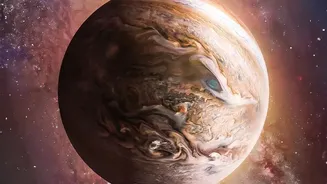
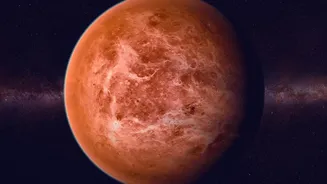
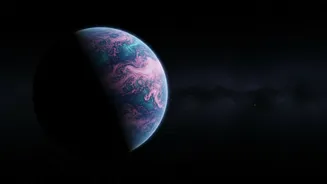
These bizarre pairs have been affectionately nicknamed 'JuMBOs,' which stands for Jupiter-Mass Binary Objects. The name is fitting. Each object in these pairs has a mass similar to that of Jupiter, but they aren't orbiting a star like planets in our solar system do. Instead, they orbit each other. In total, the team identified around 40 of these binary pairs, along with over 500 other individual free-floating planets. While astronomers have found lone 'rogue planets' before, finding so many gravitationally bound pairs was completely unprecedented. These objects are floating freely through the nebula, a discovery that simply doesn't fit with our current understanding of the universe.
A Major Wrinkle in Planet Formation
So, why is this such a big deal? Because our leading theories of planet formation can't easily explain how JuMBOs exist. The standard model says planets form from the leftover disk of gas and dust circling a young star. The star's gravity is the crucial anchor. Another theory suggests that planets could be ejected from their home solar systems through chaotic gravitational interactions. But that process would almost certainly rip a paired system like a JuMBO apart. The fact that these objects exist, and in such numbers, suggests there might be a completely unknown mechanism for creating planetary-mass objects directly from collapsing gas and dust, similar to how stars form but on a much smaller scale. It’s a finding that fundamentally challenges the playbook of planetary science.
Webb’s Eye for the Unseen
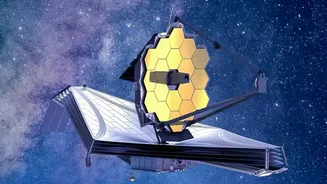
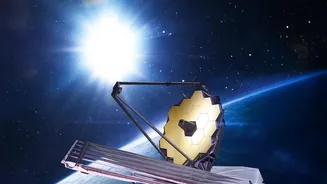
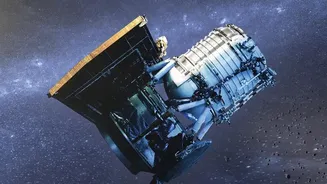
This discovery is a testament to the revolutionary power of the James Webb Space Telescope. The Orion Nebula is shrouded in thick dust, which obscures visible light. Webb, however, is designed to see in infrared, allowing it to peer through the dust and spot the faint heat signatures of these cool, gassy worlds. Without Webb's unparalleled sensitivity and specialised instruments, these rogue pairs would have remained completely invisible. This serendipitous find perfectly illustrates the immense value of the ten-billion-dollar observatory; it is not just confirming what we suspect but revealing cosmic phenomena we never even thought to look for. Each new observation brings with it the potential for another shocking and transformative discovery.