
A Landmark Partnership in Solar Science
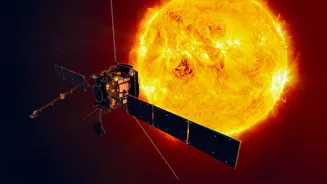
For the first time, scientists are combining data from India's maiden solar observatory, Aditya-L1, and the European Space Agency's (ESA) Proba-3 mission to study the same solar events from two unique perspectives. This joint effort, involving researchers
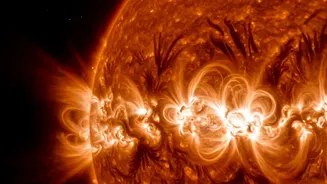
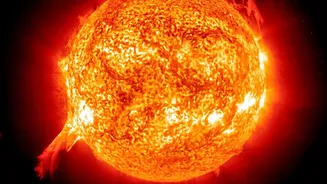
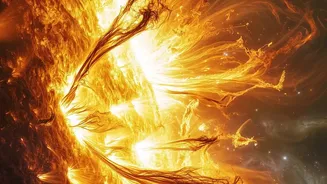
from the Indian Institute of Astrophysics (IIA) and their European counterparts, focuses on Coronal Mass Ejections (CMEs)—colossal expulsions of plasma and magnetic fields from the Sun. By merging their observations, the teams aim to build a much more complete picture of how these powerful eruptions are born and evolve in the moments after they leave the solar surface, a region that has historically been very difficult to observe.
India’s Unblinking Eye: Aditya-L1
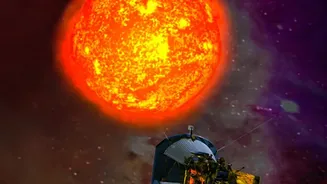
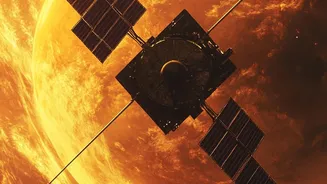
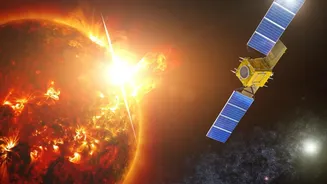
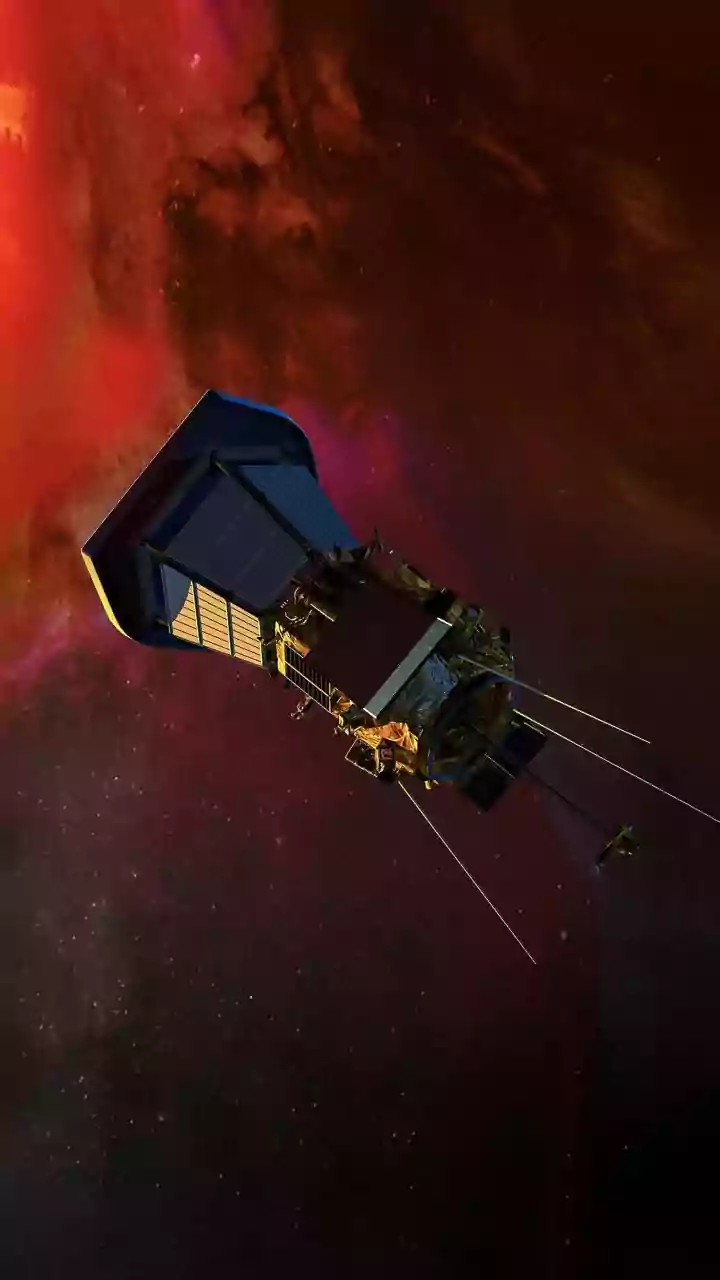
Launched by the Indian Space Research Organisation (ISRO) on September 2, 2023, Aditya-L1 is a dedicated solar observatory. It is strategically positioned at the Sun-Earth Lagrange Point 1 (L1), about 1.5 million kilometres from Earth, which allows it an uninterrupted view of the Sun. A key instrument for this collaboration is the Visible Emission Line Coronagraph (VELC). Developed by the IIA, VELC is a coronagraph that uses spectroscopy to analyse the light from the Sun's corona, revealing critical information about the temperature, density, and speed of the plasma erupting from the Sun. Its observations focus on the very inner corona, extremely close to the Sun's surface.
Europe’s Artificial Eclipse: Proba-3
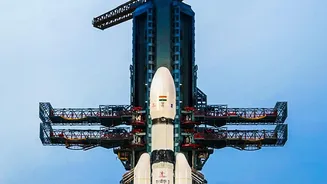
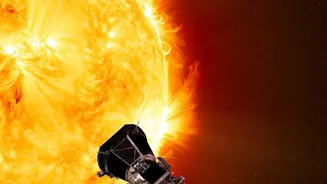
The ESA's Proba-3 mission, launched by an ISRO PSLV rocket in December 2024, is a technological marvel and the world's first precision formation-flying mission. It consists of two separate satellites flying in a precise alignment, about 150 meters apart. One spacecraft, the 'Occulter', flies in front and blocks the intense light from the Sun's main disk. This creates a perfect, long-duration artificial solar eclipse for the second spacecraft, the 'Coronagraph', which can then take incredibly clear images of the faint, superheated corona. This innovative setup allows its main instrument, ASPIICS, to capture the structure and movement of CMEs slightly farther out than VELC can see.
Combining Forces for a Complete Picture
The real breakthrough comes from how these two missions complement each other. Aditya-L1's VELC provides spectroscopic data, telling scientists 'what' the material in a CME is doing—its temperature and density. Meanwhile, Proba-3's ASPIICS provides imaging data, showing 'where' the material is and how its shape evolves. By combining VELC's view of the eruption's very beginning with ASPIICS's view of its subsequent expansion, scientists can trace a CME's journey more completely than ever before. Recent joint observations of CMEs have already demonstrated this synergy, with VELC catching the eruption in its earliest phase and ASPIICS tracking its structure as it moved outward.
Why This Research Matters
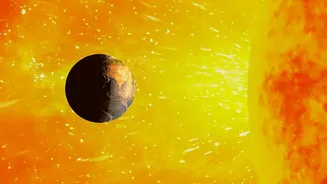
Understanding CMEs is not just an academic exercise. These solar eruptions are the primary drivers of space weather. When a CME is aimed at Earth, it can trigger geomagnetic storms that pose a significant threat to our technology-dependent society. These storms can disrupt satellite operations, damage power grids, and interfere with GPS and communication systems. Observing the birth of CMEs—measuring their initial mass, density, and energy—is crucial for improving models that predict their potential impact on Earth. The inability of previous instruments to track the faint, early evolution of these events has been a major gap in our understanding.