






The Global Gold Standard
The secret to their success is the coveted 'Blue Flag' certification, an international eco-label awarded only to the world's cleanest, safest, and most sustainable beaches. Run by the Foundation for Environmental Education (FEE), this award isn't just
about sparkling water. To earn it, a beach must meet over 30 rigorous criteria spanning water quality, environmental management, safety, and education. This means no industrial waste or sewage, top-notch waste disposal systems, lifeguards on duty, clean changing rooms, and even environmental education for visitors. It’s a holistic approach that ensures a beach is not just beautiful for a day, but preserved for generations. Karnataka is one of the few states in India to boast multiple beaches that meet this exacting global standard, transforming its coastline into a model for others to follow.
Padubidri: Where Serenity Meets Sustainability
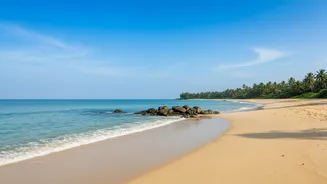
Located in the Udupi district, Padubidri Beach is a perfect example of blending natural beauty with thoughtful development. The beach has earned its Blue Flag status with a clear commitment to cleanliness and eco-friendly practices. Visitors will find well-maintained pathways, solar lighting, and designated play areas. But the efforts go deeper. The area is a designated nesting site for Olive Ridley turtles, a testament to the region’s commitment to biodiversity conservation. For tourists, this means you can enjoy modern amenities, including water sports like kayaking and jet skiing, while knowing that the local ecosystem is being protected. The beach prohibits plastic and smoking, ensuring the environment remains pristine for both humans and wildlife. It’s a destination that proves you don’t have to sacrifice comfort for conservation.
Kasarkod: The Blueprint for an Eco-Beach
Often hailed as one of India's pioneering Blue Flag beaches, Kasarkod in Uttara Kannada district is a masterclass in eco-conscious design. Walking onto this serene shore, you’ll notice the difference immediately. The infrastructure is built to support, not intrude. This includes on-site solid waste and greywater treatment plants, ensuring that nothing pollutes the environment. The entire beach is powered by a solar power plant, drastically reducing its carbon footprint. Accessibility is also a key feature, with pathways designed to be friendly for visitors with disabilities, ensuring everyone can enjoy the pristine coastline. Kasarkod isn't just a place to relax; it's a living example of how modern infrastructure can be integrated with nature to create a truly sustainable tourist destination.
Tannirbhavi: A Green Oasis by the Sea
Just a short distance from the bustling city of Mangaluru, Tannirbhavi offers a tranquil escape that beautifully marries the beach with the land. While it boasts the same high standards of cleanliness and safety as its Blue Flag counterparts, its standout feature is the adjacent Tannirbhavi Tree Park. This lush 15-hectare park, managed by the Karnataka Forest Department, is a sanctuary of trees native to the Western Ghats, many with medicinal properties. This unique addition allows visitors to combine a beach day with a stroll through a botanical garden, learning about local ecology firsthand. It deepens the connection to the environment, promoting a sense of stewardship. With facilities like lifeguards and walking trails, Tannirbhavi proves that a beach can be a hub for both recreation and environmental education.
A New Standard for India's Coasts
The success of Padubidri, Kasarkod, and Tannirbhavi is more than just a local achievement; it’s a new standard for India’s vast coastline. These beaches demonstrate that tourism growth and environmental preservation can go hand in hand. By investing in sustainable infrastructure, involving local communities, and committing to international standards, Karnataka has created destinations that attract responsible tourists looking for quality experiences. They provide a blueprint for other states, showing that the future of beach tourism lies not in unchecked development, but in creating clean, safe, and ecologically vibrant spaces. These beaches are not just places to visit, but destinations to learn from—a signpost pointing towards a more sustainable future for tourism in the country.