




A Date Tied to World War II
The choice of August 15 was not an ancient, auspicious selection but a personal one made by the last Viceroy, Lord Mountbatten. The British Parliament had given him a mandate to transfer power by June 1948, but facing immense political pressure and escalating
tensions, Mountbatten advanced the date. He chose August 15 because it marked the second anniversary of Japan's surrender to the Allied forces in 1945, an event that effectively ended World War II. For Mountbatten, who had been the Supreme Allied Commander in Southeast Asia, this date symbolised a personal victory and he considered it lucky.
Freedom at Midnight, Borders Two Days Later
While India awoke to life and freedom at the stroke of midnight on August 15, 1947, millions in Punjab and Bengal had no idea which country they belonged to. The Radcliffe Line, the boundary that partitioned British India into India and Pakistan, was only officially published on August 17, 1947, two days after independence. Sir Cyril Radcliffe, a British lawyer with no prior experience in India, was given just five weeks to draw the borders. The final awards were ready by August 12 but were deliberately withheld by Mountbatten to avoid spoiling the independence celebrations and to place the responsibility for the ensuing chaos on the newly formed governments. This delay meant that on Independence Day, many towns and villages celebrated without knowing their fate, leading to unimaginable confusion and violence when the borders were finally revealed.
The Missing Father of the Nation
As Jawaharlal Nehru delivered his iconic 'Tryst with Destiny' speech in a jubilant Delhi, the man widely regarded as the Father of the Nation, Mahatma Gandhi, was conspicuously absent. He was over a thousand kilometres away, in Calcutta (now Kolkata), working to quell the horrific communal riots that had erupted in the wake of Partition. For Gandhi, the division of India was a source of profound anguish. He refused to participate in the celebrations, choosing instead to fast and pray for peace between Hindus and Muslims. His presence in the riot-torn areas of Bengal was described by Mountbatten as a 'one-man boundary force', highlighting the moral authority he commanded even as the nation he fought to free was being born in bloodshed.
A Day of Independence Shared Globally
India is not the only country that celebrates its national day on August 15. The date holds significance for several other nations. Both North and South Korea celebrate their Liberation Day on August 15, marking their freedom from 35 years of Japanese colonial rule in 1945. The Republic of the Congo also gained its independence from France on August 15, 1960. Additionally, Bahrain declared its independence from Britain on August 15, 1971, and Liechtenstein, one of the world's smallest nations, also observes its national day on this date.
No Official National Anthem
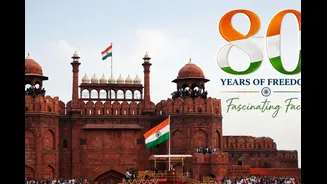
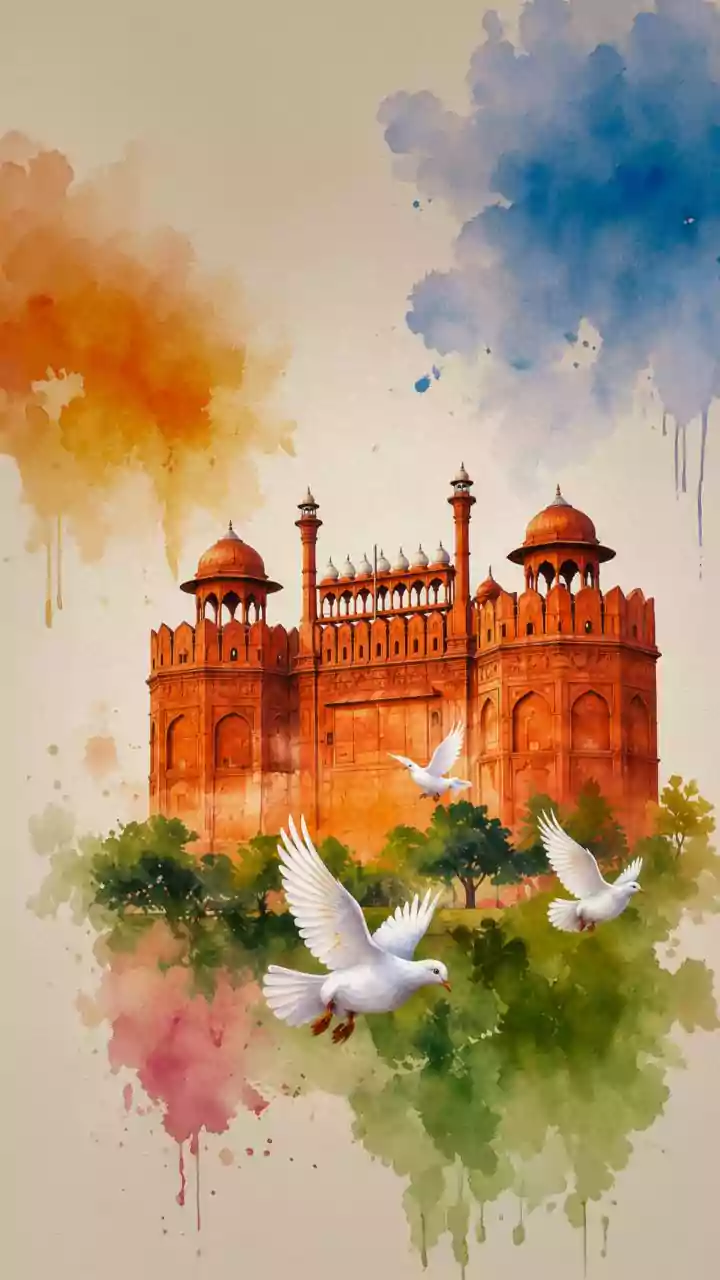
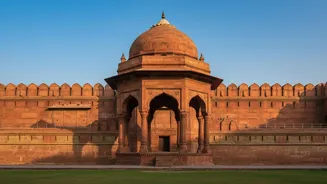
When the tricolour was hoisted for the first time at the Red Fort on August 15, 1947, India did not have an officially adopted national anthem. Rabindranath Tagore's 'Jana Gana Mana' was written in 1911 and was well-known, but the Constituent Assembly only officially adopted it as the national anthem on January 24, 1950. On the same day, 'Vande Mataram', a poem by Bankim Chandra Chatterjee that was a powerful slogan during the freedom struggle, was given an equal status as the national song. So for nearly two and a half years, the independent Dominion of India functioned without a formal anthem.
An Incomplete Map of India
The map of India on August 15, 1947, looked quite different from the one we know today. While the country celebrated freedom from British rule, several territories were not yet part of the Indian Union. Goa, along with Daman and Diu, remained a Portuguese colony for another 14 years. It was only on December 19, 1961, after a military action by the Indian Armed Forces called 'Operation Vijay', that Goa was liberated and integrated into India, finally ending the last vestiges of European colonialism on the subcontinent.