


From Landing to Catching
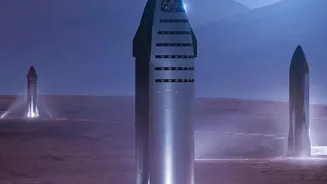
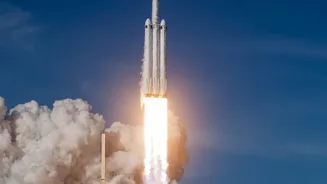
The concept of reusing rockets isn't new; SpaceX has made landing and reflying its Falcon 9 boosters a routine part of business. However, that system is only partially reusable, as the second stage of the rocket is discarded on every flight. Starship
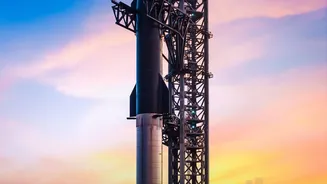
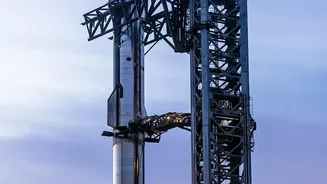
is designed for full reusability, which means recovering both the Super Heavy booster and the Starship upper stage. Instead of landing on legs, the plan is for both massive components to fly back to the launch site and be caught by the launch tower itself, a system nicknamed 'Mechazilla'. This eliminates the need for heavy landing gear on the rocket and the complex recovery logistics of ocean splashdowns, paving the way for airline-like turnaround times.
Meet 'Mechazilla'
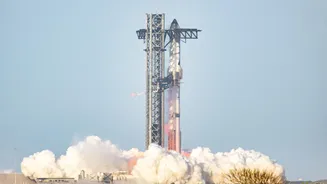
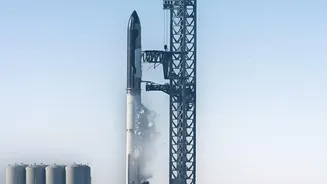
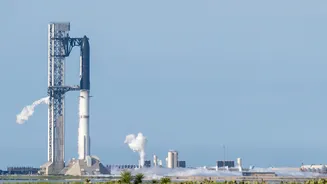
The key to this ambitious plan is the nearly 150-meter-tall launch and integration tower at Starbase, Texas. Outfitted with two giant 'chopstick' arms, the tower acts as a launch mount, a stacking platform, and a rocket-catching mechanism all in one. Using a network of high-resolution cameras, sensors, and powerful hydraulic and electromechanical systems, the arms are designed to track the returning rocket stage with incredible precision, adjust for its descent, and close in to secure it in a matter of seconds. The maneuver is fully autonomous, with the system making real-time decisions to ensure a perfect catch while withstanding the extreme heat and force of the rocket's landing burn.
The Challenge of Catching the Ship
While SpaceX has successfully caught its Super Heavy booster multiple times, catching the Starship upper stage is a far greater challenge. The booster only flies to the edge of space, but the ship travels all the way to orbit at speeds over 26,000 kilometers per hour. It must survive a fiery reentry through the atmosphere, perform a 'belly-flop' maneuver to slow down, and then flip to a vertical orientation just in time to be grabbed by the tower's arms. The recent Flight 15 mission marked the first successful catch of the Starship vehicle after it spent over 22 hours in orbit, a historic first in rocketry. The booster for that flight, however, was diverted to an ocean splashdown due to a fuel sensor issue, highlighting the difficulty of achieving a 'double catch'.
Why Full Reusability Changes Everything
Achieving full and rapid reusability is what SpaceX founder Elon Musk calls the 'holy grail' of spaceflight. Currently, even with a reusable first stage, an expendable upper stage worth millions is thrown away with each launch. By recovering and quickly reusing both the booster and the ship, the main cost of a launch would theoretically drop to just the price of propellant and ground operations. This dramatic cost reduction is the key to unlocking SpaceX's long-term ambitions, from deploying massive satellite constellations like Starlink and the proposed 'Starmind' to building a self-sustaining city on Mars. A fully reusable Starship could carry over 100 metric tons of cargo, a capacity that fundamentally changes the economics of operating in space.
The Road Ahead
The successful ship catch on Flight 15 is a monumental step, but making it routine is the next hurdle. SpaceX must now consistently execute catches of both the booster and the ship on the same flight, then demonstrate that the vehicles can be refurbished and reflown quickly. This capability is not just critical for SpaceX's business model but also for major government programs. NASA is depending on Starship as the human landing system for its Artemis program, which aims to return astronauts to the Moon. That architecture relies on Starship's ability to be refueled in orbit, a feat that requires a high launch cadence only possible with rapid reusability. The entire industry is watching to see if SpaceX can turn this sci-fi maneuver into a dependable reality.