


What is an Evening Elongation?
Because Venus orbits the Sun inside of Earth's own path, it never appears to stray very far from the Sun in our sky. We only ever see it for a few hours after sunset (as the 'Evening Star') or a few hours before sunrise (as the 'Morning Star'). An 'elongation'
is simply the angular separation between the Sun and Venus from our point of view. 'Greatest elongation' is the moment when Venus appears at its farthest distance from the Sun on our sky's dome. When this happens in the evening, it's called the greatest eastern elongation. Think of two runners on a circular track; Earth is on an outer lane and Venus is on an inner, faster one. Greatest elongation occurs at the point where, from Earth's perspective, Venus seems to be at the widest possible angle away from the Sun at the centre of the track. This event on August 15th means Venus will hang in the twilight sky for a longer duration after sunset, making it prime time for observation.
The View from India on August 15
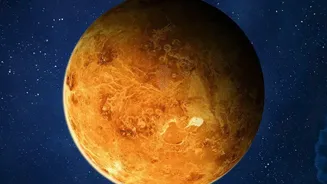
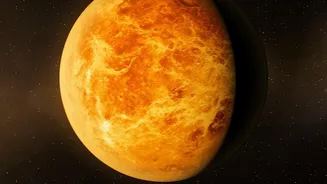
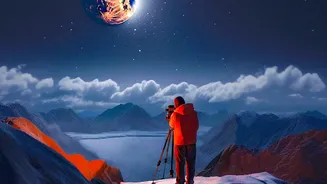
This year's greatest evening elongation occurs at 6 UTC on August 15, which is 11:30 AM Indian Standard Time. While the technical peak happens during daylight, the real show for observers in India begins just after sunset. Look to the west for a dazzling point of light that will easily outshine any star. On this evening, Venus will be at an angular distance of about 46 degrees from the Sun, giving skywatchers a generous window to admire it before it dips below the horizon. Its brilliance, rated at a magnitude of -4.4, makes it the third-brightest object in the sky, after only the Sun and the Moon. No special equipment is needed; its steady, silvery light is unmistakable to the naked eye. For those with a telescope, Venus will appear about 49% illuminated, resembling a tiny first-quarter Moon.
Why This Viewing Window is Timely
The term 'timely' is fitting for several reasons. The entire month of August 2026 is a fantastic period for stargazing. The peak of the reliable Perseid meteor shower occurs just a couple of days earlier, around August 12-13, under the dark skies of a new moon. This makes the week a perfect one for getting outdoors and looking up. The elongation on August 15th provides a brilliant, stable target to observe in the days following the meteor shower. Furthermore, this event marks the best period of Venus's 2026 evening appearance, which began in mid-February and will continue through the summer. After this point, the planet will begin its journey back toward the Sun's glare from our perspective, eventually passing between Earth and the Sun in late October. So, mid-August truly is the peak of the evening show.
Earth's Sister Planet: A World of Extremes
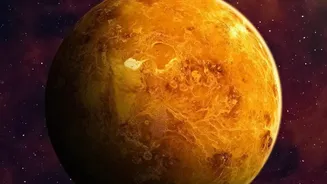
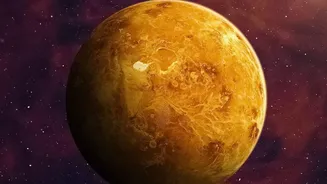
While it shines with a serene light, Venus is anything but calm. It's often called Earth's 'sister planet' due to its similar size and mass, but the comparison ends there. Its thick atmosphere is mostly carbon dioxide, creating a runaway greenhouse effect that pushes surface temperatures to a scorching 464 degrees Celsius—hot enough to melt lead. The atmospheric pressure at the surface is over 90 times that of Earth's. The planet's brightness is due to its highly reflective clouds of sulfuric acid, which bounce about 70% of sunlight back into space. Venus also has a peculiar rotation; it spins backwards very slowly, meaning a day on Venus is longer than its year. So as you watch its peaceful glow, you're witnessing a beautiful but incredibly hostile world.