





The Astronaut with Indian Roots
Dr. Anil Menon, a NASA astronaut and a Colonel in the U.S. Space Force, is not your typical space explorer. Born in Minneapolis, Minnesota, to a father from Kerala, India, and a mother from Ukraine, Menon's background is as diverse as his skill set. Before
being selected for NASA's 2021 astronaut class, he built a remarkable career at the intersection of medicine and extreme environments. He served as an emergency medicine physician, a flight surgeon for the Air Force, and was even a first responder during earthquakes in Haiti and Nepal. Menon also spent a year in India as a Rotary Ambassadorial Scholar, where he supported polio vaccination efforts, maintaining a strong connection to his heritage.
A Mission to the International Space Station
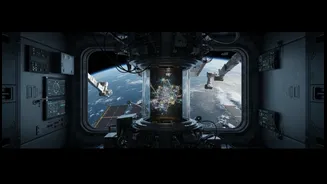
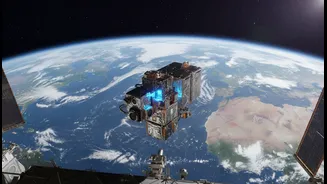
On July 14, 2026, Dr. Menon launched aboard a Soyuz spacecraft for his first journey into space, an eight-month mission to the International Space Station (ISS). As part of Expeditions 74 and 75, he and his crewmates are tasked with conducting a wide range of scientific experiments. This mission represents a critical step in preparing for humanity's next giant leap: long-duration voyages to the Moon and Mars. Menon's unique expertise as both a physician and an astronaut makes him perfectly suited for the primary goal of his mission: studying the profound effects of space on human health.
The Unseen Toll of Space Travel
Living in microgravity is a harsh experience for the human body. Without the constant pull of Earth's gravity, astronauts face a host of physiological challenges. Their bones can lose density at a rate of 1 to 1.5% per month, increasing fracture risk. Muscles, particularly in the back and legs, begin to atrophy from disuse. The cardiovascular system also changes, as fluids shift towards the head, which can lead to vision problems known as Space-Associated Neuro-ocular Syndrome (SANS). Furthermore, astronauts are exposed to significantly higher levels of space radiation, increasing their lifetime risk for cancer and other degenerative diseases. Psychological stress from isolation and confinement is another major factor that needs to be managed.
Pioneering Research in Orbit
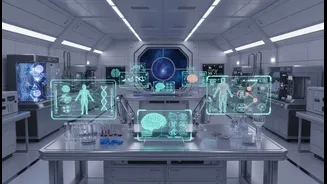
Dr. Menon's work aboard the ISS directly addresses these challenges. A key part of his research involves studying how microgravity affects blood flow and composition to better protect future astronauts. He will also help test groundbreaking technologies, such as a system to create intravenous (IV) fluids from the station's drinking water—a vital capability for deep-space missions where resupply is impossible. Another experiment uses augmented reality and AI-assisted ultrasound, which could one day allow astronauts to perform complex medical diagnostics on themselves without direct guidance from Earth. By serving as both a researcher and a test subject, Menon is generating crucial data to keep space explorers safe and healthy on their long journeys.
Why This Work Matters for Humanity
The research conducted by Dr. Menon and his colleagues is about more than just protecting astronauts. Understanding how the body adapts to space provides unique insights into conditions on Earth, such as osteoporosis, muscle wasting, and cardiovascular disease. Innovations developed for space medicine, from remote diagnostics to advanced life support, often find their way back into terrestrial hospitals, improving healthcare for everyone. Menon's journey is a testament to the human spirit of exploration and scientific collaboration. His work on the ISS is a crucial step in ensuring that when humanity finally reaches for Mars, we will do so not just boldly, but also safely.