

First, Become a Sun Detective
Before buying a single plant, the most crucial step is to understand your sunlight. Don't just guess; observe your balcony for a full day. Note when direct sunlight first hits your space and when it leaves. This simple exercise will tell you what your balcony offers.
'Full sun' means six or more hours of direct sunlight. A 'partial shade' or 'partial sun' spot gets about three to six hours of sun, often gentle morning or late afternoon light. 'Shade' means less than three hours of direct sun, or bright, indirect light for most of the day. The direction your balcony faces is a big clue: south-facing balconies usually get sun all day, while east-facing ones get gentler morning sun and north-facing ones get the least.
For Sun-Drenched Balconies (6+ Hours of Sun)
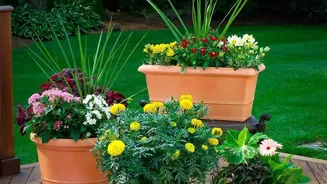
If your balcony is bathed in sun for most of the day, you have a wealth of options. These spaces are perfect for heat-loving bloomers that thrive in bright conditions. Bougainvillea is a classic choice for Indian balconies, known for its vibrant, paper-like bracts in shades of pink, orange, and red. It's drought-tolerant and produces more flowers with more sun. Hibiscus is another fantastic option, offering large, beautiful blooms daily. For smaller pots and railing planters, consider Portulaca (Moss Rose), a low-growing succulent that adores heat and comes in a rainbow of colours. Marigolds (Genda) are also incredibly easy to grow, handle heat well, and flower continuously in full sun.
For Balconies with Partial Shade (3-6 Hours of Sun)
Balconies that get a mix of sun and shade are ideal for a wide variety of plants that enjoy bright light without the scorching intensity of the afternoon sun. Begonias are a great choice, offering both beautiful flowers and colourful leaves. They are low-maintenance and prefer partial sunlight. Impatiens are also prized for their ability to provide steady colour in shadier spots, blooming profusely with just a few hours of morning sun. Fragrant options like Arabian Jasmine (Mogra) do wonderfully here, needing about four to six hours of sunlight to produce their intoxicatingly sweet-smelling flowers. You could also consider Ixora, whose clusters of star-shaped flowers do well with morning sun and afternoon shade.
For Shady Corners and Low-Light Balconies
A shady balcony doesn't mean you have to give up on flowers. While most prolific bloomers need some sun, several plants offer colour in low-light conditions. The Peace Lily is an excellent choice for shaded balconies, known for its elegant white spathes and ability to purify the air. It thrives in bright, indirect light, away from the direct sun. Certain varieties of Begonia also adapt well to lower light. For a pop of colour, Torenia, or the Wishbone Flower, blooms consistently in shaded locations and handles humid weather well. While primarily known for foliage, some flowering plants can tolerate these conditions, but it's important to manage expectations as blooming may be less dramatic than in sunny spots.
Making the Most of Limited Space
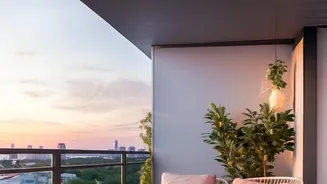
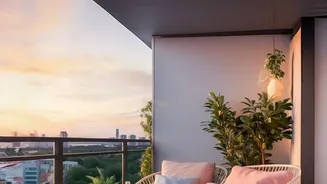
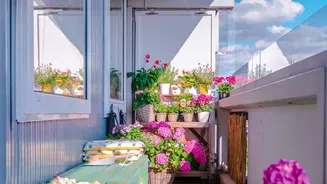
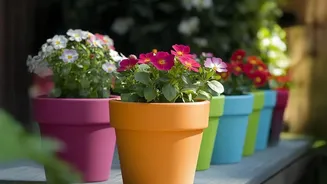
Urban balconies are often short on floor space, but that shouldn't limit your garden's potential. The key is to think vertically and use every available surface. Hanging baskets are perfect for trailing plants like Petunias or Portulaca, creating a cascade of colour. Railing planters are another space-saving solution, ideal for plants like Marigolds or Geraniums. You can also use wall-mounted planters or ladder shelves to create a vertical garden. When choosing plants, look for 'dwarf' or 'compact' varieties, such as dwarf Bougainvillea or miniature roses, which are specifically bred for container living. Even climbing plants like Mogra or Aparajita (Butterfly Pea) can be grown in pots with a small trellis to guide their growth upwards.