



The votes are in, and the 2026 US midterm elections have reshaped the political landscape in Washington. For India, the results bring both opportunities and new uncertainties for the critical economic partnership between the two nations.
A Decisive Shift in Washington
The November 2026
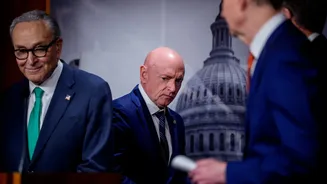
midterm elections resulted in a significant power shift, with the Democratic Party securing control of both the House of Representatives and the Senate. This outcome is seen as a major setback for President Donald Trump and the Republican party, reflecting voter dissatisfaction over a range of issues including economic anxieties and the administration's foreign policy. With a new Congress set to take office in January 2027, Democrats will have the ability to increase scrutiny of the administration's agenda, including its trade and immigration policies.
Trade Policy Under a Microscope
A key area of focus for India is the future of US trade policy. The Trump administration has been characterized by aggressive tariffs, which has created uncertainty for Indian exporters. With Democrats now controlling Congress, there is an expectation of greater oversight on these tariff policies. Experts believe this could provide India with more breathing room in negotiations for a bilateral trade agreement. However, it doesn't guarantee a complete reversal. There is a growing bipartisan consensus in the US favoring economic nationalism and the protection of American jobs, which means pressure on trade partners is unlikely to disappear entirely.
The Outlook for a Bilateral Trade Deal
Negotiations for an India-US trade deal have been ongoing, with both sides indicating that an agreement is close. The election results could impact the dynamics of these talks. Some analysts suggest that a politically weakened President Trump might be more eager to secure a quick foreign policy 'win' and could increase pressure on India to finalize a deal. This could involve pushing for greater market access for American agricultural and industrial goods. Indian officials, however, may see an opportunity to push for more favorable terms, leveraging the new political reality in Washington. It's important to note that some aspects of an interim trade agreement may not require formal Congressional ratification, potentially allowing talks to proceed despite the political shifts.
Immigration and the H-1B Visa
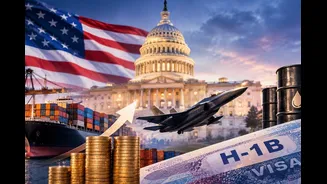
Immigration, particularly the H-1B visa program, remains a top concern for India's technology sector and skilled professionals. The Trump administration has implemented several restrictive measures, including proposals for significant fee hikes on H-1B applications. Democratic control of Congress is expected to lead to increased scrutiny of these policies. While this is unlikely to result in immediate relief or a complete reversal of existing rules, it could make it harder for the administration to push through further restrictive measures. Any substantial changes to immigration law, such as addressing the green card backlog, would require new legislation, which can be a lengthy process even with a unified Congress.
Strategic Alignment Remains Strong
Despite potential friction over trade and immigration, the underlying strategic partnership between India and the United States is expected to remain robust. Shared geopolitical interests, particularly concerning China's influence in the Indo-Pacific, form a strong foundation for bilateral cooperation that transcends partisan politics in Washington. This strategic alignment is likely to ensure continued collaboration in areas like defense and security, regardless of which party controls Congress. For New Delhi, the key will be to navigate the specific economic policy debates while reinforcing the longterm strategic value of the partnership.