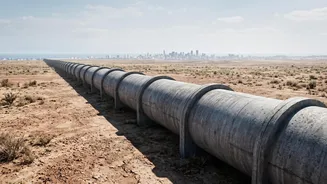








A Thirst That Rivals Cities
Behind every AI query is a physical system of chips that generate immense heat. Cooling these sprawling data centers requires a staggering amount of water. A single large data center can consume up to 19 million litres of water per day, comparable to the usage
of a small city. This water is often drawn from the same municipal supplies and groundwater that local communities depend on for drinking. With projections showing AI's water consumption set to increase dramatically by 2028, tech giants are building these thirsty facilities in regions sometimes already grappling with water scarcity, creating a potential new front in the battle for this precious resource.
The Global Scramble For Chips
The 'brains' of AI are advanced semiconductor chips, and their production is a high-stakes geopolitical game. As of 2026, the global supply chain remains incredibly concentrated, with Taiwan producing the vast majority of the world's most advanced chips. This concentration creates a massive vulnerability. In response, nations are scrambling to achieve 'chip sovereignty'. The US, Europe, and China have all committed hundreds of billions of dollars to build up domestic manufacturing capabilities, aiming to reduce their reliance on a few key locations. This isn't just about economics; it's a strategic race for control over the foundational technology of the 21st century, creating new tensions and reshaping global alliances.
Digging for the Digital Age
AI hardware doesn't appear out of thin air. It is forged from a complex cocktail of rare earth elements and critical minerals like lithium, cobalt, gallium, and germanium. These materials are essential for everything from the powerful magnets in server hardware to the specialized properties of the chips themselves. The problem is twofold. First, mining these resources carries a heavy environmental cost, often involving deforestation and pollution. Second, the processing and supply chains for many of these minerals are dominated by a single country: China. This gives Beijing significant leverage and exposes the entire global tech industry to potential supply disruptions rooted in geopolitical disputes.
A Future Mountain of E-Waste
The relentless pace of AI innovation has a dark side: a looming 'tsunami' of electronic waste. The race for more powerful and efficient models is accelerating the replacement cycle for the servers, GPUs, and other networking equipment that power AI. This hardware is often retired not because it's broken, but because it has become obsolete for cutting-edge AI tasks. According to one assessment, AI-related equipment could generate over 13 million tonnes of e-waste annually by 2030. This isn't just a disposal problem; manufacturing the replacement hardware requires enormous inputs of energy, water, and freshly mined raw materials, compounding the environmental footprint at every stage of the lifecycle.