


The 'Doomsday Glacier' Explained
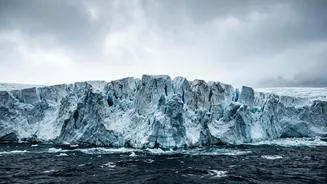
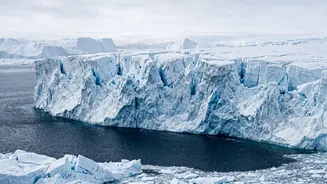
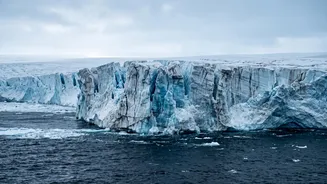
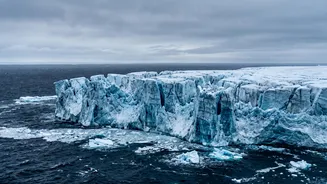
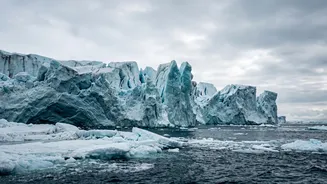
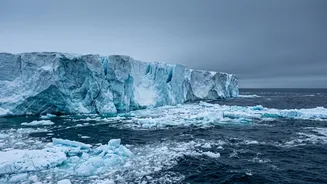
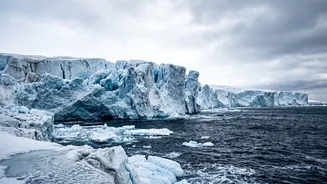
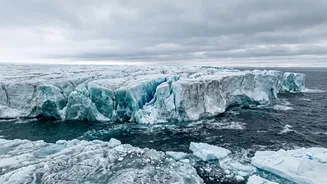
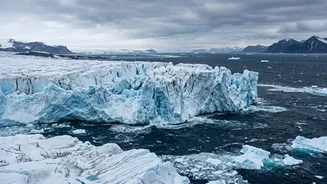
Thwaites Glacier is one of the largest and fastest-melting glaciers on Earth. Spanning 192,000 square kilometres, an area roughly the size of Florida or Great Britain, it sits in West Antarctica, acting like a colossal cork. It currently restrains a massive
volume of ice from the West Antarctic Ice Sheet from flowing freely into the ocean. If Thwaites were to collapse entirely, it holds enough ice to raise global sea levels by over 65 centimetres, or more than two feet. More alarmingly, its failure could destabilise the entire ice sheet, which contains enough ice to raise sea levels by over three metres, or about 10 feet. This potential for global devastation is why scientists are monitoring it with such urgency.
The Unstable Foundation
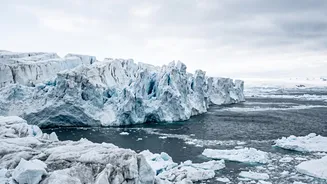
The primary threat to Thwaites comes from below. Warm ocean water is circulating beneath its floating ice shelf, melting it from the base. This is particularly dangerous because much of the glacier rests on a seabed that slopes downward. As the ice melts and the 'grounding line'—the point where the glacier lifts off the seafloor—retreats, more of the glacier's underbelly is exposed to this warm, corrosive seawater. Recent research has shown this process is more aggressive than previously thought. Scientists have discovered a 'grounding zone', several kilometres wide, where tides pump warm ocean water deep under the ice, causing vigorous melting and weakening the glacier's anchor to the land.
What New Projections Reveal
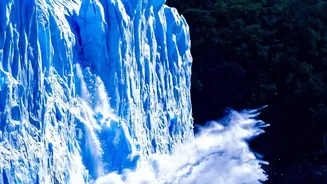
Recent studies from late 2026 have delivered sobering news. New models incorporating the dynamics of this grounding zone project that Thwaites could contribute up to 30 millimeters (about 1.2 inches) to global sea level rise by 2100. This figure is double what previous estimates had suggested, even without any additional global warming. Scientists are also concerned about the stability of the Thwaites Eastern Ice Shelf, a floating buttress that is fracturing and could break apart within the next decade. Furthermore, there is a roughly 60% chance that the main glacier could become detached from a crucial underwater ridge that currently helps to hold it back before the end of the century, which would significantly accelerate its retreat.
The Impact on India's Coastline
While a few inches of sea-level rise may sound minor, it would dramatically magnify the danger for coastal populations, including those in India. Major metropolitan areas like Mumbai, Kolkata, Chennai, and Visakhapatnam are already highly vulnerable to flooding and land erosion. Even a modest rise in the sea level will lead to more frequent and severe storm surges, threatening homes, critical infrastructure, and freshwater supplies through saltwater intrusion. Low-lying areas in Mumbai, such as Colaba and Worli, and the densely populated delta region of Kolkata are at particular risk. The potential displacement of millions of people and the immense economic damage presents a critical national challenge linked directly to the fate of a distant glacier.