





More Than a Walk in the Park
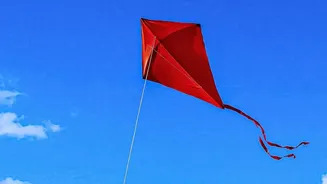
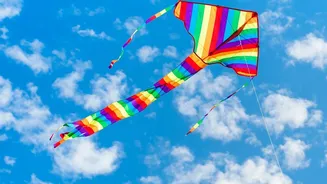
At its most basic level, flying a kite gets you outdoors and moving. You are rarely standing perfectly still. The process begins with finding an open space, which means walking across a park or beach. Then comes the launch, which often involves running
to generate enough lift to get the kite airborne. Once it's flying, you’ll find yourself walking or jogging to keep the line taut and respond to shifts in the wind. This alone turns a sedentary afternoon into a low-impact cardiovascular activity. A typical session can burn between 200 and 400 calories per hour, comparable to a brisk walk, but with the added joy of watching your kite dance against the clouds. It's an ideal way to get your heart rate up without feeling like you're doing a traditional workout.
The Core of the Matter
The real workout begins the moment the wind puts tension on your line. Your body instinctively braces against the pull, and this resistance is a form of isometric exercise. To keep the kite steady, you engage your core, back, and shoulder muscles. Your arms and shoulders do the immediate work of controlling the line, building upper-body strength and endurance. Your legs and glutes are activated to keep you grounded and stable against unpredictable gusts. This constant, subtle muscle engagement tones your entire body and improves your posture, providing a welcome antidote to hours spent hunched over a desk or screen.
Level Up With Stunt Kites
For those seeking a more intense physical challenge, stunt kiting is the answer. Unlike single-line kites that gently drift, stunt kites—also known as sport kites—are controlled with two or four lines, allowing for high-speed maneuvers, loops, and sharp turns. Flying a stunt kite is an active, full-body experience that demands constant input from the flyer. You're not just holding a line; you're actively pulling, pushing, and moving your arms to command the kite through aerobatic tricks. This provides a significant workout for your arms, chest, and core. The rapid movements and need for precision control also sharpen hand-eye coordination and reflexes, making it a mentally engaging activity as well.
The Ultimate Challenge: Power Kiting
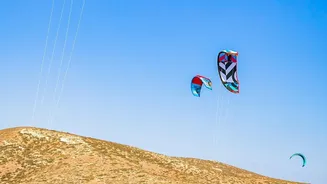
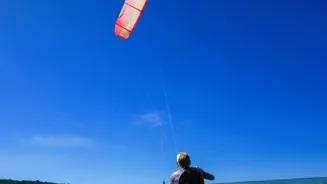
Power kiting takes the physical demands to the highest level. These are large, powerful foil kites designed to generate significant pull, enough to drag you across a field or, in sports like kitesurfing, across the water. Controlling a power kite is a full-body strength workout that heavily engages your core, back, legs, and arms. Simply holding your ground against the force of the wind is an intense isometric exercise. Experts in sports like kiteboarding emphasize that while a harness takes much of the strain off the arms, core stability is paramount for controlling the power and executing moves. It’s an extreme version of the resistance training that a simple kite provides, turning a breezy day into a genuine athletic endeavor.
Wellness for the Mind and Body
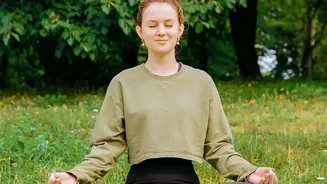
Beyond the purely physical, kite flying offers significant mental health benefits. The act of focusing on the kite as it soars is a form of active mindfulness, pulling you into the present moment and away from daily stressors. Studies and experts note that being outdoors in nature helps reduce stress, anxiety, and depression. Focusing your eyes on a distant object against the sky can also help alleviate the eye strain caused by constant screen time. The combination of gentle physical activity, fresh air, and mental focus makes kite flying a holistic activity that rejuvenates both body and mind.