


Pilates: The Art of Control
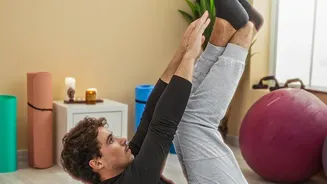
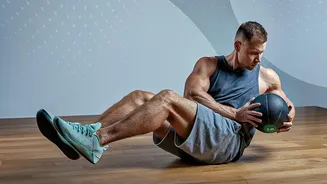
Pilates is a method of exercise that focuses on developing a strong core, improving posture, and increasing flexibility through controlled, precise movements. Developed by Joseph Pilates as a rehabilitative tool, its core principle is the mind-body connection.
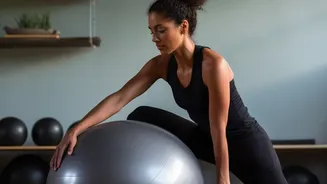
Each exercise, whether on a mat or a Reformer machine, demands intense concentration, centering, and breath control. The goal isn't to perform many repetitions but to execute each movement with perfect form. This discipline targets the deep stabilizing muscles of the torso, pelvis, and hips—the body's 'powerhouse'. By strengthening these foundational muscles, Pilates builds a robust framework that supports all other physical activities. It teaches body awareness, helping you understand how to move efficiently and safely, which is crucial for injury prevention.
Running: The Engine of Endurance
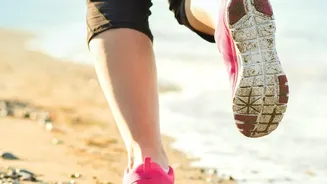
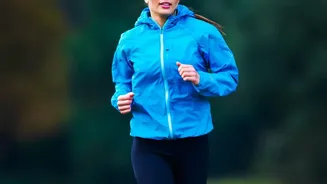
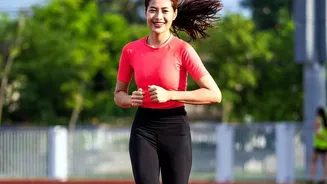
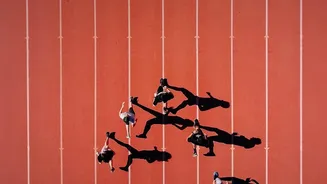
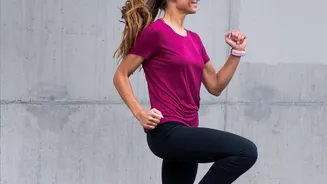
Running, in contrast, is all about forward momentum and cardiovascular endurance. It’s a high-impact activity that relies on repetition to build stamina and strength in the heart, lungs, and legs. While form is important, the primary metrics for many runners are distance, pace, and time. The repetitive nature of running, however, can lead to overuse injuries. Common ailments like runner's knee, IT band syndrome, and shin splints often stem from muscle imbalances or poor biomechanics, where stronger muscles compensate for weaker ones over thousands of strides. While it’s an incredibly effective way to improve cardiovascular health, running primarily works the body in one plane of motion, sometimes neglecting the smaller, stabilizing muscles that Pilates brings to the forefront.
Quality Meets Quantity
The headline's claim gets to the heart of their distinct philosophies. Pilates is the quality control expert of your fitness regimen. It asks, "How well are you moving?" It focuses on the integrity of each joint's motion and the engagement of the correct muscles. A single, perfectly executed Pilates movement can be more challenging and beneficial than dozens of sloppy repetitions. Running is the master of quantity, building endurance through repeated effort. It asks, "How far and how fast can you go?" This repetition is what builds cardiovascular fitness and muscular endurance in the legs. The danger lies in repetition without a quality foundation. Running with poor form or underlying weaknesses is like driving a car with misaligned wheels—eventually, something is bound to wear out.
A Perfect Partnership
Instead of viewing them as an either/or choice, the most effective approach is to see Pilates and running as a powerful partnership. Pilates provides the strong, stable core and improved posture that allows a runner to maintain efficient form, especially when fatigue sets in on long runs. A strong core prevents the hips from dropping and the upper body from slouching, reducing wasted energy and decreasing strain on the back and knees. The flexibility and mobility gained from Pilates can lead to a more efficient stride and a reduced risk of muscle pulls. Furthermore, the enhanced body awareness and breath control learned in a Pilates studio are invaluable on the road, helping runners manage their effort and stay focused. Many runners find that adding Pilates to their routine not only prevents injuries but also improves their overall performance and running economy.
Integrating Both Into Your Week
Combining these two disciplines creates a well-rounded fitness plan. A typical schedule might involve three running days and one to two Pilates sessions per week. You can schedule Pilates on your rest or active recovery days to stretch tight muscles and reinforce good movement patterns without adding impact. A short mat Pilates session can even serve as an excellent dynamic warm-up before a run, activating the core and glutes to prepare them for the work ahead. The key is listening to your body. Pilates isn't just another workout to slog through; it's a practice that teaches you to move better in every aspect of your life, including every step of your run.