




A New Pair of Eyes on the Poles
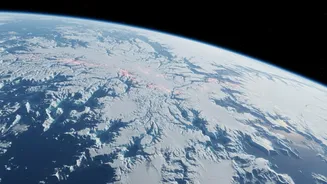
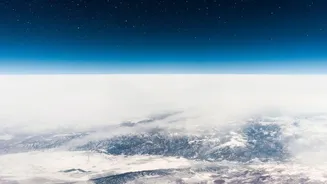
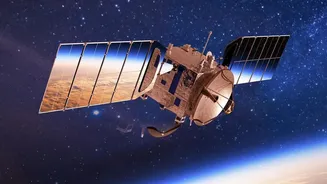
For the last two years, a pioneering NASA mission has been staring at the coldest parts of our planet to understand something fundamental: heat. The mission, called the Polar Radiant Energy in the Far-InfraRed Experiment (PREFIRE), uses two shoebox-sized
satellites, or CubeSats, that began collecting data in July 2024. Their purpose is to measure a type of energy that has never been systematically tracked before—far-infrared radiation. This invisible light is crucial because it accounts for nearly 60 percent of the heat energy that Earth radiates back into space, acting as the planet's thermostat. By finally measuring this energy, scientists can fill a major gap in our knowledge of the polar energy budget and improve climate models.
Revealing the Hidden Heat
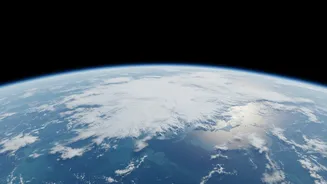
The PREFIRE mission has now captured two complete seasonal cycles at both the Arctic and Antarctic. The data has been turned into animations showing the dramatic pulse of surface temperatures, swinging from the deep cold of polar winter to the relative warmth of summer. But it’s what this data tells us about hidden heat that is most revealing. The 'hidden' aspect isn't a new source of warmth, but rather a better understanding of how heat is managed. Much of the sun's energy is absorbed in the tropics and moved toward the poles by ocean and weather currents. The poles then radiate this heat away. PREFIRE measures exactly how, where, and when this radiation escapes, particularly how it's affected by factors like clouds and water vapor which can trap heat.
Two Poles, Two Different Stories
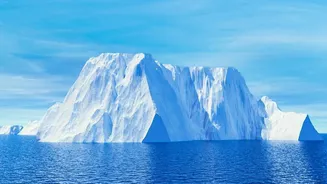
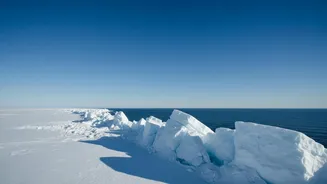
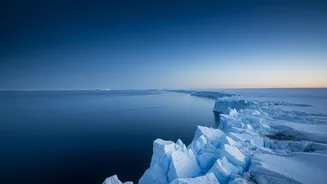
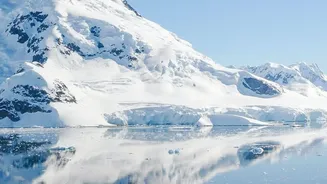
The two-year dataset vividly illustrates that the Arctic and Antarctic are not a matched pair. They operate on opposite seasonal schedules, and their geographies create very different climates. In the Arctic, a frozen ocean surrounded by land, summers can become warm enough to thaw large areas of sea ice and tundra. This creates a darker surface that absorbs more solar energy instead of reflecting it, a process that amplifies warming. In contrast, Antarctica is a massive, high-altitude continent covered in a permanent ice sheet, much of which remains below freezing even in summer. PREFIRE's detailed measurements of how these different surfaces and atmospheric conditions radiate heat will help scientists understand why the Arctic, for example, is warming at about three to four times the rate of the rest of the planet.
Why Polar Heat Matters in India
What happens in the Arctic does not stay in the Arctic. The rapid warming and melting at the poles has direct consequences for the entire globe. For India, with its thousands of kilometers of coastline, the most direct threat is sea-level rise. The Greenland and Antarctic ice sheets are the largest potential contributors to rising oceans. Furthermore, changes in the Arctic can disrupt major weather patterns. The destabilization of the polar jet stream can lead to more extreme weather events far to the south. Scientists are studying how this could influence the timing and intensity of the Indian monsoon, a system upon which the agriculture and economy of the subcontinent depend. Better climate models, refined with PREFIRE data, will lead to more accurate projections of these critical changes.