



Meet the New Starlink V5
SpaceX has officially launched its next-generation residential satellite internet terminal, dubbed the V5. This isn't just a minor update; it's a significant redesign focused on user convenience and efficiency. For those new to the conversation, Starlink
is SpaceX's ambitious project to deliver high-speed internet anywhere on the planet via a constellation of low-Earth orbit satellites. The V5 kit is the latest evolution of the user-facing hardware—the dish and router—that connects homes to this vast network. It follows the V4 model, which debuted in 2023, by continuing the trend of making satellite internet more accessible and easier to install for the average consumer. The initial rollout is happening in select regions of the US, with wider availability expected as production increases.
Speed, Size, and Power Efficiency
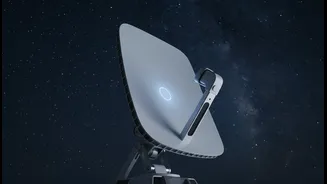
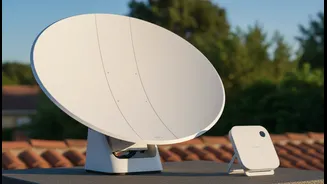
The headline feature is a combination of performance and practicality. Starlink is advertising peak speeds of over 375 Mbps for the V5. While this is technically a slight dip from the V4's theoretical maximum of 400+ Mbps, it's a huge leap from what most satellite services have historically offered and more than enough for seamless 4K streaming, online gaming, and video calls. The real story is the new form factor. The V5 dish weighs just 1.1 kg, less than half the 2.9 kg of its predecessor, and is significantly smaller. This makes it far easier to handle and install. Perhaps most impressively, it achieves this while cutting power consumption nearly in half, averaging just 35-50 watts compared to the V4's 75-100 watts. This makes it a game-changer for users in remote areas who may rely on solar or battery power.
What's New Under the Hood?
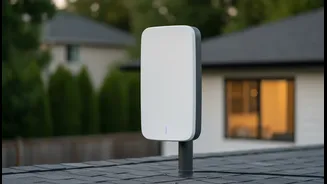
Beyond the key specs, the V5 kit comes with several quality-of-life improvements. The package includes a new, compact Wi-Fi 6 Router Mini, designed to cover up to 2,200 square feet and handle as many as 235 connected devices. The dish itself has improved weather resistance and a higher wind tolerance, crucial for a device that lives outdoors. The entire kit is designed for simple, do-it-yourself installation, arriving with everything needed to get online in minutes, including a pipe adapter for easy mounting. This focus on a streamlined user experience shows Starlink's push to move from a niche product for early adopters to a mainstream consumer-friendly service.
The Indian Context: A Game-Changer in Waiting
For India, the arrival of smaller, faster, and more efficient hardware like the V5 is particularly significant. The country's diverse and often challenging terrain means millions remain without reliable high-speed internet. Starlink has been in active discussions with the Indian government to launch its services, and while regulatory hurdles and security clearances have caused delays, the potential remains enormous. Starlink's own officials have pushed back against reports of a freeze, stating that discussions are productive and ongoing. With partnerships already announced with major players like Jio and Airtel, Starlink is poised to be a major force in bridging India's digital divide. The V5, with its lower power draw and easy installation, is ideally suited for deployment in rural and remote Indian villages, potentially transforming access to education, healthcare, and economic opportunities.
The Bigger Picture for Global Connectivity
The V5 isn't just an upgrade; it's a strategic move in the rapidly growing satellite internet market. By making the hardware more compact, efficient, and scalable to manufacture, SpaceX is preparing to bring Starlink to an even wider global audience. This continuous innovation keeps the pressure on competitors like Amazon's Project Kuiper and the Eutelsat OneWeb constellation. Each new hardware generation that becomes easier and cheaper to produce and deploy accelerates the mission of providing internet to the unconnected. The V5 demonstrates a shift in focus from pure performance to overall user experience and accessibility, a sign of a maturing service ready for mass adoption. As production ramps up, this new hardware could be the catalyst that finally brings reliable, high-speed internet to every corner of the globe.