






Two New Hubs for a New Space Age
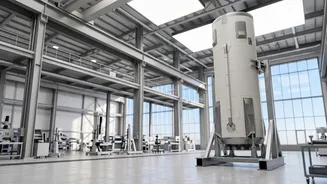
Agnikul Cosmos has officially inaugurated two critical new facilities at its Chennai campus: the Stage Testing & Inspection Facility (STIF) and the Pressurant Tank Realisation, Over-wrapping and Outfitting Facility (PROOF). Inaugurated in the presence
of Gaganyaan astronaut Group Captain Shubhanshu Shukla, these centres represent a major boost in the company's in-house capabilities. STIF is designed to test entire rocket stages under the intense pressures and conditions of a real flight. Crucially, it also allows engineers to inspect, test, and requalify stages after they have flown and been recovered. Meanwhile, the PROOF facility enables Agnikul to manufacture its own high-pressure composite overwrapped pressure vessels (COPVs), essential components that hold gases at extreme pressures. By bringing this production in-house, the company significantly reduces its reliance on external suppliers, shortens production timelines, and gains greater control over quality.
The Holy Grail of Rocketry: Reusability
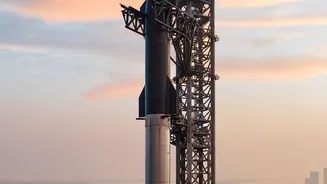
The core purpose of these new facilities is to master rocket reusability, a technology famously pioneered by Elon Musk’s SpaceX. For decades, rockets were single-use machines. Each launch required a brand-new vehicle, with the expensive components either burning up in the atmosphere or crashing into the ocean. Reusable rockets change this equation entirely. By designing rocket stages that can land themselves safely back on Earth, they can be inspected, refuelled, and flown again, drastically cutting the cost of accessing space. Agnikul's STIF facility is built specifically for this purpose, creating a repeatable cycle: build, test, fly, recover, inspect, requalify, and fly again. This capability is not just about saving money; it’s about increasing the frequency of launches, making space more accessible for satellite deployments and other commercial ventures.
Building on a Breakthrough Launch
This development follows Agnikul's historic achievement earlier in 2024. On May 30, the company successfully launched 'Agnibaan SOrTeD' (Suborbital Tech Demonstrator), a mission that made headlines for several reasons. It was India's first launch from a private launchpad and the world's first flight powered by a single-piece 3D-printed engine. That successful test validated the company's innovative design and manufacturing processes, particularly its Agnilet engine. The new STIF and PROOF facilities are the logical next step, moving from successfully testing a single engine to testing and preparing an entire reusable stage for flight. All eyes are now on the company’s upcoming 'Mission-02', which will be a crucial test of these new capabilities.
A Boost for India's Space Ambitions
Agnikul’s progress is a powerful symbol of the rise of India's private space sector. Incubated at IIT Madras, the startup is at the forefront of a movement to build indigenous, world-class space technology. By becoming more vertically integrated—meaning it controls more of its own design, manufacturing, and testing—Agnikul strengthens its position and contributes to the national goal of 'Aatmanirbhar Bharat' (self-reliant India). The new facilities position Agnikul as one of a very small number of companies globally, and the only private one in India, with the end-to-end infrastructure for testing and requalifying reusable rocket stages. This is a critical piece of the puzzle as India aims to capture a larger share of the burgeoning global space economy.