








A Digital Skin for the Planet
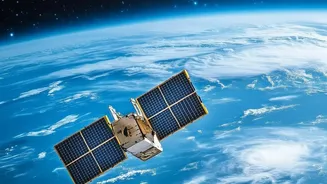
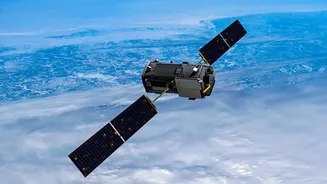
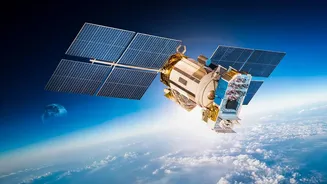
For decades, observing Earth from space was the exclusive domain of powerful governments and their national space agencies. Today, that paradigm has been completely upended. A new generation of private companies has entered the fray, launching vast constellations
of smaller, cheaper, and increasingly powerful satellites. These orbital networks are creating what some describe as a 'digital skin' for our planet, capturing imagery in unprecedented detail and frequency. What was once a grainy, static picture is now a near-real-time video feed of the Earth’s surface, with some commercial satellites able to capture details as small as a mailbox. The sheer volume of this data would be overwhelming if not for another transformative technology: artificial intelligence. AI algorithms are the engine that makes this revolution useful. They sift through petabytes of imagery, automatically detecting changes, identifying objects, and predicting trends. Instead of a human analyst searching a single image, AI can scan the entire globe for specific patterns, from deforestation in the Amazon to traffic congestion in Mumbai. Some advanced systems even process data in-orbit, sending down concise alerts rather than massive raw files, enabling almost immediate action.
The Promise of a Smarter Earth
The benefits of this commercialized eye-in-the-sky are immense and touch nearly every aspect of our lives. In agriculture, 'precision farming' is no longer a buzzword but a reality. Satellite data helps farmers monitor crop health, assess soil moisture, and apply water and fertilisers with pinpoint accuracy, boosting yields while conserving resources. For disaster management, the impact is life-saving. Emergency responders can track the progress of floods, wildfires, and cyclones in near-real-time, allowing for more effective evacuations and damage assessments. This technology also provides a critical tool for holding power to account and understanding our changing world. Environmental groups can monitor illegal mining and deforestation, while financial analysts can predict commodity outputs by observing farmland from space. The fusion of accessible satellite data and AI gives us a powerful, evidence-based lens through which to manage global challenges, from climate change and food security to urban planning and humanitarian aid.
Who Watches the Watchers?
However, this torrent of data creates a host of complex ethical and security dilemmas. The most obvious is privacy. With the ability to observe private properties and public spaces in high resolution, the line between beneficial monitoring and intrusive surveillance becomes dangerously thin. This raises fundamental questions about consent and data ownership in an age where anyone’s movements could be tracked from orbit without their knowledge. Beyond individual privacy, there are profound national security risks. What was once strategic intelligence gathered by superpowers is now a commercial product. This creates a regulatory 'grey zone' where commercial imagery can be used by non-state actors or hostile nations for targeting. Conversely, governments can pressure companies to restrict access to imagery during conflicts, blinding journalists and human rights organisations when transparency is needed most. The technology is rapidly outpacing the international laws designed to govern space, creating an urgent need for new rules of the road.
India's Stake in the Sky
Recognising both the opportunity and the challenge, India has moved decisively to claim its stake in this new space economy. With the landmark Indian Space Policy of 2023, the government has officially opened the doors for private sector participation across the entire space value chain. This move is not about privatising ISRO, but rather about creating a broader, more dynamic national space ecosystem. The policy enables ISRO to focus on frontier research and strategic missions like human spaceflight, while empowering private industry to scale up mature technologies, including Earth Observation. Institutions like the Indian National Space Promotion and Authorisation Centre (IN-SPACe) have been created to act as a single-window agency for private players, while liberalised FDI norms are attracting foreign investment. The goal is to foster a thriving industry of Indian companies building and operating satellites, developing applications, and competing globally. For a nation facing significant challenges in agriculture, water management, and disaster response, mastering this technology is not just a commercial ambition—it is a strategic necessity.