






A New Eye on the Cosmos
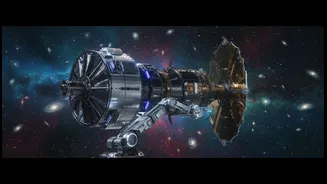
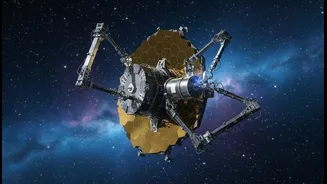
Scheduled for launch in the early 2040s, the Habitable Worlds Observatory (HWO) has an audacious goal: to directly image at least 25 Earth-like planets and scan their atmospheres for signs of life. This $11 billion successor to the James Webb Space Telescope
(JWST) will hunt for biosignatures like oxygen and methane, potentially answering one of humanity's oldest questions: are we alone? To do this, it will require unprecedented technology, including a massive mirror and an advanced coronagraph capable of blocking a star's blinding light to reveal the faint glimmer of a planet. But the most groundbreaking feature of HWO isn't just its scientific power; it's the plan for its entire lifecycle.
Lessons from Hubble and Webb
The new philosophy is a direct result of lessons learned from HWO's famous predecessors. The Hubble Space Telescope, launched into low-Earth orbit in 1990, was famously saved from a flawed mirror and subsequently upgraded five times by Space Shuttle astronauts. This servicing dramatically extended its life and enhanced its capabilities, making it one of history's most productive scientific instruments. In contrast, the James Webb Space Telescope orbits the sun 1.5 million kilometers from Earth at a point known as L2. At this remote outpost, any repair or upgrade is practically impossible with current technology. Webb is a marvel of engineering, but it was a one-shot deployment; once its fuel runs out or a critical component fails, its mission is over. NASA knew it couldn't take that risk with another multi-decade, flagship mission.
Designed for a Long Life
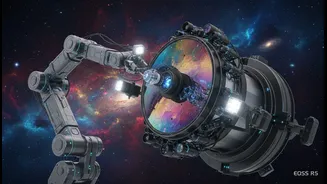
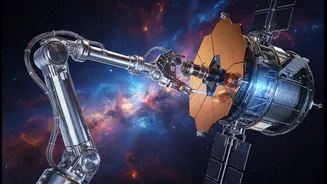
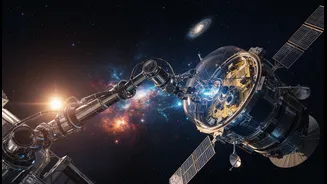
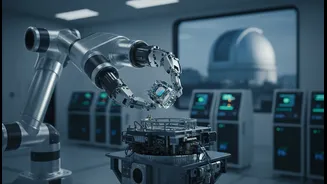
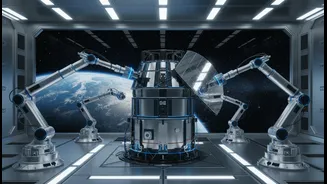
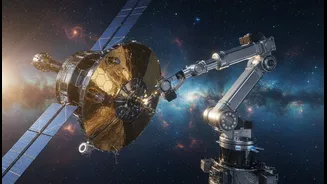
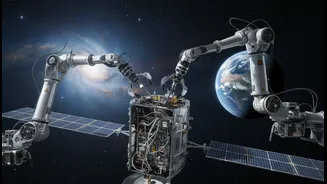
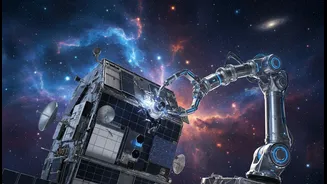
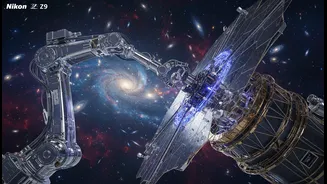
From its inception, HWO is being engineered for in-space servicing, assembly, and maintenance (ISAM). Since its destination at the L2 point is too distant for human astronauts, the work will be done by robots. NASA has mandated that the observatory be built with a modular design. Critical components like electronics, computers, and sensors will be configured as standardized, line-replaceable units (LRUs). Think of them as high-tech, space-faring cartridges. A robotic servicing spacecraft could one day travel to HWO, dock with it, and use specialized manipulators to slide out an obsolete instrument and plug in a brand-new, more powerful one. This approach doesn't just allow for repairs; it allows for evolution. The telescope launched in the 2040s won't be the same one operating in the 2060s.
The Business of Sustainable Science
This focus on maintenance and upgrades represents a profound strategic shift. It treats a space observatory less like a singular, fragile experiment and more like a durable piece of infrastructure—a sustainable asset in orbit. By planning for a long and upgradable life, NASA aims to maximize the scientific return on its massive investment. A serviceable HWO could operate for many decades, adapting to new discoveries and incorporating technologies that haven't even been invented yet. This paradigm shift is also expected to fuel a new commercial industry centered around in-space servicing. Companies are already developing the robotic systems and protocols that will be needed to keep these next-generation observatories running, creating a new ecosystem for the business of space.