







A Textbook Launch
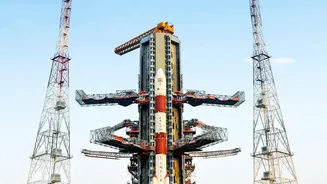
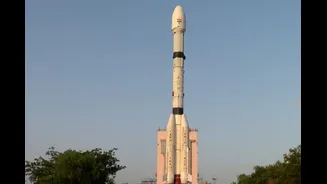
The Indian Space Research Organisation (ISRO) recorded a flawless launch in the early hours of September 4th. The 51.7-metre-tall Geosynchronous Satellite Launch Vehicle (GSLV), designated GSLV-F17, lifted off from the Satish Dhawan Space Centre as planned.
Approximately 18 minutes after its thunderous ascent, the rocket successfully placed its precious cargo, the EOS-05 satellite, into its intended sub-geosynchronous transfer orbit. The success was a welcome achievement for ISRO, marking its first successful mission of 2026 and demonstrating the reliability of its launch systems after recent setbacks. ISRO's chairman confirmed that all parameters were normal and the satellite's solar panels had deployed as expected, setting the stage for the next crucial phase of its journey.
The Eye in the Sky: Meet EOS-05
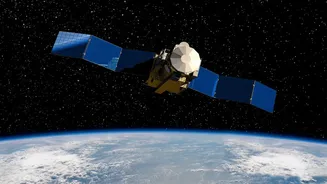
The star of the mission is EOS-05, a state-of-the-art Earth observation satellite. Weighing approximately 2,367 kg, it is the heaviest satellite ever launched by a GSLV into this type of orbit. What makes EOS-05 particularly special is that it is India's first imaging satellite designed to operate from a geosynchronous orbit, some 36,000 kilometres above the Earth. Unlike satellites in lower orbits that pass over a location periodically, a satellite in geosynchronous orbit remains largely fixed over one region. This will allow EOS-05 to provide near real-time, continuous monitoring of the Indian subcontinent, a brand new capability for the nation. The satellite is expected to have a mission life of at least seven to nine years.
The Workhorse Rocket: GSLV-F17
This mission was the 19th flight for the GSLV. The three-stage rocket is a cornerstone of India's space program, especially for launching heavier satellites. A key component is its indigenously developed cryogenic upper stage, which uses super-cooled liquid hydrogen and liquid oxygen as propellants. Mastering cryogenic technology is a major technological feat achieved by only a handful of nations, as it is incredibly complex but offers superior thrust and efficiency. The success of GSLV-F17, which once had the nickname "Naughty Boy" due to early inconsistencies, reaffirms India's self-reliance in launching heavy payloads without foreign assistance.
A Guardian for National Interests
The data from EOS-05 will have wide-ranging applications that directly benefit the nation. Its ability to provide frequent imaging of large areas will be invaluable for disaster management, offering early warnings and real-time monitoring of floods, cyclones, and forest fires. In agriculture, it will help in monitoring crop health, estimating acreage, and managing water resources. The satellite will also support urban planning and infrastructure development. Beyond these civilian uses, the satellite is intended for strategic applications, enhancing India's security by providing crucial imagery intelligence and border monitoring capabilities.
What This Means for India's Space Ambitions
The successful GSLV-F17/EOS-05 mission is more than just a single launch; it's a significant milestone. It places India in an elite club of countries with geostationary imaging capabilities. This success bolsters ISRO's reputation as a reliable and cost-effective launch service provider on the global stage. Furthermore, it clears the path for future ambitious projects. The ISRO chairman has already indicated that several more launches are planned for the financial year, including the first uncrewed mission for the Gaganyaan human spaceflight programme. This launch reinforces India's commitment to using space technology as a critical tool for national development and strategic autonomy.