





Our Familiar Four Dimensions
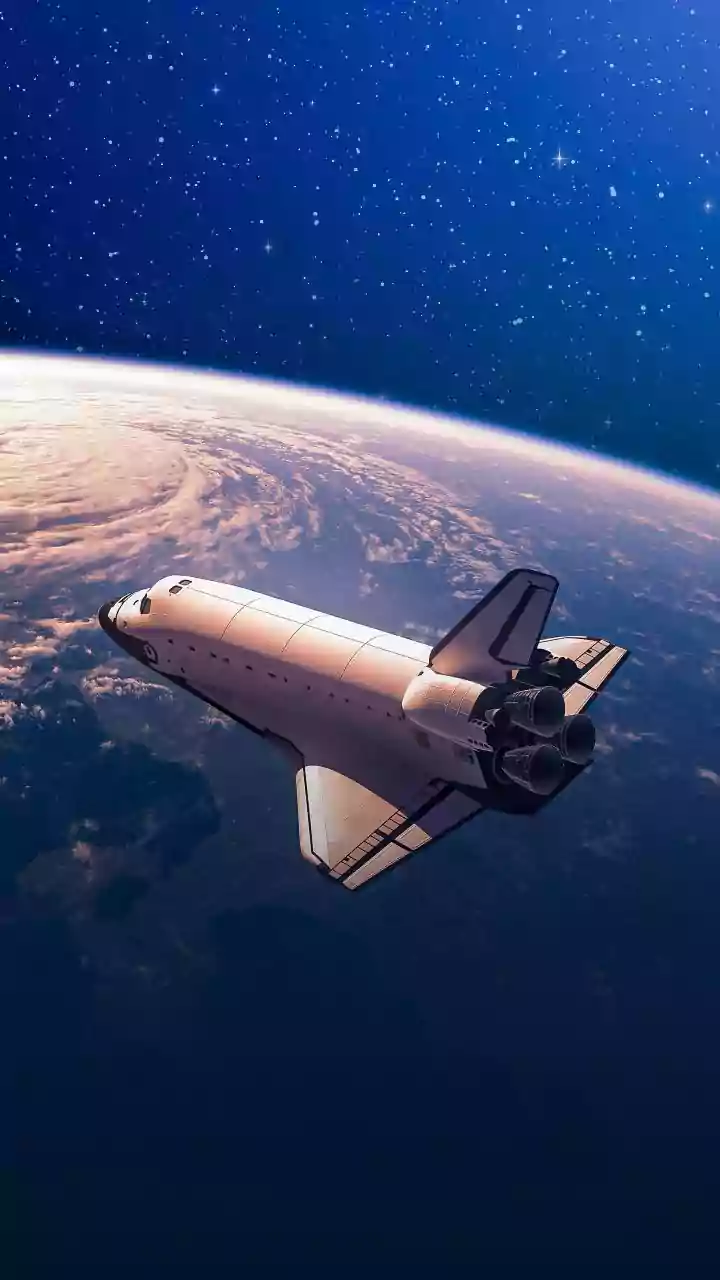
For centuries, we’ve understood our world through three dimensions of space: length, width, and height. You can move forward-backward, left-right, or up-down. In the early 20th century, Albert Einstein’s theory of relativity introduced time as a fourth
dimension, woven together with space to form a single continuum known as spacetime. In this framework, gravity isn't a force pulling you down, but a consequence of massive objects like planets and stars warping the very fabric of this four-dimensional reality. This picture has been incredibly successful, explaining everything from the orbit of Mercury to the existence of black holes and gravitational waves.
Cracks in the Standard Picture
Despite its power, the standard four-dimensional model of the universe has its limits. There are profound mysteries it can't quite solve. For instance, physicists can't explain why gravity is so much weaker than the other fundamental forces like electromagnetism and the nuclear forces. This is known as the hierarchy problem. Furthermore, astronomers have observed that about 85% of the matter in the universe is 'dark matter', an invisible substance we can only detect through its gravitational pull. Its true nature is one of the biggest puzzles in science. These unanswered questions have led some researchers to believe we need a new model, one that looks beyond our familiar four dimensions.
Introducing Extra Dimensions
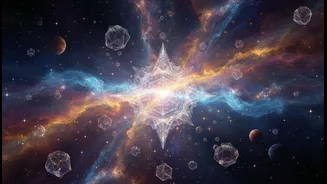
The idea of extra dimensions isn’t new. It dates back to the 1920s with Kaluza-Klein theory, which proposed a fifth dimension to unify gravity and electromagnetism. Today, the most famous of these ideas is string theory, which posits that the fundamental building blocks of reality aren't point-like particles but tiny, vibrating strings of energy. For the mathematics of string theory to work, it requires the universe to have more dimensions—typically 10 or 11 in total. So where are they? The leading idea is that these extra dimensions are 'compactified,' or curled up into a tiny geometric shape at every point in our space, too small for us to have ever noticed. Imagine an ant on a garden hose; from far away, the hose looks like a one-dimensional line, but up close, the ant knows it can also move around the circular dimension of the hose.
A Universe on a 'Brane'
A related and compelling concept is 'brane cosmology,' which comes from string theory's membranes, or 'branes'. This model suggests our entire four-dimensional universe is just one of these branes, floating in a higher-dimensional space called the 'bulk'. In this scenario, all the particles and forces we know—protons, electrons, light—are stuck on our brane. The one exception is gravity. The graviton, the particle that carries the gravitational force, is not confined and can 'leak' out into the bulk. This leakage would explain why gravity seems so weak to us; its influence is spread out across more dimensions than the other forces. This idea offers an elegant solution to the hierarchy problem.
Solving Cosmic Mysteries
Beyond explaining gravity's weakness, extra dimensions could hold the key to other puzzles. Some recent models propose that dark matter could exist in a hidden fifth dimension. In one new theory from the University of Sheffield, the specific geometry of this fifth dimension could create a 'resonance' that explains why dark matter interacted strongly in the early universe but is so hard to detect today. Other theories suggest that collisions between different branes in the higher-dimensional bulk could have triggered the Big Bang, offering an alternative to the traditional singularity. While still highly speculative, these models provide tantalizing frameworks for solving some of physics' most stubborn problems.
The Hunt for Hidden Realities
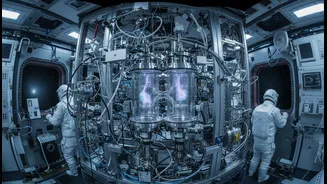
For now, these extra dimensions remain theoretical. Physicists are actively searching for evidence to prove their existence. At the Large Hadron Collider (LHC), scientists are looking for signs of particles disappearing into other dimensions or even the creation of microscopic black holes, which could form at lower energies if gravity becomes stronger at small scales. Other experiments are conducting ultra-precise measurements of gravity at sub-millimeter distances to see if it deviates from what's expected, which could signal its force leaking into large extra dimensions. While no definitive proof has been found, these experiments are pushing the boundaries of our knowledge and could one day reveal a universe far stranger and more complex than the one we perceive.