





The Theory of a Molten Moon
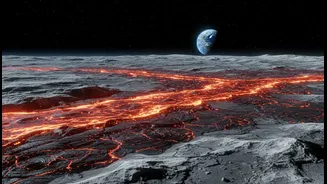
For decades, scientists have theorized about the Moon's fiery beginnings through the 'Lunar Magma Ocean' (LMO) hypothesis. This theory suggests that shortly after the Moon formed, likely from debris created when a Mars-sized object slammed into a young
Earth, it was a colossal, swirling ball of molten rock. As this global magma ocean began to cool over millions of years, a process of differentiation occurred. Heavier minerals, rich in iron and magnesium, sank to form the Moon's mantle, while lighter minerals, predominantly a rock type called anorthosite, floated to the top, solidifying to create the Moon's primordial crust. While samples from previous Apollo and Luna missions provided initial support for this idea, they were all collected from equatorial and mid-latitude regions, leaving the polar regions as a massive missing piece of the puzzle.
Chandrayaan-3's Crucial Evidence
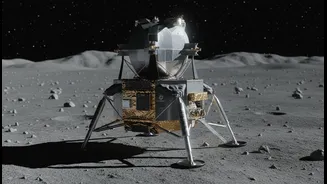
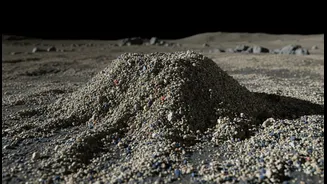
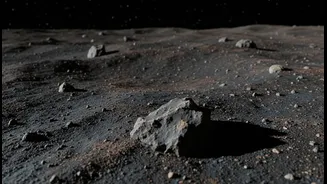
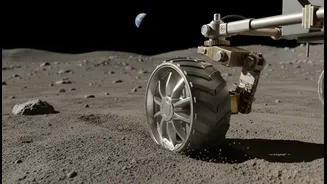
Enter Chandrayaan-3. By successfully landing near the lunar south pole, a first for any nation, ISRO placed its instruments in a completely unexplored territory. The Pragyan rover, equipped with an Alpha Particle X-ray Spectrometer (APXS), got to work analysing the chemical composition of the soil at the landing site, named Shiv Shakti Point. Researchers from the Physical Research Laboratory (PRL), Ahmedabad, and ISRO found that the soil was predominantly made of ferroan anorthosite, the same light, crustal rock predicted by the LMO hypothesis. The discovery that this rock type is also found at the south pole, just as it is in the equatorial regions sampled decades ago, provides powerful evidence that the anorthosite crust was a global phenomenon, strongly supporting the idea of an initial worldwide magma ocean.
A Surprising Discovery in the Soil
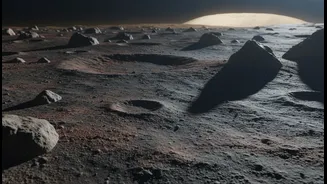
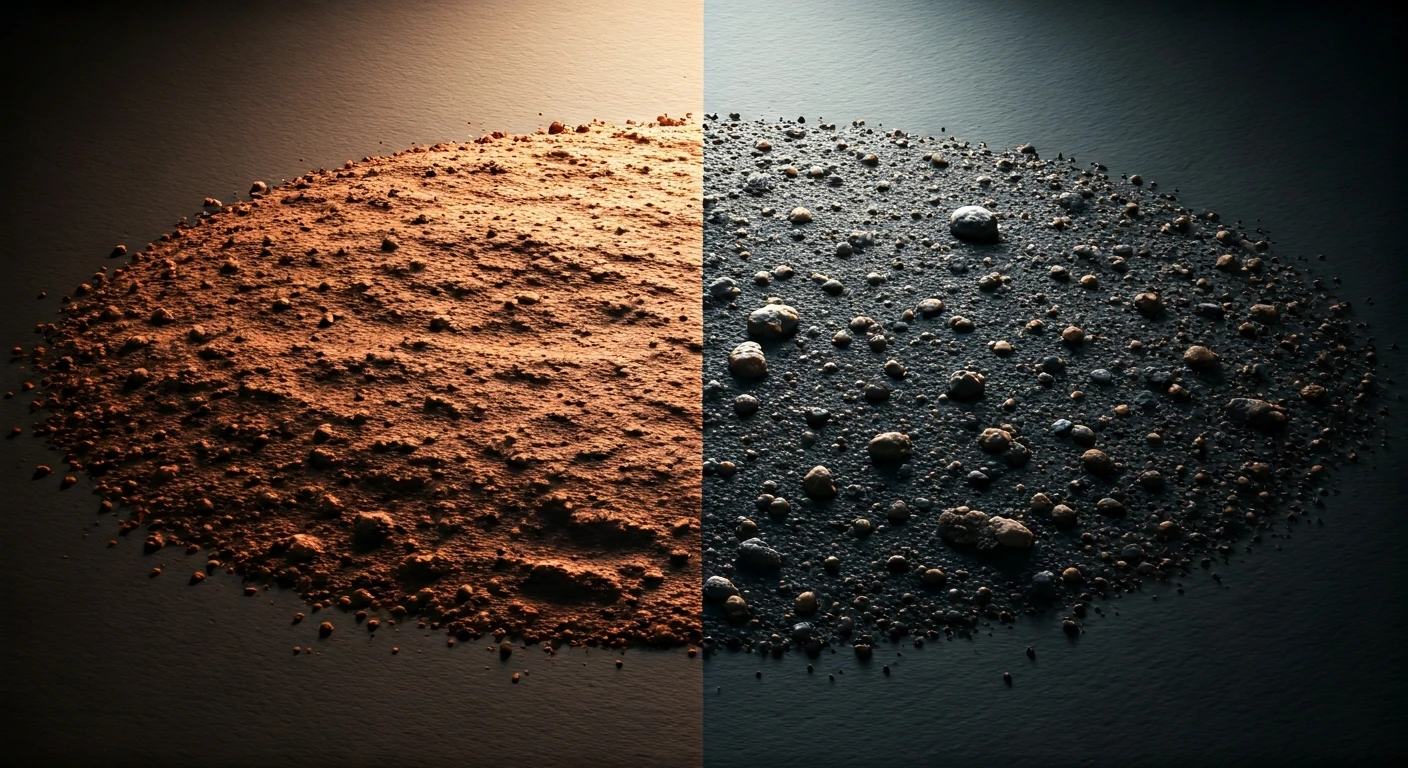
The APXS data held another surprise. The soil at Shiv Shakti Point contained a higher concentration of magnesium than expected for typical lunar crust. Scientists believe this points to a violent past. The landing site is relatively close (about 350 km) to the massive South Pole-Aitken Basin, one of the largest and oldest impact craters in the solar system. The colossal impact that created this basin billions of years ago would have been powerful enough to excavate material from the Moon's deeper, magnesium-rich mantle and scatter it across the surface. This means the soil Pragyan analysed is a mixture of the original crust and deeper mantle material, providing a rare window into the Moon's interior layers.
Linking the Moon to Earth
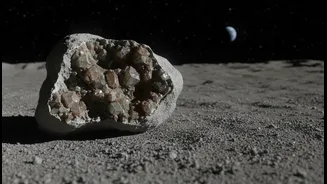
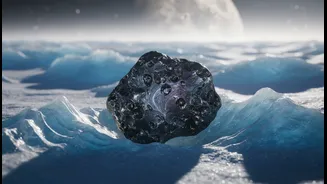
In a fascinating development, scientists compared the chemical makeup of the Shiv Shakti Point soil to the 66 known lunar meteorites found on Earth. They found a near-perfect match with a meteorite named ALHA 81005, which was discovered in Antarctica in 1981 and was the very first rock to be identified as originating from the Moon. While this doesn't mean the meteorite came from that exact spot, it shows that both the landing site and the meteorite represent a similar type of magnesium-rich crust. This groundbreaking link helps connect samples we have on Earth to specific geological regions on the Moon, a long-standing challenge for planetary scientists. It opens up new ways to understand the Moon's ancient crust and the history recorded in these celestial visitors.