



The Western Welcome: Dal Bati Churma
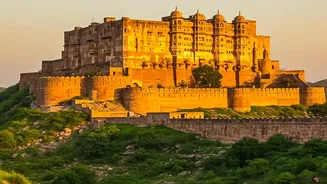
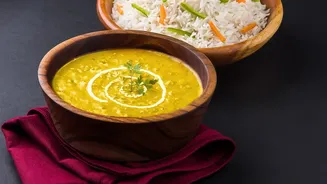
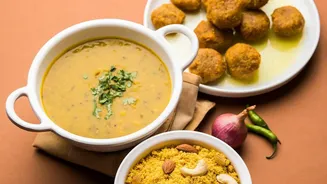
Our journey begins in the arid landscapes of Rajasthan, with a dish that is as robust as its history: Dal Bati Churma. This isn't just a meal; it's a trio of textures and tastes that represents Rajasthani hospitality. The 'Dal' is a fragrant curry made
from a mix of lentils, simmered with spices like cumin, asafoetida, and garlic. The 'Bati' are hard, round wheat rolls, traditionally baked in a clay oven or over hot coals, giving them a distinctively smoky flavour and a crisp exterior that gives way to a soft inside. The final piece, 'Churma', is a sweet, crumbly dessert made by crushing the baked bati and mixing it with generous amounts of ghee and jaggery or sugar. This dish was historically a perfect meal for warriors, as the batis could be cooked in the sand and would last for days. Today, it's a centrepiece of celebrations like Makar Sankranti and weddings, a hearty dish best enjoyed by breaking the bati, drenching it in dal and ghee, and savouring the wholesome goodness.
The Northern Delight: Holi's Gujiya
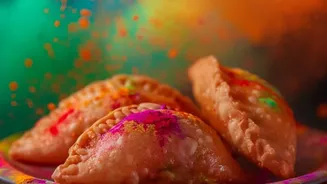
Traveling north, the festival of Holi would be incomplete without the sight and taste of Gujiya. These crescent-shaped sweet dumplings are the undisputed stars of the festival of colours. Each Gujiya is a flaky pastry parcel, typically made from refined flour, filled with a rich mixture of khoya (milk solids), grated coconut, and finely chopped nuts like almonds and pistachios, all sweetened and scented with cardamom. The process of making them is a communal activity in many households, bringing families together in the days leading up to Holi. While deep-fried to a perfect golden-brown crispness, modern, health-conscious variations include baked versions. The origins of Gujiya are debated, with some tracing it back to ancient Indian texts mentioning a similar sweet called 'karanika', while others suggest a connection to the Turkish Baklava. Regardless of its history, the act of sharing Gujiyas embodies the spirit of Holi—a moment of sweet, joyful connection.
The Southern Feast: Onam Sadya and Payasam
Further south in Kerala, the harvest festival of Onam is celebrated with a magnificent vegetarian feast called the Onam Sadya. It’s more than a meal; it's a ritual and an elaborate culinary masterpiece served on a banana leaf, often featuring over 26 different dishes. The Sadya is a symphony of flavours, from tangy pickles and spicy curries to cooling pachadis (yoghurt-based dishes) and crunchy banana chips. At the heart of the spread is red rice, accompanied by dishes like Sambar, Avial (mixed vegetables in coconut), and Rasam. This feast represents abundance and equality, served to honour the mythical King Mahabali. But no Sadya is complete without Payasam, a sweet pudding that serves as the dessert. There are many varieties, from the rice-based 'Paal Payasam' to the lentil-based 'Parippu Pradhaman'. This sweet, fragrant conclusion to the grand meal leaves one with a feeling of contentment that perfectly captures the spirit of Onam.
The Central Sweetheart: Puran Poli in Maharashtra
In the heart of western and central India, especially Maharashtra, festivals like Ganesh Chaturthi and Holi are marked by the comforting aroma of Puran Poli. This sweet flatbread is a lesson in balance and technique. The 'Puran' is a soft, sweet filling made from cooked chana dal and jaggery, delicately flavoured with cardamom and nutmeg. This filling is encased in a thin dough 'Poli' made of wheat flour and rolled out carefully to ensure the stuffing spreads evenly without tearing the bread. Cooked on a griddle with a generous amount of ghee until it's golden and puffed, Puran Poli is soft, fragrant, and melts in the mouth. It represents both indulgence and the patience required to prepare it, making it a fitting offering during festive occasions that bring families together. It's often served warm, sometimes with a side of milk or a savoury curry called Katachi Amti.
The Eastern Treasure: Odisha's Chhena Poda
Our culinary tour concludes in the east, in Odisha, with a dessert born from a happy accident: Chhena Poda. The name literally translates to 'burnt cheese', and it is often called India's answer to cheesecake. It is believed to have been invented in the 20th century in the town of Nayagarh by a confectioner named Sudarshan Sahoo, who left leftover sweetened chhena (fresh cottage cheese) in a warm oven overnight. The next day, he discovered a dessert with a beautifully caramelised, dark brown crust and a soft, creamy interior. Made from fresh, well-kneaded cottage cheese, sugar, and sometimes nuts and cardamom, Chhena Poda is slow-baked for several hours to achieve its signature texture and smoky flavour. It is a favourite offering to Lord Jagannath at the Puri temple and is integral to festivals like Durga Puja and Rath Yatra. Its unique taste—a delightful contrast between the bitter, caramelised crust and the sweet, milky crumb—makes it a revered icon of Odia cuisine.