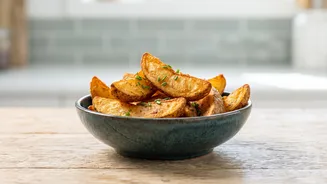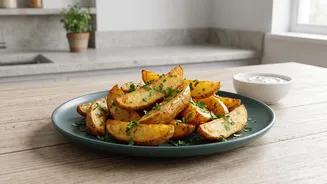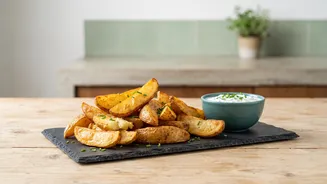





The Foundation of a Great Wedge
The perfect potato wedge has a crispy, golden-brown exterior that gives way to a fluffy, steamy interior. Achieving this texture isn't about luck; it's about technique. Many homemade attempts fail due to the wrong potato choice or improper preparation,
leading to a greasy, limp result. The first step to greatness is selecting the right potato. High-starch varieties like Russet or Maris Piper are ideal. Their low moisture content and dense texture are perfect for creating that desirable contrast between a crunchy shell and a soft inside. Waxy potatoes, while great for boiling, tend to hold too much water and won't crisp up as effectively in the oven.
Prep Work for Perfect Crispiness
Once you have your potatoes, the next critical step is preparation. For uniform cooking, cut the potatoes into even-sized wedges, about half an inch thick. This ensures they all cook at the same rate. Here’s a professional tip: soak the cut wedges in a bowl of cold water for at least 30 minutes. This process draws out excess starch from the surface of the potatoes. Less starch means less gumminess and a far crispier final product. After soaking, it is absolutely essential to pat the wedges completely dry with a clean towel or paper towels. Water is the enemy of crispiness; any remaining moisture will cause the wedges to steam in the oven instead of roast.
Building Flavour with Garlic
Garlic is a powerhouse of flavour, but it requires careful handling when roasting at high temperatures. Fresh minced garlic can easily burn, leaving an acrid, bitter taste. To avoid this, a two-stage approach works wonders. When you first toss the dry wedges with olive oil, use garlic powder instead of fresh garlic. Garlic powder distributes evenly and infuses the potatoes with a deep, roasted garlic flavour throughout the baking process. It’s robust enough to handle the high heat required for crispy wedges. The pungent kick of fresh garlic isn't lost; it’s simply saved for the end. We'll come back to that.
The High-Heat Bake
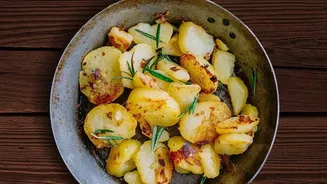
To achieve that coveted crunch, a hot oven is non-negotiable. Preheat your oven to a high temperature, around 220°C (425°F). Spread the seasoned wedges in a single layer on a baking sheet lined with parchment paper, ensuring they don't touch or overlap. Overcrowding the pan traps steam, which is the primary cause of soggy wedges. Roasting them cut-side down, at least for the first half of baking, maximizes contact with the hot pan and creates a beautifully caramelized crust. Bake for 30-40 minutes, flipping them halfway through, until they are golden brown and crispy on all sides.
The Fresh Finish with Basil
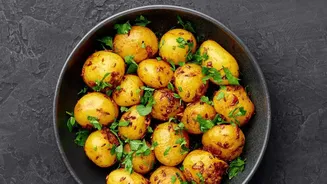
This is where the magic happens. Unlike hardy herbs like rosemary, fresh basil is delicate and its aromatic oils are quickly destroyed by intense heat. Adding it at the beginning of the roasting process would leave you with wilted, flavourless specks. Instead, the basil is added at the very end. Once the wedges are hot and crispy out of the oven, it's time to introduce the fresh elements. You can create a simple finishing sauce by mixing finely minced fresh garlic and chopped fresh basil with a little olive oil. Tossing the hot wedges in this mixture immediately after baking allows the residual heat to gently warm the garlic and release the basil's vibrant, peppery aroma without cooking it. The result is a multi-layered flavour experience: deep, roasted notes from the garlic powder and a bright, fresh finish from the basil and raw garlic.