






Myth: Honey Isn't Really Sugar
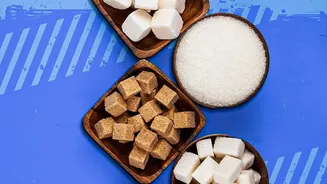
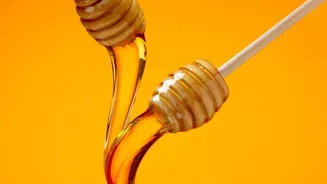
This is the most common misconception. While honey feels more wholesome, it is, at its core, a sugar. In fact, honey is composed of about 80% sugar, primarily two simple sugars: fructose and glucose. Table sugar, or sucrose, is made of the same two components,
just bonded together. The key difference is that bees add enzymes to nectar that pre-digest the sucrose, splitting it into separate fructose and glucose molecules. This makes honey slightly easier for our bodies to absorb, but from a chemical and caloric standpoint, it's still very much a sugar. A tablespoon of honey even contains slightly more calories than a tablespoon of granulated sugar—about 64 compared to 49—simply because it's denser.
Reality: It Has a Slightly Better Impact on Blood Sugar
One of the main arguments for honey is its effect on blood glucose. This is measured by the glycemic index (GI), which ranks how quickly a food raises blood sugar levels. Table sugar has a GI of around 65. Honey's GI is typically a bit lower, averaging around 58, though it can vary widely depending on the type of flower the nectar came from. This modest difference means honey may cause a slightly slower and smaller rise in blood sugar compared to white sugar. This is partly due to its higher fructose content, which is processed by the liver rather than entering the bloodstream directly. However, it still significantly impacts blood sugar and should be consumed with care, especially by individuals with diabetes or insulin resistance.
Myth: The Health Benefits Outweigh the Sugar Content
Honey, especially raw and less-processed varieties, does contain beneficial compounds that table sugar lacks. It's a source of antioxidants, including flavonoids and phenolic acids, which help fight cellular damage in the body. It also possesses natural antibacterial and anti-inflammatory properties and contains trace amounts of vitamins, minerals, and enzymes. However, there's a catch: these beneficial compounds exist in very small quantities. To get a significant dose of these nutrients, you would have to consume a large amount of honey, which would also mean consuming an unhealthy amount of sugar. Therefore, while these benefits are a nice bonus, they don't give you a free pass to ignore the sugar content.
Reality: It Still Counts Towards Your Daily Sugar Limit
Health organisations like the World Health Organization (WHO) make it clear that the body doesn't distinguish between different sources of 'free sugars'. This category includes sugars added to food and drinks, as well as sugars naturally present in honey, syrups, and fruit juices. The WHO recommends that free sugars should make up less than 10% of your total daily energy intake, which is about 50 grams (or 10 teaspoons) for an average adult. For additional health benefits, they suggest reducing this further to below 5% (about 25 grams or 6 teaspoons). Every spoonful of honey you add to your tea or yogurt counts towards this daily limit, just like any other sugar.
The Final Verdict: A Healthier Choice, But Not a Health Food
So, is honey healthier than sugar? Yes, marginally. Its trace nutrients, antioxidant properties, and slightly lower glycemic index give it a slight edge over refined white sugar, which provides only 'empty calories'. Because honey is often sweeter than sugar, you might also find yourself using less of it to achieve the same level of sweetness, which can be a small calorie-saving advantage. However, it is not a 'health food' to be consumed freely. Thinking of it as a better-for-you version of sugar is the most accurate approach. Use it for its unique flavour and the minor benefits it offers, but always treat it as what it is: a sweetener to be enjoyed in moderation.