








The Deal in a Nutshell
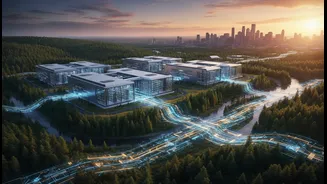
Meta is building its first Canadian AI data centre, a massive facility in Sturgeon County, Alberta. To power this digital fortress, it has signed a long-term agreement with a consortium including Pembina Pipeline. This group will build, own, and operate
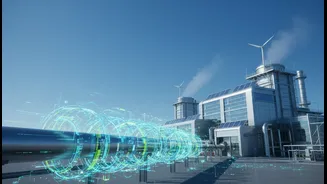
the Greenlight Electricity Centre, a 932-megawatt combined-cycle natural gas power plant designed to supply dedicated, reliable electricity directly to Meta's campus starting around 2030. This is what's known as a 'behind-the-meter' project, meaning the power generation is built specifically for the customer, helping to avoid straining the public electricity grid. The deal is part of a larger trend where tech giants are directly funding the energy infrastructure needed to power their expansion.
The Insatiable Thirst for Power
The engine driving this decision is the explosive growth of artificial intelligence. AI models require enormous amounts of computational power, which translates to a staggering demand for electricity. Data centres, the physical brains of the internet, are incredibly power-hungry, and AI-focused facilities even more so. Projections show electricity consumption from data centres is set to skyrocket, potentially doubling by 2030, largely due to AI. Companies like Meta are in a global race to build out their AI capacity, but they are increasingly running into a physical bottleneck: a shortage of available, reliable power.
Renewables Meet Reality
So, why not just build more solar panels and wind turbines? While Meta and other tech companies are major investors in renewable energy, those sources face a significant challenge: intermittency. The sun doesn't always shine, and the wind doesn't always blow. For a data centre that needs to operate 24/7 without fail, this is a critical problem. A power outage could be catastrophic. This requires a source of 'firm' or 'dispatchable' power—one that can be turned on and off as needed to guarantee an uninterrupted supply. At present, large-scale battery storage is still developing, and other options like advanced nuclear are years away from widespread commercial use. This leaves a gap that needs to be filled now.
Natural Gas as the 'Bridge' Fuel
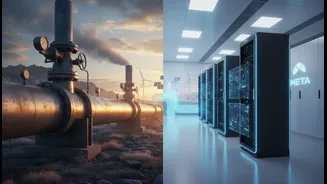
This is where natural gas comes in. In the context of the energy transition, many companies and governments view it as a 'bridge fuel.' It is a fossil fuel, but it emits significantly less carbon dioxide than coal when burned. A modern combined-cycle gas plant, like the one Pembina is building, can provide the constant, reliable power that data centres demand. For Meta, this appears to be a pragmatic compromise between its operational needs and its long-term climate goals. The Alberta government has actively encouraged this model, requiring large power users like data centres to secure their own generation to protect the provincial grid. This isn't an isolated incident; Meta is pursuing similar strategies in the US, funding the construction of multiple natural gas plants to power a massive AI campus in Louisiana.
Criticism and the Bigger Picture
The move has, unsurprisingly, drawn criticism from environmental groups. The Pembina Institute, a Canadian clean energy think tank, noted the new data centre will consume more power than the entire city of Calgary and argued the deal structurally locks in demand for natural gas. Greenpeace Canada has called for a moratorium on such 'megadata centres' until stronger environmental protections are in place. This deal highlights the central tension of the modern digital economy: our demand for powerful AI and cloud services is growing exponentially, but our ability to power it with purely green energy hasn't kept pace. The Meta-Pembina partnership is a clear sign that, for the foreseeable future, tech's green ambitions will continue to collide with hard operational realities.