
The Grand Vision of Gaganyaan
At its core, the Gaganyaan mission aims to launch a crew of three astronauts into a Low Earth Orbit of 400 kilometres. They will spend three days in space before returning safely to Earth, splashing down in the Indian Ocean. More than just a single flight,
Gaganyaan is a comprehensive programme designed to build a robust and sustainable foundation for all future Indian human spaceflight endeavours. It represents a monumental leap in India's technological prowess, involving the development of critical new systems, extensive testing, and the establishment of dedicated infrastructure to support human missions. The long-term vision extends to establishing the 'Bharatiya Antariksh Station' (Indian Space Station) by 2035 and a crewed lunar landing by 2040.
The Powerhouse: A Human-Rated LVM3 Rocket
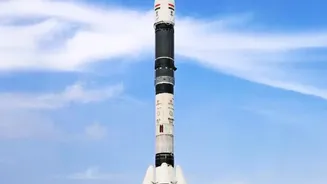
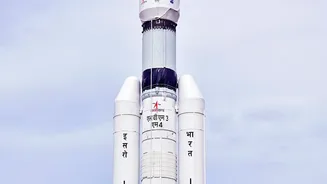
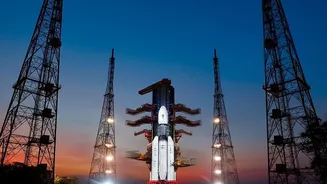
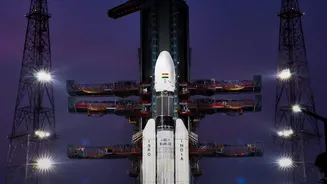
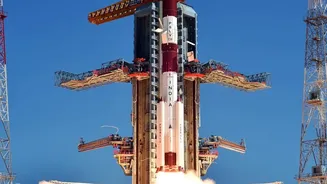
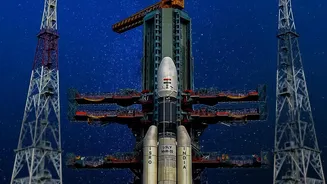
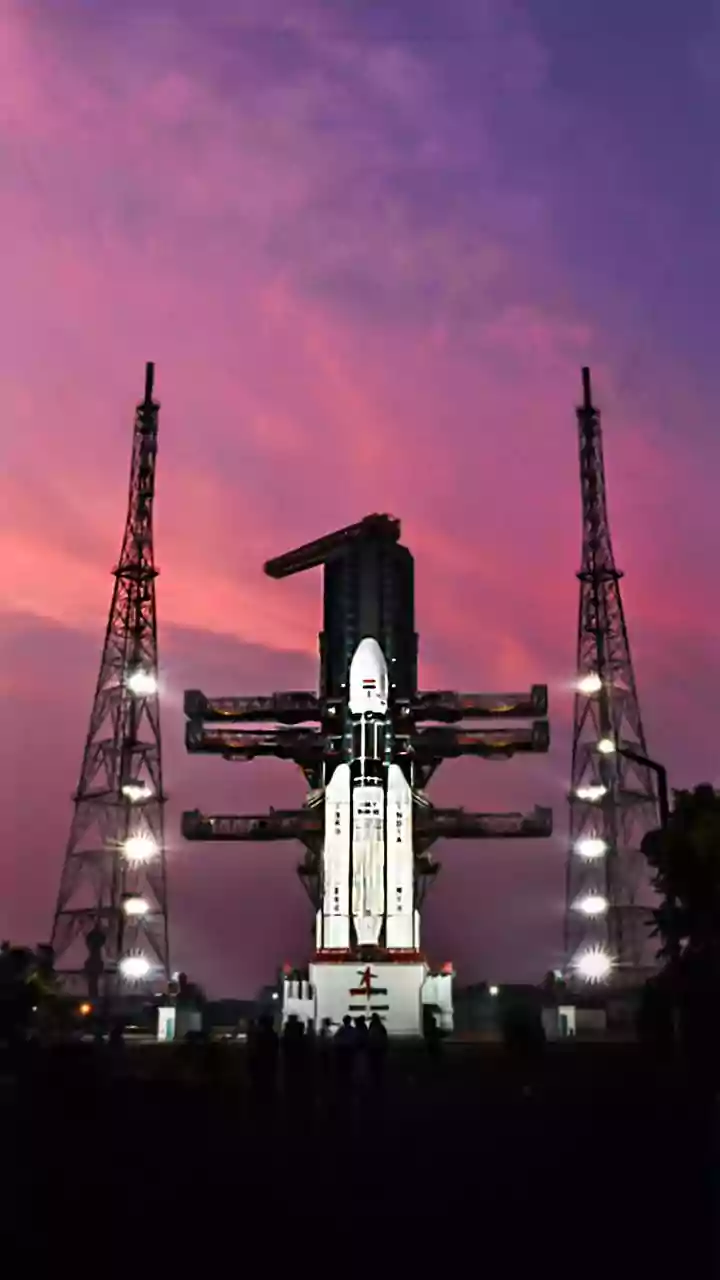
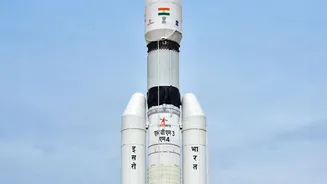
Lifting the crew into orbit requires a launch vehicle of immense power and, more importantly, unwavering reliability. For this task, ISRO has chosen its most powerful rocket, the Launch Vehicle Mark-3 (LVM3), previously known as the GSLV Mk III. This three-stage rocket, with its solid, liquid, and cryogenic stages, has been meticulously re-engineered to meet the stringent safety standards required for human spaceflight, earning it the designation 'Human-Rated LVM3' (HLVM3). The vehicle has undergone rigorous ground testing of its propulsion and structural systems to ensure it can safely carry the Orbital Module and its precious human cargo into space.
The Orbital Module: A Home in Space
The astronauts' home and command centre in orbit will be the Orbital Module, which consists of two main parts. The Crew Module is the habitable space where the astronauts will live and work. This conical capsule is equipped with life support systems, avionics, and navigation technology. Attached to it is the Service Module, which provides the necessary propulsion, power, and thermal control to support the Crew Module during its orbital phase. ISRO is indigenously developing a sophisticated Environmental Control and Life Support System (ECLSS) to maintain a habitable environment by regulating temperature, pressure, and air quality inside the capsule. Upon re-entry, the Service Module separates, and the Crew Module alone makes the fiery descent back to Earth.
Safety First: The Crew Escape System
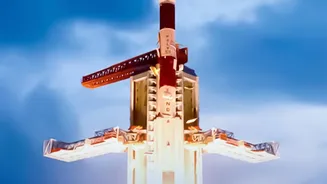
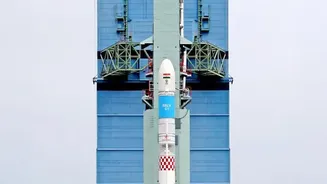
Astronaut safety is the absolute highest priority of the Gaganyaan mission. A critical piece of safety hardware is the Crew Escape System (CES). This system is an emergency measure designed to pull the Crew Module and its occupants away from the launch vehicle in the event of a catastrophic failure on the launchpad or during ascent. Powered by a set of quick-acting solid motors, the CES can rapidly propel the crew to a safe distance. ISRO has conducted a series of demanding tests to validate this system, including a Pad Abort Test in 2018 and the successful TV-D1 mission in October 2023, which demonstrated an in-flight abort during the challenging transonic phase of flight. These tests prove the system's capability to rescue the crew under the most critical scenarios.
Training India's 'Vyomanauts'
The individuals selected for this historic mission are highly experienced test pilots from the Indian Air Force. A group of four astronaut-designates have already completed extensive training at Russia's Gagarin Cosmonaut Training Center, which involved everything from survival training to simulations of extreme G-forces and weightlessness. This rigorous preparation is designed to equip them physically and mentally for the incredible challenges of spaceflight. Their ongoing training now continues at ISRO's own Human Space Flight Centre in Bengaluru, ensuring they are fully prepared for every phase of their upcoming mission.