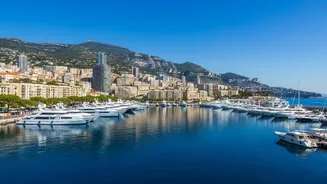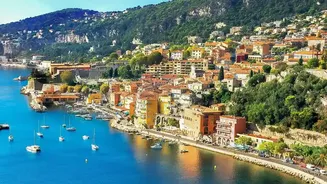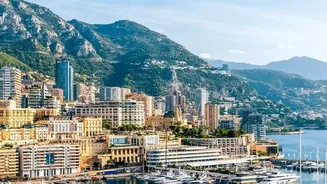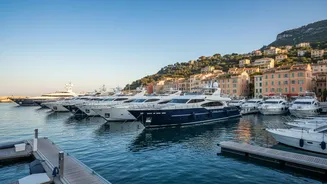







The Land of No Income Tax
For its residents, Monaco offers a reality that sounds like a fantasy: zero personal income tax. This isn't a recent development but a policy that dates back to 1869. Residents of Monaco do not pay tax on their salaries, investment income, capital gains,
or dividends. This policy applies to all residents, with one notable exception for French nationals due to a bilateral treaty. There is also no wealth tax, annual property tax, or council tax, making it a highly attractive destination for the world's affluent individuals. The core idea is simple: attract high-net-worth individuals who will spend money and invest locally, thereby stimulating the economy without needing to tax their income directly.
A Different Reality: The Indian Taxpayer’s Ledger
The Indian tax system operates on a completely different philosophy. It is built on the principle of progressive taxation, where tax rates increase as income rises. For the assessment year 2026-27, most salaried individuals face a deadline of July 31 to file their returns on income earned in the previous financial year. This system uses various tax slabs, with rates climbing progressively. On top of this, surcharges and a health and education cess apply to higher income brackets, making the effective highest marginal rate one of the more significant ones globally. This revenue is the lifeblood of the nation, funding everything from infrastructure and public health to defence and education.
The Catch: Gaining Residency in Monaco
Living this tax-free dream isn't as simple as just moving in. Gaining residency in Monaco is a rigorous process designed to ensure that only financially self-sufficient individuals are approved. An applicant must prove they have accommodation in the principality, which means either renting or buying property in one of the world's most expensive real estate markets. Furthermore, they must demonstrate financial self-sufficiency. While there is no statutory minimum, this typically involves depositing a substantial sum—often cited as €500,000 or more—into a Monaco bank account. Finally, a thorough background check for a clean criminal record is mandatory.
Not Entirely Tax-Free
While the absence of income tax is the main draw, it's a misconception that Monaco is entirely tax-free. The principality has other revenue streams. It levies a Value Added Tax (VAT) on goods and services, with a standard rate of 20%, aligned with the French system. There's also a tax on business profits for companies that generate more than 25% of their turnover outside Monaco. Additionally, inheritance tax applies to assets located within Monaco, though the rates are a modest 0% for direct descendants and spouses, scaling up to 16% for unrelated persons. Registration duties and stamp taxes also apply to property transactions and legal documents.
Two Nations, Two Philosophies
The contrast between India's and Monaco's tax models is more than just a matter of numbers; it reflects fundamentally different societal and economic structures. India's system, common in large, populous democracies, is designed to gather resources from a broad base of earners to fund extensive public services and welfare programs for its vast population. It is a system of collective contribution for collective benefit. Monaco's model, on the other hand, is a strategic choice for a tiny city-state. By forgoing income tax, it has successfully positioned itself as an exclusive haven for the ultra-wealthy, creating a high-spending, luxury-driven economy that sustains itself without needing to tax personal earnings.