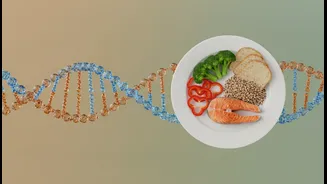








The Promise of a Personalised Plate
In the world of wellness, a new trend has gained significant traction: nutrigenomics, or the use of genetic testing to determine the ideal diet for an individual. Companies offer to analyse your saliva sample and provide a detailed report on how your body
is genetically predisposed to process fats, carbohydrates, and various micronutrients. The sales pitch is powerful, suggesting a future where guesswork is eliminated and your meals are optimised for your biology. For anyone who has struggled with generic diet advice that doesn't seem to work, the concept of a plan made just for you is incredibly appealing. It taps into our desire for certainty and a high-tech solution to the age-old challenge of maintaining a healthy weight and lifestyle.
What the Science Actually Says
While the idea is compelling, the current scientific evidence does not support the hype. The field of nutrigenomics is still in its infancy, and the links between most genes and their effect on diet are not strong enough to make definitive recommendations. A landmark study from Stanford University, known as DIETFITS, provides the most powerful counter-argument. Researchers put over 600 overweight adults on either a healthy low-fat or a healthy low-carbohydrate diet for a year. They also genotyped the participants to see if certain genetic makeups would favour one diet over the other. The results were clear: there was no significant difference in weight loss between the two diet groups. More importantly, a person's genetic profile did not predict whether they would be more successful on a low-fat or low-carb plan. The average weight loss was nearly identical for both diets, around 12 to 13 pounds.
The Real Secret: Consistency Is King
So if a perfect genetic match isn't the secret, what is? The data points overwhelmingly to one factor: adherence. Multiple studies have shown that the best diet is simply the one a person can stick with over the long term. Whether it's low-fat, low-carb, Mediterranean, or another plan, consistency trumps the specific composition of the diet. The DIETFITS study itself had a huge range of results within each group, with some participants losing over 60 pounds and others gaining 20. The researchers concluded that this variability had little to do with genetics and more to do with how well each person was able to adhere to their assigned plan. Choosing a healthy eating pattern that you genuinely enjoy and can integrate into your life is far more effective than trying to follow a theoretically “perfect” plan that feels restrictive and unsustainable.
Principles That Actually Work
Instead of spending money on a genetic test that provides weak recommendations, experts suggest focusing on foundational principles that have been proven to work. The DIETFITS study emphasised a high-quality diet for both groups, encouraging participants to eat whole foods, plenty of vegetables, and to cook at home whenever possible, while avoiding added sugars and refined grains. Other key predictors of long-term weight management include regular physical activity, aiming for about 200-300 minutes of moderate exercise per week. A high-fiber, high-protein diet is also strongly associated with success, as it promotes satiety and helps maintain muscle mass. Ultimately, success is built on behaviours like self-monitoring, having strong internal motivation, and maintaining a positive body image focused on health rather than just weight.
When Genetics Do Play a Role
This is not to say that genetics are completely irrelevant to nutrition. There are specific, well-established medical conditions where genetic testing is crucial. For example, people with phenylketonuria (PKU) have a mutation that prevents them from processing a specific amino acid, requiring a strict diet. Similarly, genetic tests can confirm celiac disease or a predisposition to lactose intolerance, guiding necessary and effective dietary changes. However, these are clear-cut cases involving single genes with a powerful effect. This is vastly different from the complex, multi-gene interactions that supposedly determine your ideal intake of fat or carbohydrates, for which the science remains weak and inconclusive for the general population.