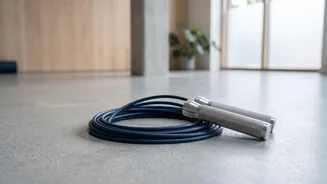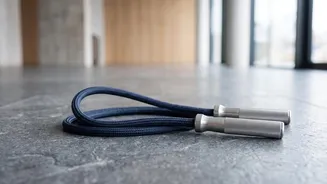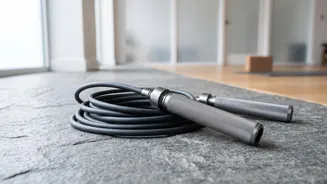






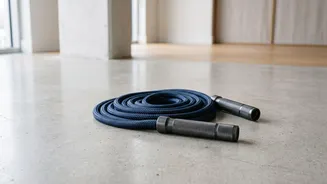

When it comes to simple, effective cardio, running and jumping rope are two of the most popular choices. But beyond just burning calories, which one is better for developing the kind of coordination and footwork that benefits you in everyday life?
The Coordination and Footwork Challenge
Jumping
rope is fundamentally a lesson in rhythm and timing. It forces a high level of coordination between your eyes, hands, and feet, all working together to maintain a steady cadence. This constant, repetitive practice sharpens your neuromuscular pathways, improving agility, balance, and the ability to make quick, precise movements. Athletes in sports like boxing and basketball have long used jump ropes to enhance their footwork and reaction time. Running, while also requiring coordination, involves a more linear and natural movement pattern for most people. While it improves intermuscular coordination, making your stride more efficient, it doesn't challenge your hand-eye-foot synchronicity in the same way. For pure footwork control and developing quickness, jump rope has a distinct advantage.
Cardiovascular Health and Calorie Burn
Both activities are excellent for cardiovascular health. However, in a head-to-head comparison of efficiency, jumping rope often comes out on top. Research has shown that just 10 minutes of jumping rope can offer similar cardiovascular benefits to 30 minutes of jogging. When it comes to burning calories, jump rope is more calorie-dense per minute. A person of average weight can burn between 10 to 16 calories per minute jumping rope, which is comparable to running at a fast pace. The reason for this is that jumping rope engages the upper body, core, and lower body simultaneously, making it a more complete full-body workout than running, which is primarily a lower-body exercise.
Impact on Joints and Injury Risk
This is a critical point of difference. Running is a high-impact activity, with studies showing a significant yearly injury rate among runners. The repetitive pounding on hard surfaces like pavement can put considerable stress on the ankles, knees, and hips. While jumping rope is also an impact exercise, proper form makes it significantly lower-impact. When jumping correctly—on the balls of your feet with only a slight bend in the knees—your legs act as natural shock absorbers, reducing the strain on your joints. This makes it a potentially safer alternative for individuals with joint sensitivities or those looking to prevent overuse injuries. Furthermore, jumping rope strengthens the muscles and connective tissues around the joints, which can help reduce the risk of injury in other activities.
From Workout to Everyday Life
The benefits of both exercises extend beyond the workout itself. The endurance built from running can make daily tasks like climbing stairs or carrying groceries feel easier. However, the specific skills gained from jumping rope are uniquely transferable to everyday agility. The improved balance, coordination, and quick reflexes can help you react faster if you stumble, navigate a crowded space more easily, or simply feel lighter and more controlled on your feet. The constant need to re-establish balance with each jump builds a kind of functional strength and body awareness that is useful in countless daily scenarios.
Accessibility, Cost, and Convenience
Both exercises are highly accessible. Running is technically free, though good running shoes are a wise investment to prevent injury. It requires outdoor space or access to a treadmill. A jump rope is an inexpensive, portable piece of equipment that you can use almost anywhere with a few square feet of space and a suitable surface. This makes it incredibly convenient for home workouts or travel. The main barrier to entry for jumping rope is the learning curve; it requires more skill and practice for a beginner to maintain a continuous workout compared to running.