


A Discovery on Mount Sharp
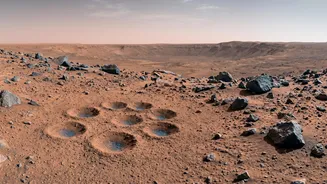
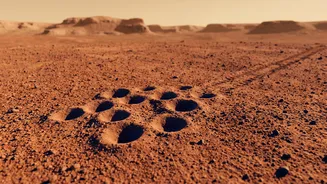
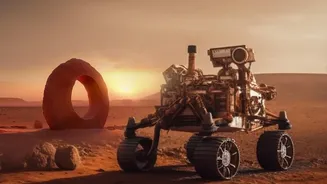
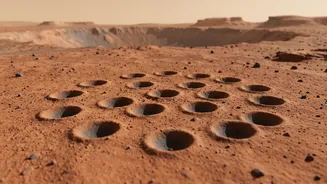
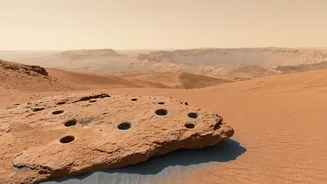
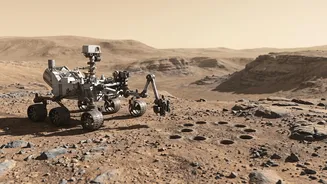
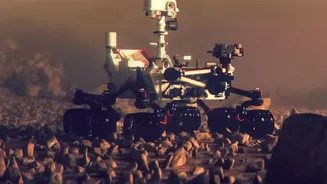
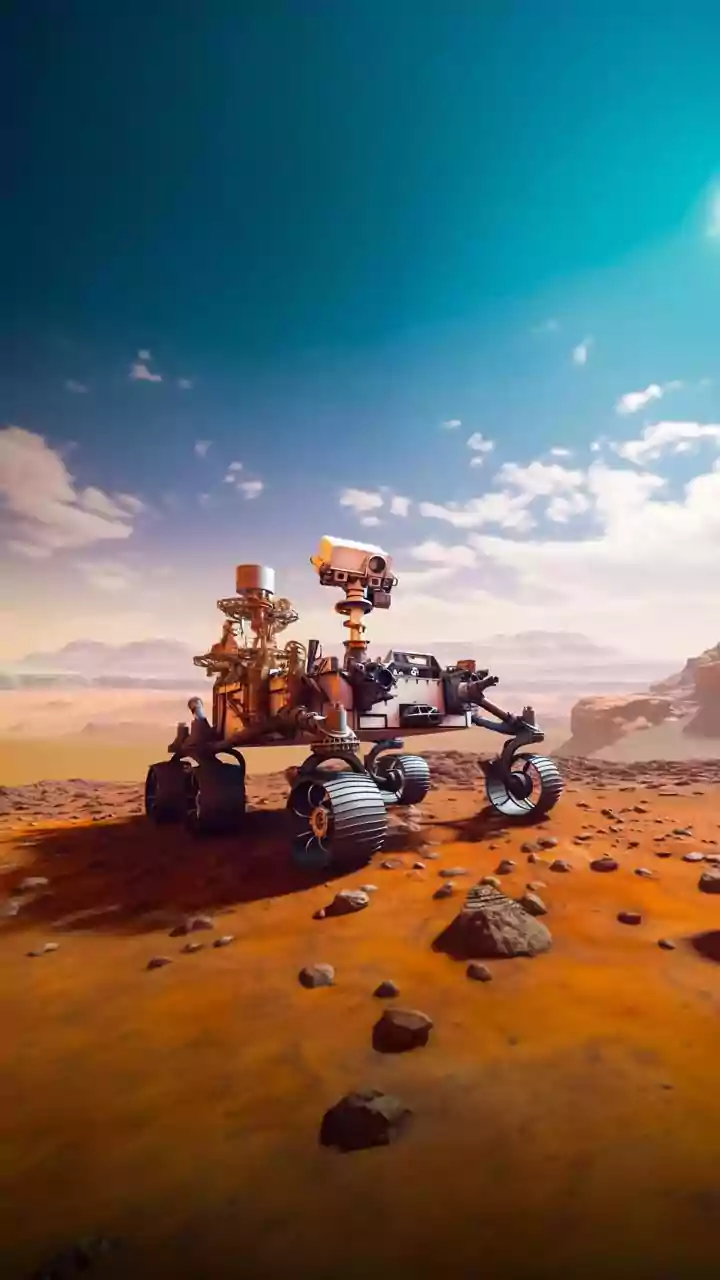
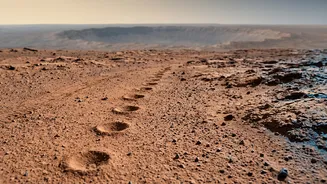
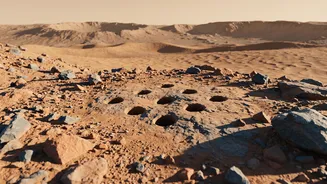
While navigating a region known as Valle Grande on the slopes of Mount Sharp, the Curiosity rover stumbled upon something peculiar. Dotted across the rocky ground were small depressions, a sight not entirely uncommon on a planet frequently struck by meteorites.
However, a closer look revealed these were no ordinary pits. For a mission that has been exploring the Martian surface for over a decade, encountering something that defies an easy explanation is a significant event. The rover is currently in an area of great interest within the Gale Crater, a site believed to have been formed by an asteroid impact billions of years ago.
What Makes These Holes So Strange?
Unlike typical Martian holes, these newly discovered pits are unusually broad and shallow. One of the most common explanations for small cavities in Martian rock is a process of erosion. A harder pebble or mineral nodule embedded in softer rock resists erosion longer than its surroundings; when it eventually weathers away, it leaves a small pit. But that doesn't seem to be the case here. Scientists on the Curiosity team noted that there were no obvious pebbles or nodules in or near the holes that would suggest they were once filled. This lack of a clear cause is what makes the discovery so baffling to the mission's science team.
Ruling Out the Usual Suspects
With the most common geological explanation not fitting the evidence, scientists are left to consider other possibilities. The planet's surface is a complex tapestry of its long history, shaped by wind, ancient water, and impacts. While meteorite strikes are a constant source of craters and holes, these particular features don't match the profile of an impact event. They are simply different from the thousands of other pits and depressions Curiosity has documented over its 14-year mission. This isn't the first time Mars has presented a geological mystery; the planet is full of strange features, from 'spiderweb' like terrain to vast polygonal fractures, each providing clues to its past.
The Scientific Investigation Begins
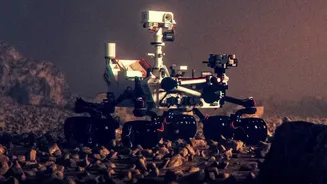
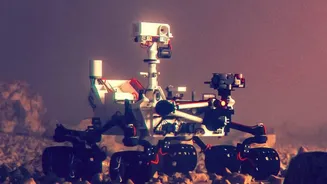
To get to the bottom of the mystery, NASA is deploying Curiosity's advanced toolkit. The rover used its Mars Hand Lens Imager (MAHLI) to take close-up photos of the tiny divots, some as small as one centimeter across. At the same time, its Mastcam cameras captured overlapping stereo images of the area. By combining these images, the science team can create detailed three-dimensional models of the pits. These models will allow them to precisely measure the shape, depth, and contours of the holes, which could provide crucial clues about how they were formed. The team is also analyzing the chemical composition of the surrounding rock, which shows its own oddities, including layers that seem to resist erosion differently. This suggests the environment may have changed rapidly when these rocks were first laid down.
A Planet That Still Surprises
While the headline of 'no answers' sounds dramatic, it's the very heart of the scientific process. The lack of an immediate explanation isn't a failure, but an opportunity. It forces a deeper look and challenges existing assumptions about Martian geology. The team has not suggested any extraordinary origins, such as biological activity, but is focused on geological processes that might be new to them. Each new puzzle from Mars, whether it's the composition of its rocks or the shape of its surface, helps scientists piece together the planet's evolution. It's a reminder that even after years of exploration, the Red Planet retains its ability to surprise and fascinate, offering up fresh mysteries that drive the search for knowledge.