





The Foundation: Perfect Soil
Lemon trees are particular about where their roots settle. The most critical factor is drainage. Citrus roots are highly susceptible to rot, so they cannot sit in waterlogged soil. Whether you're planting in a pot or the ground, a well-draining, lightweight
mix is non-negotiable. Avoid using heavy garden soil or clay, as it compacts and retains too much moisture. For potted lemons, a quality commercial citrus potting mix is an excellent choice. Alternatively, you can create your own blend. A popular and effective recipe is the '5-1-1' mix: five parts composted bark, one part potting soil, and one part perlite for aeration. Lemon trees also prefer a slightly acidic soil with a pH between 6.0 and 7.0. Most citrus-specific soil mixes are formulated to meet this requirement.
The Fuel: Abundant Sunlight
Sunlight is the energy source that fuels flowering and fruit production. Lemon trees are sun-worshippers, requiring a minimum of six to eight hours of direct, unfiltered sunlight every day. In fact, for the best and most reliable fruiting, eight hours or more is ideal. The perfect spot for an outdoor plant is a sunny, sheltered location, perhaps near a south-facing wall that can reflect extra warmth. For indoor plants, an unobstructed south-facing window is your best bet. If you're in a region with extremely hot summers, a little shade during the harshest afternoon hours can help prevent leaf scorch. If your indoor space can't provide the necessary hours of direct light, the tree may survive but is unlikely to produce fruit. In such cases, supplementing with a full-spectrum grow light is essential to keep your lemon tree productive.
The Elixir: Smart Watering
Watering is an art, not a rigid schedule. The golden rule is to check the soil first. Stick your finger two to three inches deep; if the soil feels dry at that depth, it's time to water. If it's still moist, wait another day or two. This prevents overwatering, the most common cause of problems like root rot and yellowing leaves. When you do water, do it thoroughly. Use the 'drench and dry' method: slowly pour water over the soil until it freely drains from the bottom of the pot. This ensures the entire root ball is hydrated and helps flush out any salt buildup. Discard any excess water from the saucer. A young, newly planted tree will need more frequent watering to establish its roots, but a mature tree can go longer between drinks. You'll also need to adjust for the seasons, watering more frequently in hot, dry summer months and less often in the winter.
Container and Potting Choice
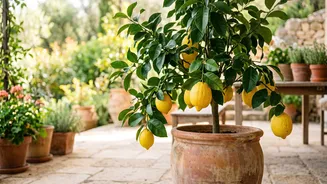
The right container is just as important as the soil inside it. Drainage is the number one priority, so ensure your pot has ample drainage holes at the bottom. Without proper drainage, even the best soil mix can become waterlogged. When it comes to material, unglazed terracotta pots are a great choice because their porous nature allows air and moisture to move through the sides, helping the soil to breathe and dry out more evenly. Plastic or glazed ceramic pots retain more moisture, so you’ll need to be extra cautious about not overwatering. Choose a pot that is appropriately sized for your tree—one that is too large can hold excess soil moisture, increasing the risk of root rot. It's better to repot the tree into a slightly larger container every two to three years as it grows.
Feeding for Fruit
While soil, sun, and water are the big three, nutrition is what takes a lemon plant from simply surviving to truly thriving and fruiting. This is especially true for container-grown citrus, as nutrients are flushed out with each watering. Lemon trees are heavy feeders and require a balanced fertilizer formulated specifically for citrus or acid-loving plants. These fertilizers contain the right ratio of nitrogen, phosphorus, and potassium, along with essential micronutrients like iron, zinc, and manganese that citrus needs. A good practice is to feed your plant every four to six weeks during the active growing season (spring and summer). Reduce or stop fertilizing during the dormant winter months when the tree's growth slows down. Always follow the package instructions and water the tree thoroughly after applying fertilizer to prevent root burn.