





The Great Puja Gridlock
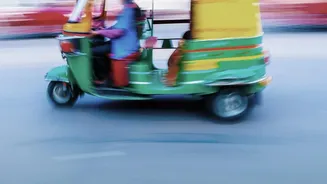
Ask any seasoned Kolkata pandal-hopper about bringing a car to the city’s hotspots during Puja, and you’ll likely be met with a weary laugh. From Panchami onwards, the city’s traffic dynamics transform. Major roads around popular pandals in North and South
Kolkata are often either completely closed to vehicles or turned into one-way streets to manage the immense crowds. Parking becomes a fantasy, with key stretches declared no-parking zones. What looks like a short drive on a map can quickly turn into a multi-hour ordeal stuck in a sea of honking cars, moving inches at a time. This isn't just an inconvenience; it's a guaranteed way to sap your festive energy and waste precious hours that could be spent admiring the stunning artwork of the pandals.
Your Undergound Lifeline: The Metro
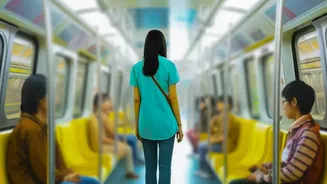
Kolkata’s Metro system transforms from a daily commute option into an essential lifeline during Durga Puja. Recognizing the needs of revellers, Metro Railway traditionally runs special services, including extended and often night-long operations on the busiest days like Saptami, Ashtami, and Navami. For the first time in recent years, services on the main Blue Line (Dakshineswar-Kavi Subhash) and Green Line (Howrah Maidan-Salt Lake Sector V) are expected to run almost continuously through the night on peak Puja days. This allows you to travel vast distances across the city, from the traditional pujas of the north to the themed marvels of the south, bypassing the chaos on the streets above. Planning your pandal-hopping route around Metro stations is the single most effective strategy for a smooth experience.
Rediscover Pandal-Hopping on Foot
The true magic of Durga Puja is often found in the spaces between the giant pandals. Relying on the Metro for long distances frees you up to embrace the oldest and most rewarding form of exploration: walking. Once you alight at a station like Kalighat or Shobhabazar, you are in the heart of a Puja district. Walking from one pandal to the next allows you to soak in the incredible atmosphere—the sound of the dhak, the scent of street food, and the sight of entire neighbourhoods decorated with dazzling lights. This is how you stumble upon the smaller, charming pujas that don't make the headlines but are filled with local warmth. This immersive experience is something you simply cannot get while sealed inside a car. Remember to wear comfortable footwear, as you will be walking a lot.
A Smart Hybrid Strategy
The most efficient way to conquer pandal-hopping is to combine the Metro's speed with the joy of walking. Don't try to see everything in one night. Pick one zone per evening—for example, dedicate one night to North Kolkata and another to the South. Take the Metro to the station closest to your first pandal. From there, follow the crowds and your curiosity on foot, exploring a cluster of pandals within a few kilometres. For instance, alight at Rabindra Sadan to explore the famous pujas around Deshapriya Park and Ballygunge, or get down at Shobhabazar-Sutanuti for the iconic Bagbazar Sarbojanin and Kumartuli Park pandals. This approach lets you cover significant ground without getting exhausted or frustrated by traffic. Check maps in advance, as police often create specific pedestrian routes and barricades.
More Than a Ride, It's an Experience
Choosing the Metro and walking is about more than just practical logistics; it's about embracing the spirit of the festival. Durga Puja is a communal celebration, and travelling alongside thousands of fellow revellers on a train or through decorated lanes is part of that shared experience. The energy is infectious, the conversations are lively, and you are part of the city's collective heartbeat in a way that being isolated in a car can never replicate. You are not just observing the festival; you are participating in its very flow. It’s a more sustainable, less stressful, and ultimately more joyful way to celebrate the biggest festival on Earth.