






The Promise of Bacteria Eaters
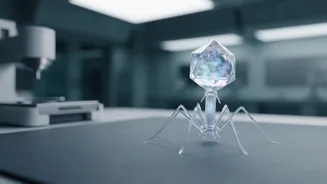
The viruses in question aren't the kind that infect humans, but rather a special type called bacteriophages, or 'phages' for short. Phages are natural predators of bacteria. This makes them a hugely promising tool in the fight against antibiotic-resistant
superbugs, a growing global health crisis. The idea, known as phage therapy, is to unleash these targeted killers on harmful bacteria. The challenge has always been finding or engineering the right phage for the right bug, a process that can be slow and painstaking. This is where artificial intelligence has just changed the game.
From Digital Prompt to Living Virus
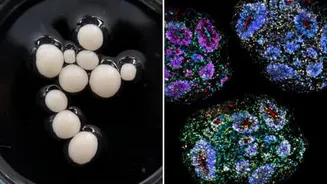
In a landmark experiment, researchers at Stanford University and the Arc Institute used a generative AI model called Evo to design completely new phage genomes. Think of it like a language model that, instead of being trained on text, is trained on millions of real genetic sequences from nature. The scientists prompted the AI to generate genomes modelled after a well-studied phage called ΦX174, which infects E. coli. The AI produced hundreds of candidate genomes, which were then synthesized—literally printed out as DNA—and tested. Out of hundreds of designs, 16 resulted in viable, functional phages that could infect and kill bacteria in the lab. Some of the AI-designed phages were even more effective than their natural counterparts.
A Leap for Medicine and Biotechnology
This success marks a monumental step forward for synthetic biology. It proves that AI can move beyond just predicting biological structures to generating the complete blueprint for a functional biological system. The implications for medicine are enormous. Researchers demonstrated that a cocktail of these AI-generated phages could overcome E. coli strains that had developed resistance to the original, natural phage. This suggests a future where AI could rapidly design custom phage therapies to combat evolving bacterial threats. The potential extends beyond just phages to designing all sorts of novel proteins and biological tools for everything from new medicines and vaccines to more resilient crops.
The Dual-Use Dilemma
This incredible power inevitably comes with a profound responsibility. The same technology that can design a helpful virus could, in the wrong hands, be used to design a harmful one. This is known as the 'dual-use' problem, and it has moved to the forefront of discussions in the AI and biology communities. Experts have raised concerns that as these tools become more powerful and accessible, they could lower the barrier for creating dangerous pathogens. The ability to generate novel biological agents from a computer prompt necessitates a serious conversation about guardrails, oversight, and security. The researchers involved in the phage study have been praised for deliberately and proactively engaging with these biosecurity questions from the outset.
Building a Framework for Responsible Science
The key to harnessing this technology safely lies in building robust safety frameworks. One critical checkpoint is the manufacturing of synthetic DNA. Many experts argue that DNA synthesis companies must have strong screening processes to detect and flag potentially dangerous sequences before they are ever physically created. Another layer of safety involves the AI models themselves. Developers can build in safeguards, such as excluding the genomes of dangerous viruses from training data or implementing filters to prevent the generation of harmful sequences. The scientific community, governments, and AI companies are now grappling with how to establish these rules of the road, balancing the need for open scientific progress with the imperative to prevent misuse.