




A Historic, If Imperfect, Orbital Debut
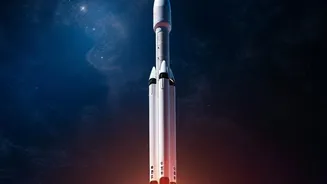
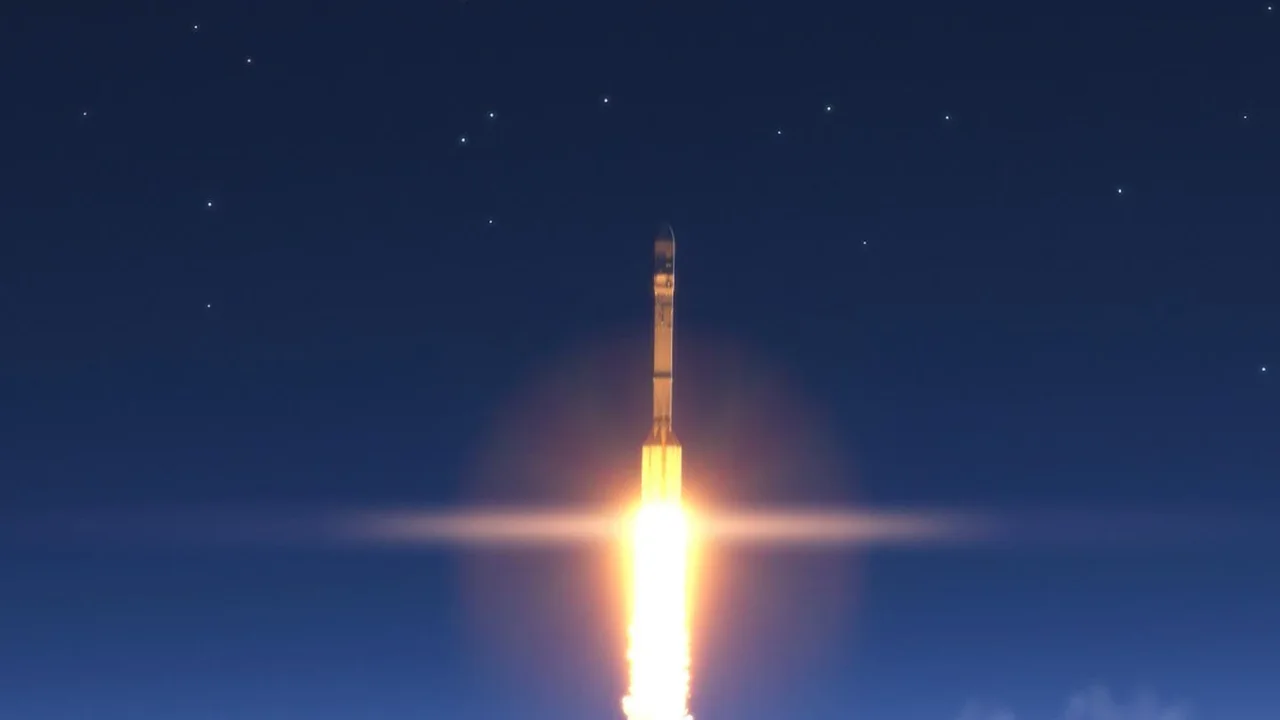
During its 14th test flight, the world's largest and most powerful rocket blasted off from Starbase, Texas, with a clear goal: to circle the planet. For the first time, the mission profile was not a high-altitude arc ending in the ocean, but a true orbital
attempt. The flight was not without drama; an engine on the upper stage shut down prematurely during ascent. After a tense evaluation, mission controllers decided to press on, firing another engine to push the spacecraft into a stable orbit around Earth, sparking cheers at mission control. Though the initial plan for a 10-hour, six-orbit journey was cut short to just three hours out of caution, the primary objective was met. Starship was officially an orbital vehicle.
From Suborbital Hops to Global Reach
Previous Starship tests, while impressive, were essentially high-altitude 'hops.' The rocket would ascend, perform manoeuvres, and then follow a suborbital trajectory back to a splashdown in the ocean. Reaching orbit is an entirely different challenge. It requires achieving a speed of around 28,000 km/h, fast enough that the Earth curves away beneath the spacecraft as quickly as gravity pulls it down. This successful orbital insertion demonstrates that Starship has the power and control necessary for sustained spaceflight, moving it from the category of a promising prototype to a vehicle on the cusp of operational status.
A Working Rocket, Not Just a Test Article
Underscoring this transition, Flight 14 carried its first-ever operational payload. Tucked inside its bay were 26 next-generation Starlink V3 internet satellites, which were successfully deployed into low-Earth orbit. In previous flights, Starship had only deployed dummy or test satellites. This successful deployment was a landmark moment, making the flight not just a test but also a revenue-generating mission for SpaceX's primary business division. It proved Starship’s capability as a heavy-lift launch platform, with the company noting that this single launch added more bandwidth to its network than 20 Falcon 9 flights combined.
Why This Milestone Unlocks the Future
Achieving orbit is the gateway to all of SpaceX's ambitious long-term plans. The entire concept of Starship is built on full and rapid reusability, which dramatically lowers the cost of accessing space. This orbital capability is a prerequisite for its most critical future missions. For one, NASA is relying on a modified version of Starship to be the human landing system for its Artemis program, which aims to return astronauts to the Moon by 2028. The success of Flight 14 is a huge boost for that timeline. Furthermore, the long-term vision of establishing a self-sustaining city on Mars is entirely dependent on a fleet of orbital-class Starships capable of being refuelled in space for the long journey, a capability that can now be developed and tested.
The Road Ahead Is Still Long
Despite the 'wildly successful' nature of the test, as SpaceX commentators called it, there is still much work to be done. Both the Super Heavy booster and the Starship upper stage experienced engine shutdowns during the flight. While the booster executed a soft splashdown in the Gulf of Mexico, the Starship itself broke apart upon hitting the Pacific. The ultimate goal remains catching both the booster and the ship with the launch tower's mechanical arms for rapid reuse, a feat only accomplished with the booster on a previous flight. Additionally, SpaceX has yet to demonstrate in-space propellant transfer between two Starships, a crucial technology for deep-space missions to the Moon and Mars.