
The Enemy of Crisp: Surface Starch
When you slice a potato, you rupture its cells, releasing starch. This fine, white powder coats the surface of each slice. While starchy potatoes like Russets are ideal for frying, this excess surface starch is the primary culprit behind soggy chips.
When it hits the hot oil, this starch gelatinises, absorbing moisture and forming a sticky, glue-like layer. Instead of allowing the water within the potato to escape, it traps it. This steaming effect prevents the surface from dehydrating and becoming crisp, resulting in a pale, gummy texture rather than a golden, brittle one.
The Science of a Simple Rinse
This is where your kitchen tap becomes your most valuable tool. Rinsing the sliced potatoes under cold water washes away that problematic layer of excess surface starch. Some culinary experts even recommend soaking the slices in cold water for a few hours to draw out even more starch, changing the water whenever it becomes cloudy. By removing this starchy barrier, you're clearing the path for moisture to escape the potato slice once it enters the fryer. This step is purely mechanical; its sole purpose is to get rid of the sticky film that would otherwise prevent the potato from crisping up properly. It’s a crucial prep step for creating a light, crispy texture.
Why Pat-Drying Is Non-Negotiable
After meticulously rinsing the starch off, it might seem counterintuitive to obsess over drying. But this step is just as critical, for reasons of both safety and science. Water and hot oil are a dangerous combination. Because oil is much hotter than the boiling point of water, any water droplets will instantly vaporize into steam, expanding in volume by about 1,700 times. This violent expansion causes the hot oil to splatter dangerously, posing a significant burn risk and a fire hazard. From a cooking perspective, that water also works against you. The energy from the hot oil is spent turning the water into steam, causing the oil's overall temperature to drop. A lower oil temperature means the potato slices will absorb more grease before they have a chance to crisp, leading to a heavy, oily final product.
Paving the Way for the Maillard Reaction
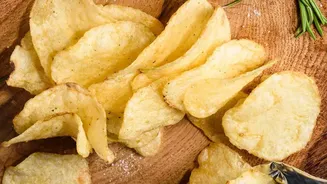
By rinsing away starch and thoroughly drying the surface, you've created the perfect canvas for culinary magic: the Maillard reaction. This is the chemical process between amino acids and reducing sugars that occurs at high temperatures, creating the beautiful brown crust and complex, savoury flavours we associate with fried foods. A dry, starch-free surface allows the hot oil to immediately begin its work of dehydrating the potato's exterior. Once the surface temperature rises above 140°C, the Maillard reaction kicks in, transforming the humble potato slice into a golden, flavourful, and irresistibly crispy chip. Without the initial rinse and dry, this reaction is hindered, leaving you with a chip that’s pale and lacking in flavour.
Your Two-Step Path to Perfect Chips
So, how do you put this all into practice? It’s simple. First, after slicing your potatoes to your desired thickness with a mandoline or sharp knife, place them in a colander and rinse them thoroughly under cold running water until the water runs clear. For even better results, let them soak in a bowl of cold water for at least 30 minutes. Second, and just as importantly, dry the potato slices completely. Spread them in a single layer on a clean kitchen towel or on paper towels. Pat them dry, then let them air-dry for a few more minutes if you have the time. Only when the potatoes are bone-dry should they go into the hot oil.