

A Delivery from the Cosmos
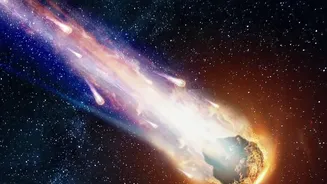
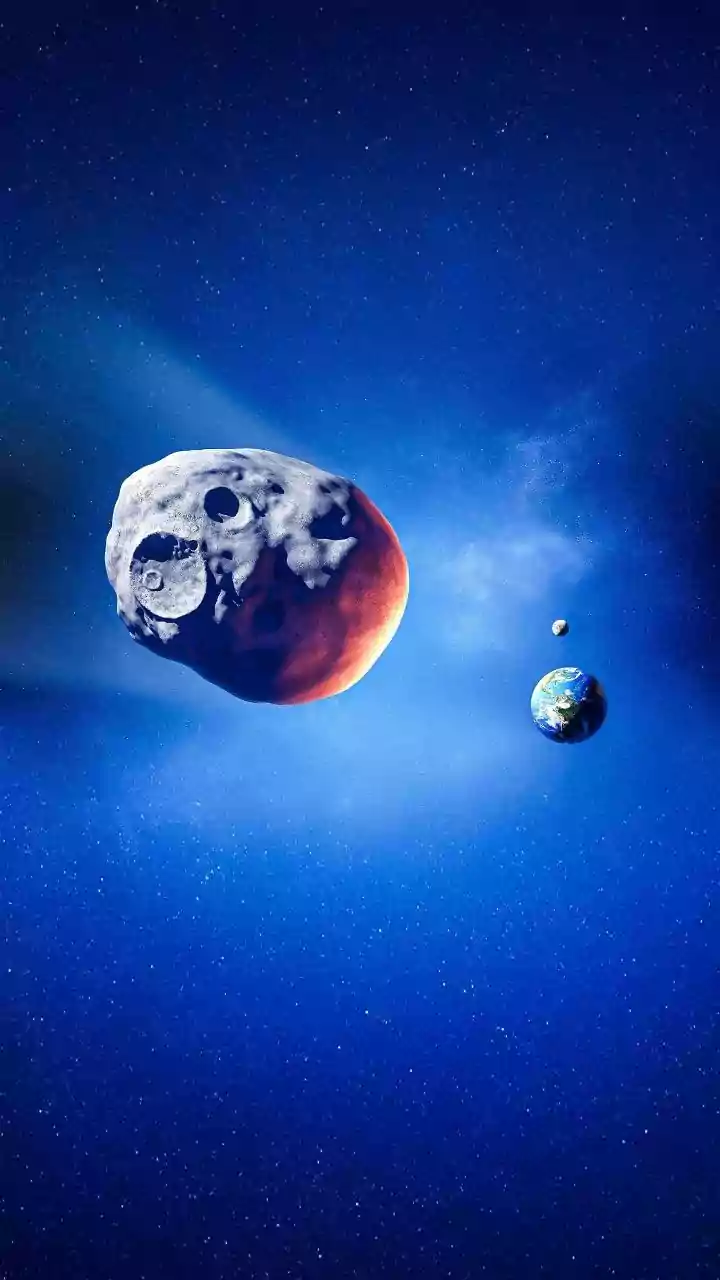
On July 16, 2024, residents in the New York and New Jersey area were startled by a daytime meteor that created a sonic boom. Shortly after, a homeowner in Hillsborough, New Jersey, heard a loud crash. They discovered a hole in their master bedroom ceiling
and dark, unusual rocks scattered amid the debris. This was no ordinary rock; it was a meteorite, a visitor from the outer reaches of our solar system. The homeowner's quick thinking to collect the fragments with gloves and preserve them in clean jars proved scientifically invaluable, protecting the pristine space rock from earthly contamination.
More Than Just a Rock
Scientists were ecstatic. The object, named the Hillsborough meteorite, was a rare type known as a CM-type carbonaceous chondrite. These meteorites are like cosmic time capsules, formed in the early days of our solar system and containing carbon-rich compounds. Because this one was recovered so quickly—literally minutes after landing—it offered an unprecedented, untarnished look at the chemistry of its parent asteroid. Analysis from an international team of researchers, published in the journal Science Advances, revealed that the rock had been extensively processed by salty, briny water on its original asteroid.
The Building Blocks of Life
So, what are amino acids? Think of them as the Lego bricks of life. They are organic compounds that link together to form proteins. Proteins, in turn, do almost everything in our bodies, from building muscle tissue to carrying out the chemical reactions that keep us alive. All life on Earth, from the smallest bacterium to the largest whale, uses a set of just 22 essential amino acids. Finding them in the Hillsborough meteorite, therefore, was a monumental discovery. It confirmed that these vital ingredients aren't just made on Earth; they exist in space and can be delivered to planetary surfaces.
A Message in the Stone
This wasn't the first time amino acids have been found in a meteorite. The famous Winchcombe meteorite, which landed in the UK in 2021, also contained these crucial compounds. But the Hillsborough meteorite was special because of its pristine condition and the evidence of its interaction with briny water. This suggests that asteroids are not just inert, dead rocks. They can host complex chemical environments where water and organic materials mix, potentially creating the molecules necessary for life to begin. The discovery provides some of the strongest evidence yet that the raw materials for life on Earth may have been delivered from space billions of years ago.
The Panspermia Question
This finding gives a boost to a fascinating, and sometimes controversial, theory called panspermia. The idea suggests that life, or at least its core components, can be spread between planets, and even star systems, by meteorites, comets, and space dust. While the Hillsborough meteorite doesn't prove that alien bacteria are hitching rides on asteroids, it strongly supports a version of the theory called pseudo-panspermia. This hypothesis posits that while life itself might not travel through space, the fundamental organic molecules needed for life to emerge are distributed throughout the cosmos. In essence, the universe might be seeding planets with the potential for life.