




Meet the Milky Way’s New Planet Hunter
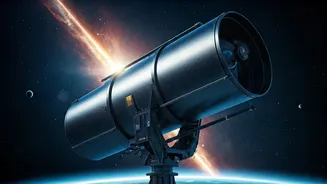
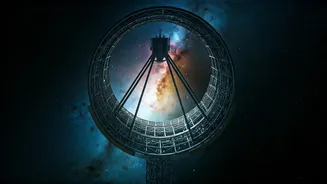
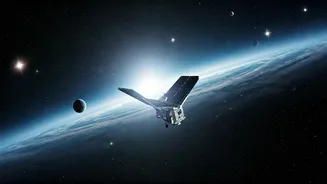
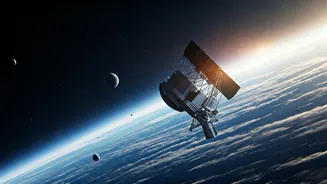
Scheduled to launch by late 2026, the Nancy Grace Roman Space Telescope is NASA's next great observatory, designed to tackle some of the biggest questions in astrophysics. While it has a mirror the same size as the Hubble Space Telescope, its power lies
in its extraordinary field of view. Its Wide Field Instrument will be able to capture an area of the sky 200 times larger than Hubble's infrared camera in a single snapshot. This vast perspective makes it an unprecedented survey tool, built to map the universe with incredible speed and efficiency. While Roman’s mission includes studying dark energy and the evolution of the cosmos, one of its most anticipated jobs is to conduct a census of exoplanets, radically expanding our catalogue of known worlds.
The Power of a Cosmic Magnifying Glass
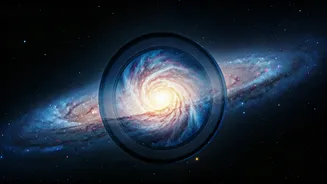
So, how will Roman find these hidden planets? While it will use the proven 'transit' method (watching for the dip in starlight as a planet passes in front of its star), its true game-changer is a technique called gravitational microlensing. Predicted by Albert Einstein, this phenomenon occurs when a massive object, like a star, passes almost directly in front of a more distant star from our viewpoint. The gravity of the foreground star acts like a natural magnifying glass, bending and amplifying the light of the background star, causing it to temporarily brighten. If that foreground star has a planet orbiting it, the planet's own gravity adds a second, smaller spike of brightness to the signal. This brief flicker is the tell-tale sign of a hidden world, even one too small, too distant, or too dim to be seen directly.
Finding the Lost Worlds
Previous planet-hunting missions like Kepler and TESS, which primarily use the transit method, have been incredibly successful but are biased toward finding large planets in tight, close orbits around their stars. Microlensing is different. It's most sensitive to planets that are farther from their stars, in orbits similar to those of planets in our own solar system. This means Roman will be able to find analogs to nearly every planet in our solar system, from rocky worlds to ice giants like Neptune. Perhaps most excitingly, microlensing is the only method that can systematically find 'rogue' planets — worlds that have been ejected from their original star systems and now wander the galaxy alone. These cosmic nomads are essentially invisible, but Roman will spot them by the way their gravity warps the light of stars far behind them.
A New Galactic Census
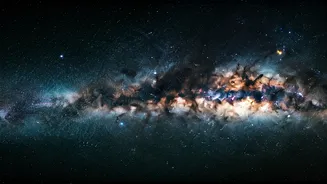
By combining the transit method with its powerful microlensing survey, Roman is expected to discover a staggering number of new worlds. Projections suggest it could find roughly 100,000 planets via the transit method and thousands more through microlensing. This will dramatically increase the current confirmed exoplanet count, which stands at just over 6,000. But this mission is about more than just numbers. By surveying a huge and diverse population of stars toward the dense center of our galaxy, Roman will provide the first true statistical census of planetary systems. This will help astronomers understand how common different types of planets are, how planetary systems are arranged, and whether our own solar system's architecture is a common blueprint or a galactic rarity. The mission will paint a far more complete picture of the worlds that populate the Milky Way.