






The Persistent Myth: A Generational Warning
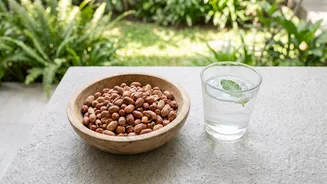
The caution against drinking water after enjoying peanuts is a belief passed down through generations in many cultures. The common reasoning is that the combination can trigger a sudden cough, throat irritation, or even an upset stomach. The advice is especially
common during winter months, when roasted peanuts are a popular snack. Theories vary, with some suggesting the oils in peanuts react poorly with water, while others point to a clash between the 'heat' generated by peanuts and the 'cooling' effect of water, supposedly throwing the body off balance. Despite being widespread, many of these claims are not backed by scientific evidence and remain largely anecdotal.
The Science: How Your Body Digests Peanuts and Water
From a biological standpoint, there is little evidence to support the idea that water negatively interacts with peanuts in your digestive system. In fact, the opposite is often true. Water is essential for healthy digestion, helping to break down food and facilitate the absorption of nutrients. Peanuts are dense in protein, fibre, and healthy fats. Water aids the digestive process by helping to move this fibrous material through your system, preventing constipation. While some argue water dilutes digestive juices, the stomach is highly effective at regulating its acid levels to handle whatever you consume. For a healthy adult, the combination of peanuts and water should not pose any inherent digestive risk.
Tracing the Myth's Origins
So where did this idea come from? There are several plausible theories, none of which have been definitively proven. One popular hypothesis connects the warning to the natural dryness of peanuts, which can make you thirsty. If you eat them quickly without chewing properly and then gulp down water, it could create a choking hazard or a sensation of irritation. Another theory is that the oils in peanuts, when combined with water, could create a fatty residue in the food pipe, leading to a cough—though nutrition experts have expressed skepticism about this mechanism. It's also possible that a few coincidental experiences, where someone happened to fall ill after this specific combination, evolved into a widespread superstition.
The Real Risks: It's Not About the Water
While drinking water after peanuts is not the issue, there are some genuine risks associated with eating them. The most serious is a peanut allergy, which can cause symptoms ranging from throat irritation and hives to life-threatening anaphylaxis. For someone with an allergy, any discomfort is caused by the peanut protein itself, not the act of drinking water afterward. In children, whose immune and digestive systems are still developing, new food combinations can sometimes cause minor gastric issues, which may be why the warning is often directed at them. Finally, eating very large quantities of peanuts can lead to bloating or discomfort simply due to their high fat and fibre content, which slows digestion.
Enjoying Peanuts Safely
For the vast majority of people, drinking water after eating peanuts is perfectly safe and even helpful for digestion. The key is to consume them mindfully. Chew peanuts thoroughly to aid digestion and reduce any risk of choking. If you are prone to throat irritation, it may be sensible to wait 10 to 15 minutes before drinking a large amount of water, and perhaps opt for room-temperature water instead of ice-cold. Ultimately, the most significant risks associated with peanuts come from pre-existing allergies or potential contamination with moulds like aflatoxin, which is rare in commercially produced peanuts from regulated sources. When it comes to the simple act of staying hydrated after a snack, your body knows what to do.