









Deconstructing the Billions
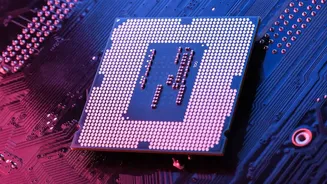
When we talk about AI infrastructure, it is not just about the clever software that powers chatbots. It's the colossal, power-hungry physical world that makes AI possible. This includes everything from the advanced semiconductor chips that act as the brains
of the operation to the massive data centres that house them. It encompasses high-speed networking to connect these components, the power grids to energize them, and even the real estate and water required for cooling. The McKinsey report highlights a significant investment shift towards this physical foundation, indicating the market is moving past initial hype and into a full-scale buildout phase.
The Big Spenders and Their Motivations
The primary drivers of this spending spree are the world's largest technology companies, often called 'hyperscalers'. Giants like Amazon, Google, Microsoft, and Meta are pouring hundreds of billions into securing their dominance in the AI age. This investment is a massive bet that enterprise demand for AI services will continue to explode. For them, controlling the underlying infrastructure is a strategic necessity, creating a high-stakes race where the cost of falling behind is immense. Beyond Big Tech, governments and venture capitalists are also injecting huge sums of capital, with firms like OpenAI and Anthropic raising funds at astronomical valuations to secure their own computational resources.
The Anatomy of the AI Arms Race
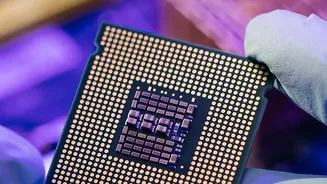
The competition is fierce for every component of the AI stack. There is a high demand for advanced GPUs (Graphics Processing Units), the specialized chips essential for training large AI models, which has led to supply constraints. This bottleneck has fueled investment in alternative processors and custom chip designs by large tech firms aiming to reduce reliance on single suppliers. Another critical battleground is networking, where high-speed fabrics are needed to allow vast clusters of GPUs to work together efficiently. Perhaps the most fundamental constraint, however, is energy. A single large AI data centre can consume as much power as a small city, making access to affordable and reliable power a key factor in deciding where this new infrastructure gets built.
What It Means for India
For India, this global investment wave presents both a massive opportunity and a significant challenge. The country has already emerged as a major player, ranking high in AI competitiveness and boasting the world's second-largest AI talent pool. Recognizing the opportunity, Indian conglomerates and the government have announced ambitious plans to invest billions in building out domestic AI infrastructure, from gigawatt-scale data centres to sovereign AI capabilities. The goal is to position India not just as a consumer of AI, but as a globally competitive hub for providing affordable AI services at scale. However, reports also flag a gap between India's scale and its current infrastructure capacity. While India is a leader in digital adoption, it ranks lower in existing AI infrastructure, highlighting the need to convert its scale and talent into physical assets to truly compete with the US and China.