
More Than Just a Party Trick
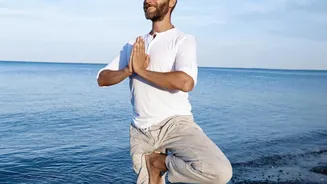
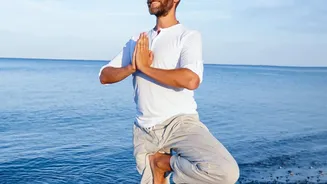
Single-leg balance is a fundamental skill that underpins much of what we do every day. It's essential for walking, climbing stairs, and stepping over obstacles. Essentially, any time you are moving, there's a moment where you are balancing on one leg.
Strong single-leg stability helps prevent injuries by strengthening the muscles around the joints in your ankles, knees, and hips. This improved stability can reduce your risk of falls and give you more confidence in your movements. Furthermore, balance training enhances proprioception, which is your body's awareness of its position in space. This constant communication between your brain and muscles is crucial for coordination and can even support cognitive function as you age.
Start with Strong Support
The biggest mistake people make when starting balance training is trying to go it alone from day one. The most effective way to build this skill is by starting with significant support. Stand next to a sturdy kitchen counter or a wall. Begin by placing both hands lightly on the surface as you lift one foot off the ground. The goal isn't to lean on the support, but to have it there to prevent a fall and allow your body to get used to shifting its weight. This safe starting point lets your stabilizing muscles learn to fire correctly without the fear of toppling over, which can cause you to develop bad habits. Having a support surface nearby is a non-negotiable rule for beginners.
Quality Over Quantity: The Short Hold
When you're starting, the duration of your hold is less important than the quality. Aim for short, controlled holds of about 10 to 15 seconds. Holding the position for a brief period allows you to focus on maintaining good form and engaging the correct muscles without them becoming fatigued. As soon as you feel your form breaking down—your hip dropping, your torso leaning, or your ankle wobbling excessively—it's better to put your foot down and reset. Trying to power through a long hold with poor form is counterproductive. The objective is to achieve clean, steady reps, not to set a new time record right away. Consistency with short, perfect holds will build strength and control far more effectively than long, sloppy ones.
Your Form Checklist
To get the most out of the exercise, pay attention to your posture. Stand tall with your shoulders back and your core muscles engaged. When you lift one leg, keep the knee of your standing leg slightly bent; never lock it. Try to keep your pelvis level, as if you were balancing a glass of water on each hip. A common mistake is letting the hip of the lifted leg hike up or drop down. Finally, keep your gaze fixed on a stationary point in front of you to help maintain your stability. Your body will naturally want to wobble a bit, and that's okay. These small corrections are your muscles learning to stabilize you.
How to Progress Safely
Once you can comfortably hold the position with two hands for 30 seconds with minimal wobbling, it's time to progress. First, move from two hands of support to just one hand, and then to just your fingertips. As you get stronger, you can reduce your reliance on the support until you can balance without touching it at all. From there, you can increase the hold time, aiming for 30 seconds or more. For a further challenge, try standing on a slightly unstable surface like a pillow or foam pad, which forces the muscles in your foot and ankle to work harder. You can also introduce dynamic movements, such as slowly swinging your raised leg forward and back or reaching with your hand. Always prioritize control over difficulty.