







Bengaluru Hosts the Global Space Community
The International Conference on Spacecraft Mission Operations, or SMOPS-2026, has brought the world of space technology to Bengaluru. Jointly organised by the Indian Space Research Organisation (ISRO), the Astronautical Society of India (ASI), and the International Academy
of Astronautics (IAA), the event is a critical forum for the planet's leading space agencies, private companies, and academics. The theme is "Innovative Operations for Smart and Sustainable Space Mission Management". This year's focus is squarely on the challenges posed by an increasingly congested orbital environment, including managing large satellite constellations, human spaceflight missions, and the ever-present threat of space debris. With participants from NASA, ESA, JAXA, and numerous startups, the conference serves as a global hub for charting a safer course for future space activities.
The High Price of a Crowded Orbit
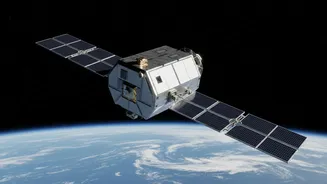
Low Earth Orbit (LEO) is becoming a victim of its own success. The number of active satellites has skyrocketed, but so has the amount of debris—defunct satellites, spent rocket stages, and millions of smaller fragments. With more than 36,000 trackable objects larger than 10 centimeters and a total junk mass exceeding 10,000 tons, the risk of collision is a clear and present danger. Even a tiny paint chip, travelling at over 28,000 km/h, can inflict catastrophic damage on a functional satellite, threatening the services we rely on for everything from GPS navigation and weather forecasting to global communications. Experts warn of the Kessler Syndrome, a scenario where collisions create a cascade of new debris, potentially rendering certain orbits unusable for generations.
The Search for Sustainable Solutions
The core of the discussion at SMOPS-2026 revolves around actionable solutions. Historically, satellites were built for durability, not disposal. Today, the focus is shifting towards a circular economy model for space. This includes designing satellites with built-in de-orbiting capabilities to ensure they burn up in the atmosphere at their end of life. Another key area is Active Debris Removal (ADR), where technologies like robotic arms, nets, and harpoons are being developed to capture and remove existing junk. Furthermore, experts are calling for better Space Traffic Management (STM) systems, using AI and advanced radar to track objects and prevent collisions, much like air traffic control does for airplanes.
India's Growing Role and Responsibility
By hosting SMOPS-2026, India is cementing its position as a key player in the quest for space sustainability. As a major space-faring nation, ISRO is actively contributing to the solution. The organisation is a member of the Inter-Agency Space Debris Coordination Committee (IADC) and has aligned its policies with international guidelines. ISRO has announced a "Debris Free Space Mission" (DFSM) initiative, aiming for zero debris creation by all Indian space actors by 2030. Indian startups are also stepping up; Hyderabad-based Cosmoserve is developing ADR technologies, including a soft robotic capture mechanism that flew on Skyroot Aerospace's Vikram-1 rocket. These efforts, combined with ISRO's own work on rendezvous and docking technology, show a deep commitment to ensuring that the final frontier remains open and safe for all.