






More Than Just a Dip
In India, a meal is often considered incomplete without a chutney. The word itself comes from the Hindi 'chatni', meaning 'to lick', a nod to their irresistible nature. While many outside India associate the term with sweet, jarred fruit preserves, traditional
Indian chutneys are typically fresh, savoury, and complex. Their history is deeply rooted in Ayurveda, where they were first created as digestive aids thousands of years ago. Pastes of herbs and spices were designed to balance the body and stimulate appetite, with flavour as a happy consequence. They are not merely side dishes but integral components that complete the nutritional and flavour profile of a meal, from the bustling streets of Mumbai to the quiet kitchens of South India.
The South Indian Star: Coconut Chutney
No South Indian breakfast of idli, dosa, or vada is complete without a scoop of creamy white coconut chutney. Made from freshly grated coconut, green chillies, ginger, and often tempered with mustard seeds and curry leaves, it offers a mildly sweet and nutty profile. A common myth is that its high fat content makes it unhealthy. However, the fats in coconut are primarily medium-chain triglycerides (MCTs), which are metabolised differently and can be a source of energy. Coconut is also rich in fibre, vitamins, and minerals. While it is calorie-dense and best enjoyed in moderation, it's far from being an empty-calorie indulgence. A typical serving provides a decent amount of healthy fats and fibre, making it a functional food that offers benefits beyond basic nutrition.
The All-Rounder: Mint & Coriander Chutney
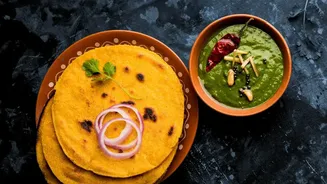
The vibrant green chutney, a blend of fresh mint (pudina) and coriander (dhania) leaves, is arguably the most versatile of all. It’s the cooling counterpoint to a spicy samosa, the zesty spread in a sandwich, and the perfect partner for dhokla. The reason this chutney is so often paired with fried and heavy foods is rooted in its digestive properties. Both mint and coriander are known to promote digestion, soothe the stomach, and reduce inflammation. Coriander is also believed to be beneficial for managing blood sugar levels, while the essential oils in mint can help freshen breath and relieve nausea. Packed with Vitamin C and other antioxidants, this chutney is a powerhouse of fresh flavour and functional benefits.
The Protein Powerhouse: Peanut Chutney
Especially popular in states like Andhra Pradesh, Maharashtra, and Karnataka, peanut chutney (or shengdana chutney) offers a nutty, earthy, and robust flavour profile. Made from roasted peanuts, red chillies, and sometimes tamarind or garlic, it’s a protein-packed condiment that adds a significant nutritional boost to any meal. Peanuts are an excellent source of plant-based protein, heart-healthy monounsaturated fats, and essential nutrients like magnesium and vitamin E. This makes peanut chutney a fantastic choice for a satisfying and energy-sustaining breakfast accompaniment. Because it has a low glycemic index, it provides sustained energy without causing sharp spikes in blood sugar. Like all chutneys, moderation is key due to its calorie density, but its rich nutrient profile makes it a wholesome choice.
The Tangy Classic: Tomato Chutney
Simple, tangy, and deeply flavourful, tomato chutney is a staple across India, with countless regional variations. Some versions are cooked down until jammy and sweet, while others are fresh and raw with onions and spices. Whether served with poori, dosa, or upma, its appeal is universal. The key health benefit comes from cooked tomatoes, which are an excellent source of lycopene, a powerful antioxidant linked to various health benefits. The simple ingredients—often just tomatoes, chillies, ginger, and spices—make it a relatively light yet flavourful option that brightens up any breakfast plate.