





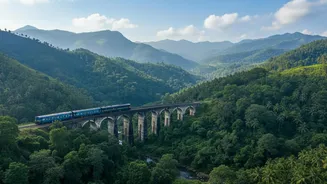
The Himalayan Trio: UNESCO's Finest
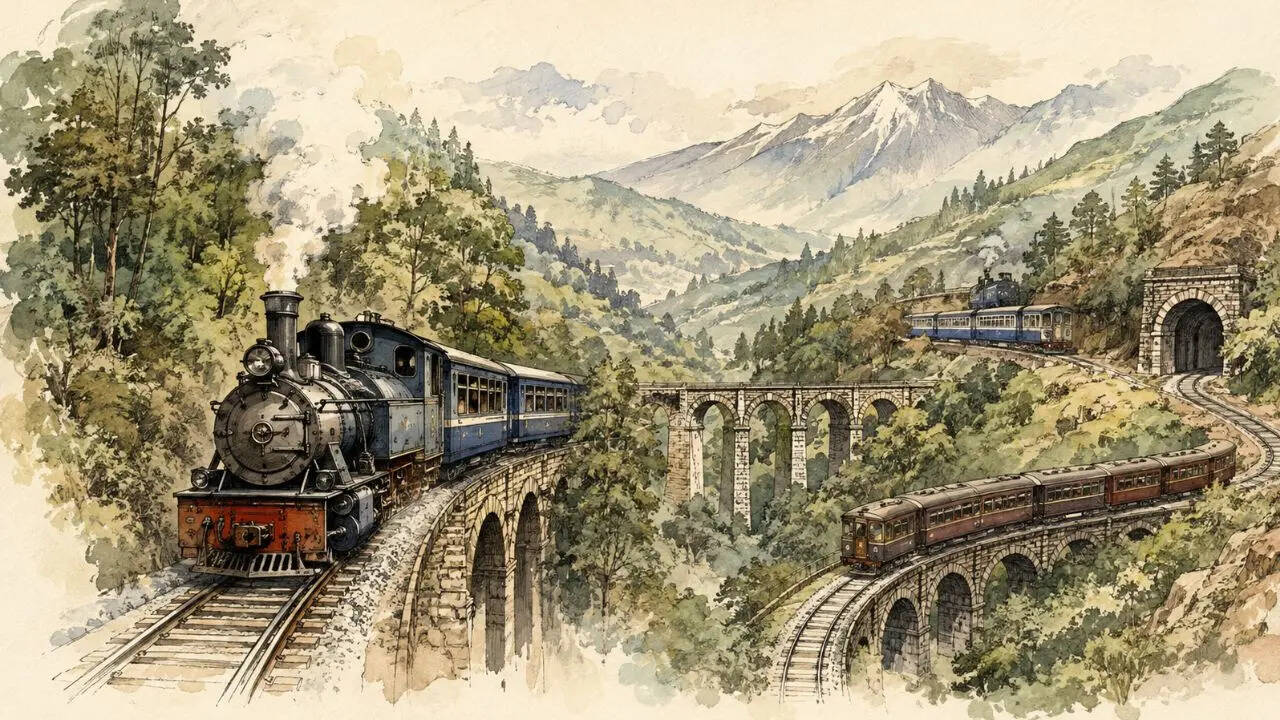
India is home to three spectacular railway lines collectively designated as a UNESCO World Heritage Site: the Mountain Railways of India. These aren't your average tracks; they are marvels of engineering built in the 19th and early 20th centuries to navigate
the rugged, beautiful Himalayas. Each offers a unique journey back in time, chugging through landscapes that are as dramatic as they are enchanting. The trio includes the Darjeeling Himalayan Railway, the Nilgiri Mountain Railway, and the Kalka-Shimla Railway.
Darjeeling's Beloved Toy Train
The Darjeeling Himalayan Railway, affectionately known as the 'Toy Train', is the oldest of the three heritage lines, opening in 1881. Its narrow-gauge track, just two feet wide, winds for 88 kilometres from New Jalpaiguri to Darjeeling. The journey is famous for its ingenious loops and zig-zags, like the iconic Batasia Loop, which helps the train gain altitude while offering panoramic views of Darjeeling and Mount Kanchenjunga. Meandering through bustling market towns and fragrant tea gardens, this ride is a fairytale experience.
Kalka to Shimla: A Tunnel-Filled Ride
Built to connect the British Raj's summer capital, Shimla, the Kalka-Shimla Railway is an engineering spectacle. Over its 96-kilometre journey, the train passes through more than 100 tunnels, crosses over 800 bridges, and navigates an incredible 900-plus curves. The route offers breathtaking views of the Shivalik hills, with pine forests, rolling valleys, and quaint colonial-era stations dotting the landscape. The longest tunnel at Barog is a highlight, taking nearly three minutes to cross and adding a touch of mystery to the scenic journey.
The Steep Climbs of the Nilgiris
Down south, the Nilgiri Mountain Railway in Tamil Nadu offers a different kind of thrill. It is the only rack and pinion railway in India, a specialised system designed to tackle the steepest slopes in Asia. The train travels 46 kilometres from Mettupalayam to the hill station of Udhagamandalam (Ooty), climbing from 1,069 feet to 7,228 feet. The journey, partly powered by a vintage steam locomotive, takes you through rocky terrain, dense forests, and verdant tea plantations, crossing 250 bridges and 16 tunnels along the way.
The Marvel Over the Sea: Pamban Bridge
Moving from mountains to the sea, the journey to Rameswaram Island is defined by one of India’s most iconic structures: the Pamban Bridge. Opened in 1914, it was India’s first sea bridge and, for a long time, its longest. The train ride across this 2-kilometre-long bridge feels like gliding over the water, with the blue expanse of the Palk Strait on either side. The old bridge featured a bascule section that could lift to allow ships to pass through. A new vertical-lift bridge has recently been constructed to replace the century-old marvel, ensuring this thrilling journey continues.
Touching the Clouds: The Chenab Bridge
In Jammu and Kashmir, a modern engineering feat has set a new global standard. The Chenab Rail Bridge, part of the ambitious Udhampur-Srinagar-Baramulla Rail Link project, is the world's highest single-arch railway bridge. Standing 359 meters above the riverbed—taller than the Eiffel Tower—this 1.3-kilometre-long steel arch bridge is a testament to India's engineering capabilities in extreme terrain. While the full line establishes crucial all-weather connectivity for the Kashmir Valley, the bridge itself has become a symbol of national pride.
A Coastal Masterpiece: The Konkan Railway
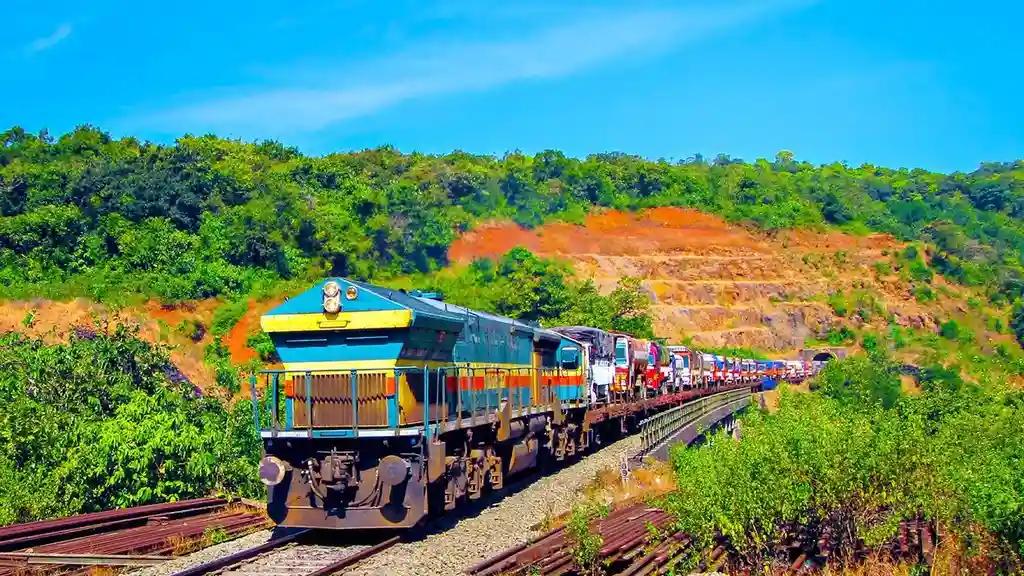
For sheer coastal beauty, few routes can compete with the Konkan Railway, which connects Roha in Maharashtra to Mangaluru in Karnataka. Spanning over 740 kilometres, the track runs parallel to the Arabian Sea, sandwiched between the water and the lush Western Ghats. The journey is a visual treat, featuring over 2,000 bridges and more than 90 tunnels. It winds through serene villages, past pristine waterfalls like Dudhsagar Falls (especially spectacular during monsoon), and offers endless views of green fields and coastal landscapes.