




The Dawn of Communicating Cars
Imagine you're driving on a highway, and your dashboard flashes an alert: 'Hazard Ahead: Vehicle Stopped in Blind Curve'. You ease off the accelerator, long before the danger is visible. This isn't science fiction; it's the core promise of Vehicle-to-Everything,
or V2X, communication. This technology allows vehicles to wirelessly exchange information with each other (V2V), with roadside infrastructure like traffic lights (V2I), and even with pedestrians' devices (V2P). Unlike GPS navigation, which relies on satellite data and maps, V2X creates a live, dynamic network where cars share real-time safety information directly. The goal is to create a 'digital safety net' that gives drivers or autonomous systems crucial extra seconds to react, potentially preventing thousands of accidents.
How C-V2X Technology Works
The engine behind this new safety plan is a technology called Cellular V2X, or C-V2X. It uses the same principles as the cellular networks our smartphones rely on, particularly the advancements brought by 5G. C-V2X operates in two key ways. First, it allows for direct communication (known as PC5) between vehicles and nearby infrastructure without needing to go through a network tower. This is vital for time-sensitive alerts like collision warnings, where even a millisecond's delay matters. Second, it uses the broader cellular network (known as Uu) to share less urgent but still important information over longer distances, such as notifications about upcoming traffic jams, adverse weather conditions, or road work. By combining these two communication modes, C-V2X provides a robust system that can warn of dangers both immediately ahead and miles down the road.
Real-World Hazard Warnings
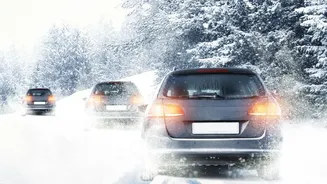
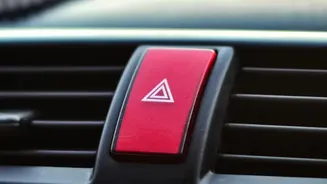
The applications for road safety are transformative. A vehicle hitting a patch of black ice can automatically warn following cars to slow down. A car broken down on the shoulder can broadcast a continuous digital alert, making it visible to others long before its hazard lights are seen. Companies are already developing services that integrate this data. For example, HAAS Alert's Safety Cloud sends digital warnings from emergency vehicles, tow trucks, and work zones directly to drivers' navigation apps and in-car infotainment systems, giving them up to 30 seconds of advance notice. Pilots have shown this technology can dramatically reduce hard-braking events near work zones and improve emergency vehicle response times. The system can warn of everything from a nearby accident to a wrong-way driver or a pedestrian stepping into the road from a blind spot.
The Road to Adoption in India
While the technology is powerful, widespread adoption faces hurdles, particularly in a market like India. The primary challenges are cost, infrastructure, and data privacy. For V2X to be effective, a critical mass of vehicles and infrastructure needs to be equipped with the technology—a significant investment for both consumers and governments. Furthermore, much of this technology relies on robust 5G connectivity, which is still not universally available across rural and semi-urban India. There are also valid consumer concerns about data security and who has access to vehicle location and driving data. However, the Indian government is taking steps to pave the way. Recently, the Ministry of Road Transport and Highways (MoRTH) issued draft notifications for V2V communication standards and has been working on a regulatory framework, signaling a clear intent to integrate these life-saving technologies into the nation's transport ecosystem.