



Our Sun, A Temperamental Star
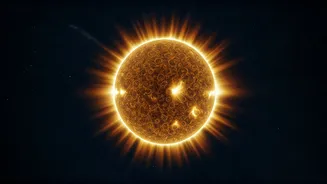
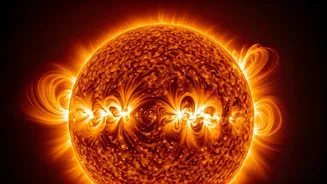
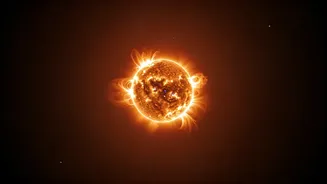
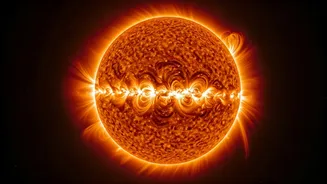
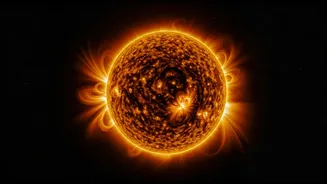
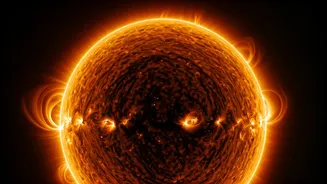
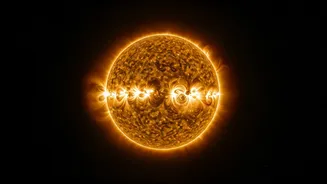
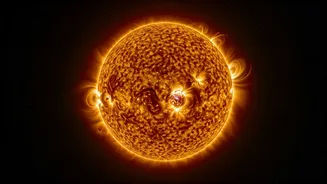
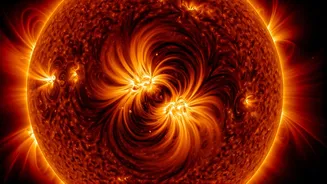
We often think of the Sun as a constant, benevolent source of light and warmth. But it is a magnetically active star, prone to fits of violent activity. It periodically releases enormous bursts of energy and charged particles in the form of solar flares
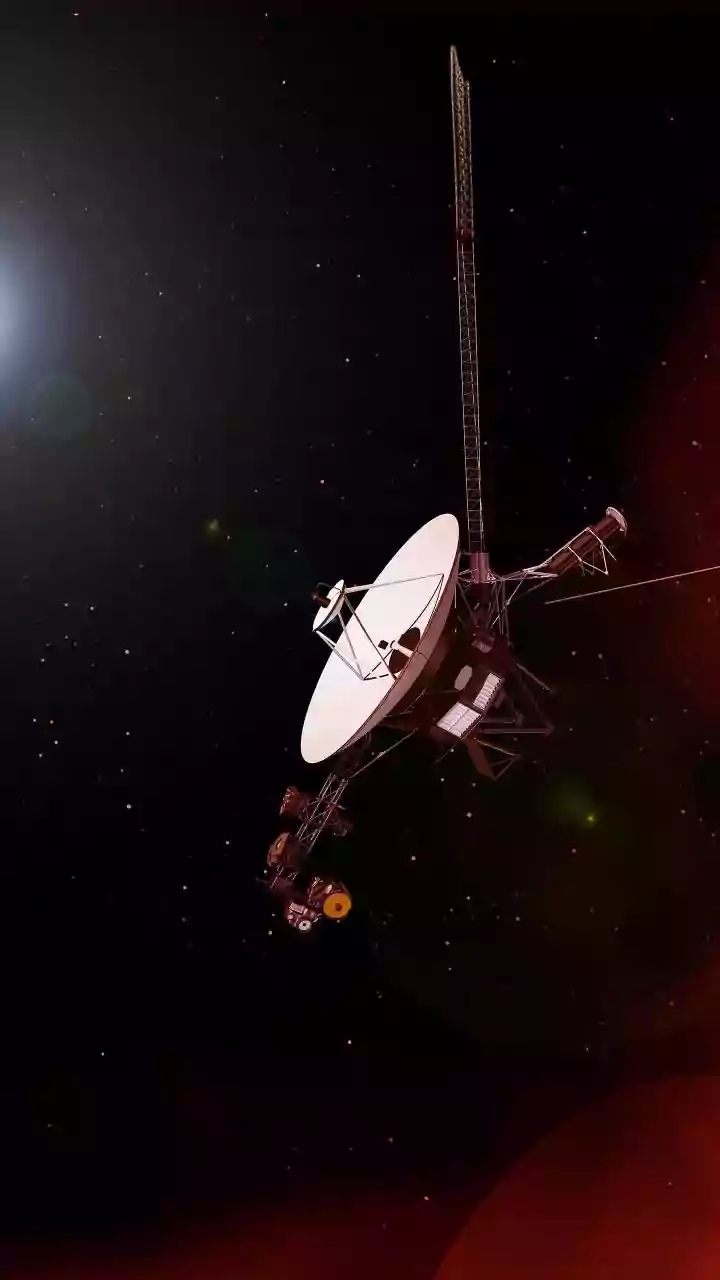
and coronal mass ejections (CMEs). When these eruptions are directed at Earth, they can cause what is known as a geomagnetic storm. While minor storms can produce beautiful auroras, extreme events pose a significant threat to our modern, technology-dependent civilization. They have the potential to cripple satellite communications, disrupt GPS navigation, damage electrical power grids, and endanger astronauts in space.
The Gaps in Our Knowledge
Scientists have been systematically observing sunspots and space weather for centuries, but detailed, satellite-based monitoring is a relatively recent development. This modern record, spanning only a few decades, is too short to capture the full range of the Sun's behaviour. We know major events can happen, like the 1859 Carrington Event, which was so powerful it set telegraph offices on fire, or the 1989 storm that caused a massive blackout in Quebec. But scientists need to know the true upper limit. How powerful can a solar storm get? Answering this requires looking further back in time, well before the space age.
Clues in Clay and Ink
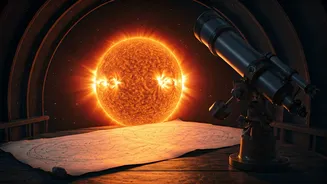
This is where historical records become invaluable scientific data. Researchers are now meticulously combing through archives from across the globe. In a recent breakthrough, Indian astronomers used artificial intelligence to digitise and analyse a century of hand-drawn 'suncharts' from the Kodaikanal Solar Observatory, dating from 1904 to 2022. This project converts careful human observations into data that can be used in modern computer models, helping to create a much longer, more consistent record of the Sun's activity. Other teams are looking even further back, analysing 2,700-year-old Assyrian cuneiform tablets that describe unusual red glows in the sky—likely aurorae caused by powerful solar storms. By cross-referencing these astrological reports with carbon-14 levels in ancient tree rings, scientists can confirm and date these powerful solar events.
From Galileo's Sketches to AI Models
Perhaps some of the most famous records are the detailed sunspot drawings made by Galileo Galilei in 1612. Today, scientists are applying cutting-edge technology to these 400-year-old sketches. By training deep-learning AI on modern, concurrent sunspot drawings and satellite images, researchers can teach a computer to translate the historical sketches into sophisticated data. The AI can generate what Galileo’s Sun would have looked like to a modern satellite, inferring information about magnetic fields and energy levels that he could never have seen. This innovative technique acts as a bridge, connecting the earliest telescopic observations with our most advanced space-based instruments and allowing for a richer understanding of past solar events like the Carrington Event.
Forecasting the Future by Studying the Past
The ultimate goal of this historical detective work is to improve our ability to predict and prepare for future space weather. By building a timeline of extreme solar storms over millennia, scientists can better calculate the probability of a Carrington-level, or even stronger, event occurring in our lifetime. This long-term view helps identify patterns and cycles in solar activity that are invisible in short-term records. Understanding the frequency and magnitude of these rare, high-impact events is crucial for governments and industries to develop more resilient infrastructure, from power grids to satellite networks. In essence, by listening to the whispers of ancient sky-watchers, we can better protect our technological future from the Sun's occasional fury.