





A Catastrophe Unfolds
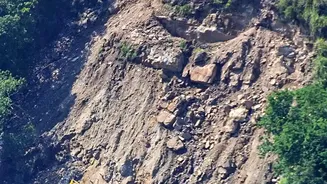
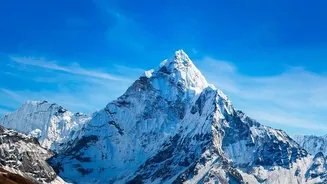
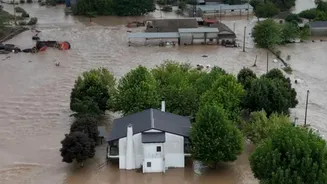
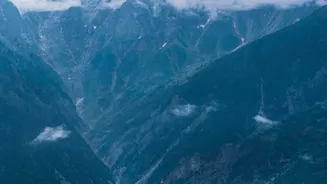
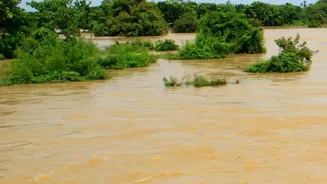
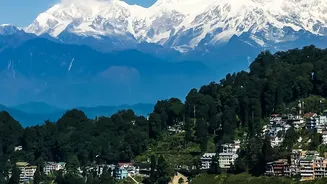
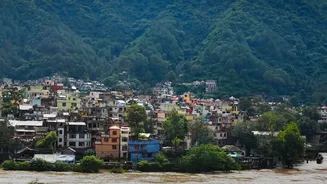
In late August 2026, a massive section of rock and glacier ice collapsed from Langtang Lirung peak in the Himalayas, triggering a catastrophic flood. This torrent of water, ice, and debris tore through communities along the Trishuli River, claiming over
1,300 lives and leaving thousands more missing. The scale of the destruction was immense, but scientists say this wasn't a simple, single-trigger event. Instead, it was the result of a long and complex chain reaction, a 'compound crisis' where multiple factors aligned to produce a disaster of almost unprecedented scale.
The Fingerprints of Climate Change
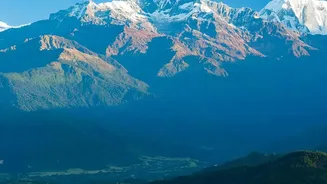
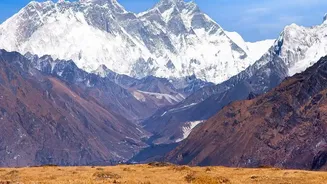
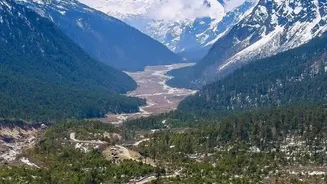
A primary driver identified by scientists is human-caused climate change. Research from the World Weather Attribution initiative confirmed that global warming played a crucial role in setting the stage for the collapse. The Himalayas are warming at a faster rate than the global average, leading to significant changes in the high-mountain environment. Glaciers that once buttressed steep rock faces are thinning and retreating, removing a key source of stability. The glacier near the collapse site had retreated by more than 300 meters since 2010. Furthermore, the weeks leading up to the disaster saw record-breaking warm temperatures for July and August in the local area, intensifying meltwater production.
The Unstable Ground Below
Climate change is not acting in a vacuum; it is exacerbating pre-existing geological vulnerabilities. The Himalayas are a young and tectonically active mountain range, defined by steep slopes and fractured rock. A crucial factor in this disaster was the thawing of permafrost—permanently frozen ground that acts like glue, holding loose rock and soil together on steep slopes. With regional temperatures rising, the altitude at which ground stays frozen year-round has been climbing by about 100 meters per decade. This thaw weakens the rock faces, making them more susceptible to failure. Scientists also believe the powerful 7.8 magnitude Gorkha earthquake in 2015 may have further weakened the bedrock in the region, leaving it primed for a future collapse.
A Cascading Hazard
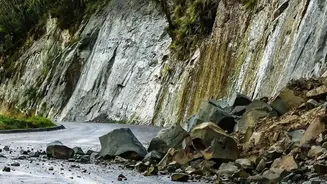
The August disaster was a textbook example of a cascading hazard, where one event triggers another in a deadly sequence. The initial collapse of rock and ice slammed into the valley, generating a seismic shock equivalent to a magnitude 5.2 earthquake. This impact created a fast-moving debris flow of rock, melting ice, and water that was far more destructive than a typical flood. As this slurry moved downstream, it picked up more sediment and water, growing in volume and destructive power. This type of disaster is notoriously difficult to predict, unlike rainfall-based floods, as the failure can happen suddenly, overwhelming early warning systems that may be in place.
A Sign of Things to Come
While the combination of factors made this particular event rare, scientists warn that the underlying drivers are becoming more common. Across the Himalayas, rising temperatures are increasing the risk of landslides and Glacial Lake Outburst Floods (GLOFs), where lakes formed by melting glaciers suddenly burst their natural dams. Researchers stress that this is not just a problem for Nepal; mountain communities around the world face similar threats as the cryosphere—the frozen parts of our planet—responds to a warming climate. The disaster shows that the limits of adaptation are already being reached in some of the world's most vulnerable regions.