




A Fresh Vote of Confidence
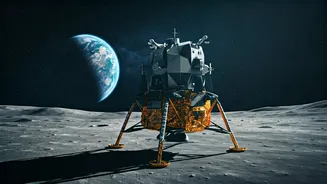
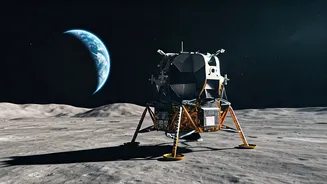
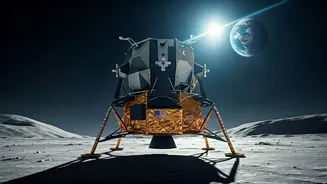
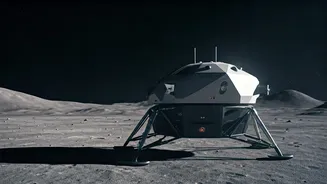
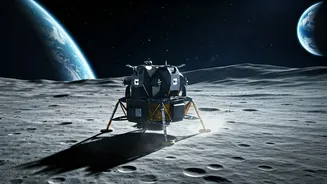
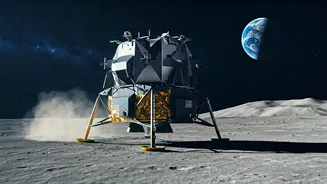
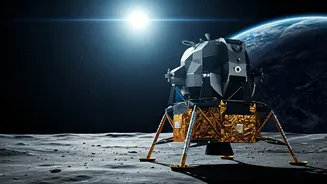
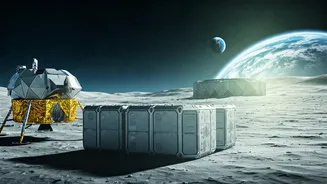
On June 30, 2026, NASA awarded Houston-based Intuitive Machines a new contract under its Commercial Lunar Payload Services (CLPS) initiative, valued at up to $148.3 million. The mission tasks the company with delivering a new Nova-C lander to the Moon
by 2028. However, this isn't just another one-off mission. The contract is specifically designed to help the company transition from building bespoke spacecraft to mass-producing them. According to CEO Steve Altemus, the goal is to shift from “custom aerospace engineering to commercial mass production of lunar infrastructure.” This move signals NASA’s long-term investment in creating a reliable and repeatable delivery service to the Moon, a crucial step for its Artemis program.
The Legacy of Two Tipped Landers
The new contract is noteworthy because of the company's recent track record. In February 2024, Intuitive Machines made history when its Odysseus lander (IM-1) became the first private spacecraft to achieve a soft landing on the Moon and the first American vehicle to do so in over 50 years. But the landing wasn't flawless. The craft caught a landing leg on the surface and tipped over, coming to rest at an angle. Despite this, Odysseus managed to transmit valuable scientific data. A little over a year later, in March 2025, the company's second lander, Athena (IM-2), also reached the Moon but met a similar fate, tipping upon arrival. This second incident was more severe, preventing the deployment of its primary drilling experiment and leading to a rapid loss of power.
Failure as a Feature, Not a Bug
To an outsider, awarding another contract after two tipped landings might seem counterintuitive. But it aligns perfectly with the core philosophy of NASA’s CLPS program. Started in 2018, CLPS is designed to foster a commercial marketplace for lunar deliveries by offering fixed-price contracts to private companies. The strategy deliberately accepts a higher level of risk than traditional, multi-billion-dollar NASA-led missions. The agency is willing to tolerate some commercial failures in exchange for rapid innovation, lower costs, and more frequent missions. As NASA officials have explained, even if several commercial missions fail, the program as a whole can still deliver more science at a fraction of the cost of a single, monolithic mission. In this model, learning from mistakes is an integral part of the process.
Proving Resilience Under Pressure
What NASA likely saw in Intuitive Machines was not just the stumbles, but the remarkable ability to recover and still extract value. During the final descent of the first mission, engineers discovered that a critical laser navigation system had been accidentally left unarmed before launch. In a stunning display of real-time problem-solving, the team wrote and uploaded a software patch to use a secondary NASA instrument for guidance, saving the mission from total failure. This demonstration of ingenuity and operational grit is arguably as valuable to NASA as a perfect landing. It proves the company can handle the extreme and unexpected challenges of spaceflight, a key trait for a long-term partner in building a sustainable presence on the Moon.
Paving the Way for Artemis
This latest mission is more than just another delivery; it's a building block for humanity's return to the Moon. The payloads on this upcoming 2028 mission will include instruments to study the lunar environment and provide navigation data crucial for future landings. By investing in a 'production line' for landers, NASA is working to establish the steady cadence of supply missions needed to support its Artemis program, which aims to land astronauts near the lunar south pole. Intuitive Machines, despite its imperfect landings, has proven it can get to the Moon. Now, NASA is betting it can learn to do so reliably and at scale.