





The Quantum Classroom’s Great Divide
Quantum computing holds the promise of solving problems that are currently impossible for even the most powerful classical supercomputers. This potential has sparked a global race to build a quantum-ready workforce. However, educating this future workforce has been
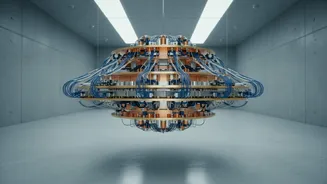
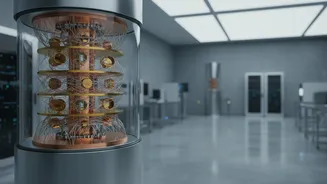
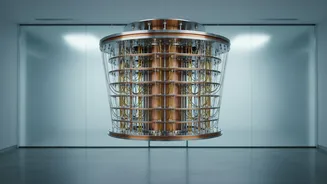
a major challenge. For most students, quantum mechanics and computing are taught as abstract concepts, heavy on mathematics and theory but light on practical application. The reason is simple: quantum computers are rare, expensive, and incredibly sensitive machines. Until recently, the idea of a student running an algorithm on a real quantum processor was almost unheard of. This created a significant gap between what was taught in the classroom and the practical skills needed in the burgeoning quantum industry. Students could learn about qubits and entanglement, but they couldn't get a feel for how these concepts behave on actual, imperfect, noisy hardware.
A Bridge to Real-World Machines
Several pioneering programs are now emerging to dismantle this barrier. Tech giants and academic institutions are rolling out platforms that provide direct, hands-on access to quantum systems. For instance, IBM's Classroom Accounts, announced in May 2026, allow educators to onboard dozens of students onto the IBM Quantum Platform, giving them allocated time on real quantum computers without needing a credit card. Similarly, companies like QC Ware have developed platforms such as Forge, which provide a service-based gateway to quantum hardware from various providers, including IBM, D-Wave, and others. These initiatives are built on the understanding that to truly learn quantum computing, students need to move beyond simulators and interact with the real thing. This shift from purely theoretical instruction to an experiential model is poised to revolutionize how the next generation of quantum talent is trained.
How It Works: From Theory to Practice
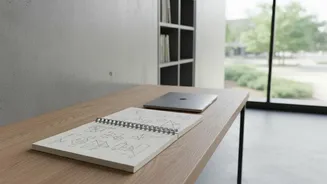
These new pathways largely rely on cloud-based access. Students can write quantum algorithms from their laptops and send them to be executed on a physical quantum computer located in a lab hundreds or thousands of miles away. For example, a student can design a quantum circuit using a graphical interface or program it in a language like Python, and then run the experiment on a multi-qubit processor. Some university programs, like the Quantum Forge course at the University of Colorado Boulder, take this a step further. They create a team environment that mirrors an industry internship, where students work on real-world projects sponsored by quantum tech companies. This model teaches not only the technical skills of programming and hardware testing but also crucial professional skills like project management and team collaboration, which are often underdeveloped in traditional science programs.
Why Hands-On Experience is a Game-Changer
The importance of this hands-on experience cannot be overstated. Simulators are useful for learning the ideal, error-free behaviour of quantum algorithms. However, real quantum hardware is notoriously noisy and prone to errors. Working with these machines gives students an intuitive understanding of the practical challenges in the field, such as quantum decoherence and gate fidelities. According to a recent commentary in Nature Reviews Physics, students need experience with physical hardware to truly grasp the transition from theoretical circuits to real-world measurements. This practical knowledge makes them far more valuable to potential employers. Students who have debugged problems on a real quantum processor are better prepared to contribute to the industry from day one. This shift is about moving from students who understand the theory to graduates who can build and operate the technology.
Building India's Quantum Future
For a nation like India, with its strong base in technology and a massive pool of young talent, these developments are particularly significant. The global competition for quantum experts is fierce, and the countries that can build a skilled workforce will have a decisive economic and strategic advantage. By integrating these hands-on platforms into university curricula, Indian educational institutions can ensure their students are not just learning about the quantum revolution but are equipped to lead it. Providing accessible pathways to real hardware democratizes a once-exclusive field, opening up new career opportunities for engineers, physicists, and computer scientists across the country. As these initiatives mature, they will play a crucial role in cultivating the expertise needed to drive innovation and secure India's place at the forefront of the quantum era.