
A Monumental Break-Up
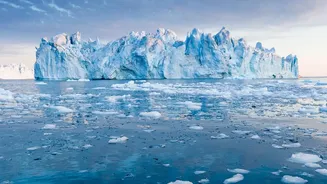
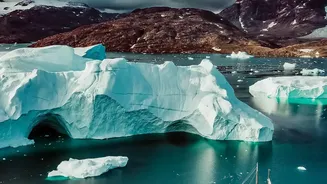
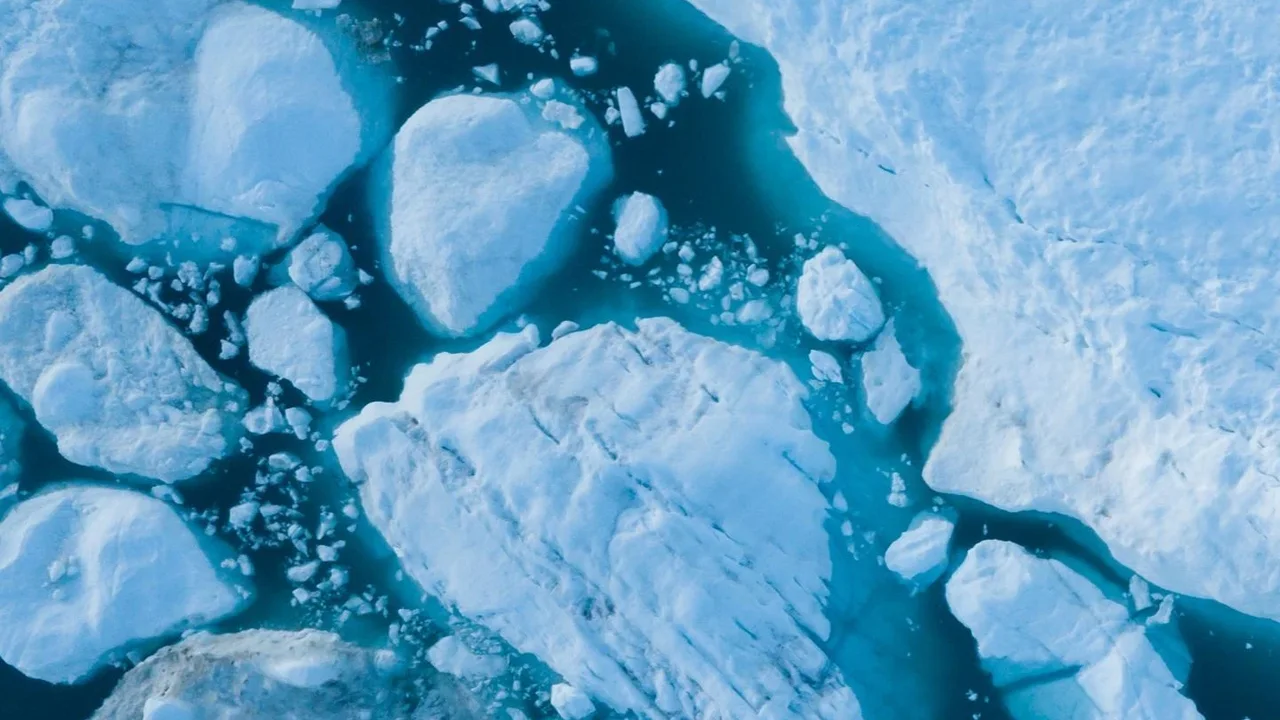
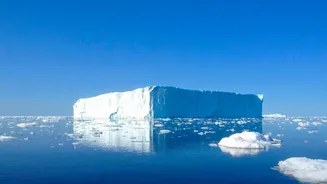
On August 4, 2026, satellites confirmed that a massive slab of ice had detached from the Petermann Glacier in northwest Greenland. The newly formed iceberg, described as a tabular or flat-topped island of ice, measures approximately 76.4 square kilometres.
To put that into perspective, it's about the same surface area as Manhattan Island. Scientists estimate its thickness could be up to 150 metres, making it a truly enormous piece of ice. This event marks the Petermann Glacier's largest single loss of ice since 2012 and is considered the most significant calving event anywhere in the Arctic since 2020. Researchers, who had been monitoring growing cracks in the glacier for years, were not entirely surprised but noted the event's remarkable scale.
The Science of Glacier Calving
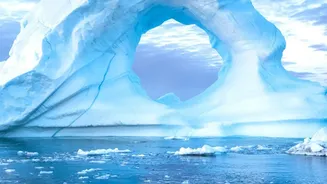
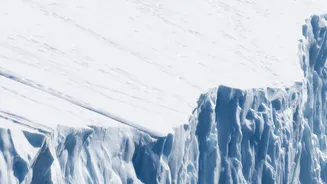
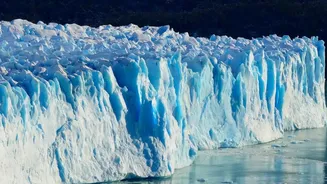
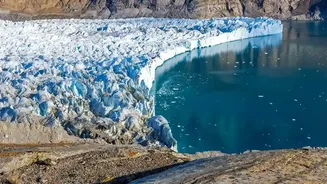
So, what exactly is calving? It's the natural process by which chunks of ice break off from the edge, or terminus, of a glacier. Think of a glacier as a very slow-moving river of ice. Driven by gravity and its own immense weight, it flows towards the sea. When a glacier like Petermann extends out over the ocean, it forms a floating "ice tongue." This floating portion is vulnerable. The stress of its own forward motion, combined with the action of ocean tides and currents, creates fractures. Warmer ocean water can also melt the ice from below, undercutting the cliff face and further destabilizing it. Eventually, these stresses cause a huge section to break away and float off as an iceberg.
A Symptom of a Warming Planet
While calving is a natural process for glaciers that end in water, the frequency and size of these events are crucial indicators of climate health. Scientists are concerned because the rate of ice loss from Greenland is accelerating. This particular break from the Petermann Glacier is not an isolated incident but part of a much larger and worrying trend. The warming of both the atmosphere and the oceans is the primary driver. Higher temperatures speed up melting on the glacier's surface, and warmer ocean water attacks the ice from below. This 'one-two punch' weakens the glaciers, making large-scale calving events like this one more likely. In fact, scientists anticipate that two more large sections could break away from Petermann in the near future.
Why Greenland's Ice Matters to Everyone
The Greenland ice sheet is the second-largest body of ice in the world, after Antarctica. It holds an enormous amount of frozen freshwater. If it were all to melt, global sea levels would rise by more than 7 meters, or about 23 feet. That catastrophic scenario is not imminent, but the current melting is already having a measurable impact. Meltwater from Greenland is already a significant contributor to global sea level rise. This isn't a distant, abstract problem. Rising seas threaten coastal communities around the globe with increased flooding and erosion. For a country like India, with its long coastline and numerous major cities like Mumbai, Chennai, and Kolkata, the connection between a melting Arctic and local risk is direct and undeniable.
A Floating Laboratory
This massive new iceberg, now adrift, will be closely monitored by scientists using satellites. It serves as a natural laboratory, offering a rare chance to study how such a large piece of Arctic ice moves, breaks apart, and melts in open water. The data gathered will help refine models that predict future ice loss and sea level rise. While the birth of this Manhattan-sized iceberg is a dramatic event in itself, its true significance lies in what it represents: a clear, unambiguous signal from the top of the world. It is a powerful data point in the story of our changing climate, reminding us that the fate of distant glaciers is inextricably linked to the future of our coastal homes.