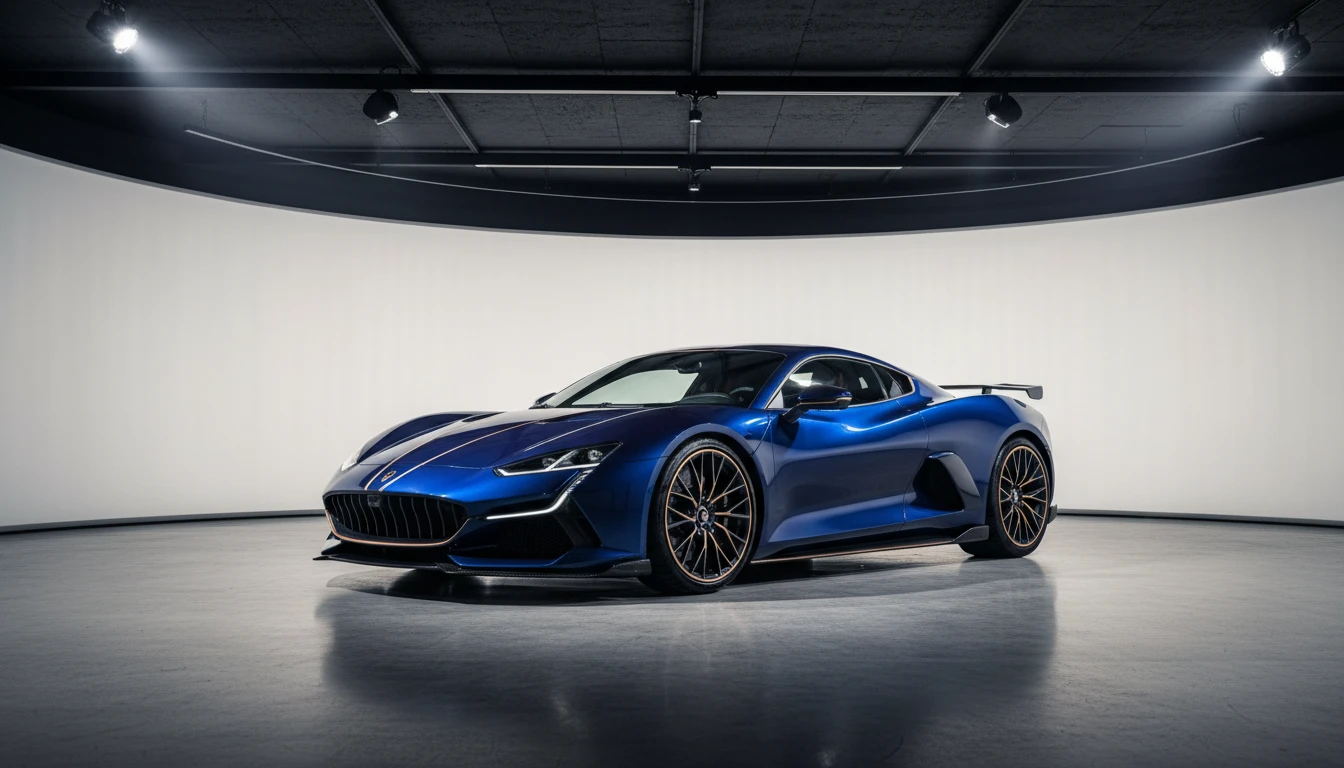










A Creature of the Track
When Bugatti first unveiled the Bolide concept in 2020, it was a breathtaking statement of intent. The idea was simple yet audacious: take the legendary 8.0-liter quad-turbo W16 engine from the Chiron and build the lightest possible car around it. The result
was an experimental vehicle designed for one thing only: dominating a racetrack. With a skeletal carbon-fibre monocoque, extreme aerodynamics that generate tonnes of downforce, and an engine tuned for 110-octane racing fuel, the concept boasted a theoretical 1,825 horsepower. Bugatti later announced a limited production run of just 40 units, confirming the Bolide as the final chapter for its iconic W16 engine. These production cars were slightly detuned to run on commercially available premium fuel, producing 1,578 horsepower, and were intended exclusively for private track days.
The Lanzante Intervention
While Bugatti created the Bolide as a purebred track machine, it never intended for it to wear a license plate. Enter Lanzante Limited, a British engineering firm renowned for making the impossible possible. With a history of converting track-only legends like the McLaren F1 GTR for road use, Lanzante saw an opportunity to tame the Bolide. The firm recently debuted the world's first road-legal Bolide at the Goodwood Festival of Speed, a shocking development for the automotive world. This conversion was not a simple task; it required a deep understanding of both automotive engineering and regulatory requirements to civilize a car that was born to be wild, without diluting its core character.
The Challenge of Civilisation
Making a car like the Bolide street-legal is a monumental engineering challenge. A track car is built for a perfect, smooth surface, extreme speeds, and minimal comfort. Public roads, with their potholes, speed bumps, and traffic, are an entirely different environment. The first major hurdle was the suspension. Lanzante had to significantly soften the Bolide's rock-hard, track-tuned setup to make it usable on uneven public roads. Another immediate issue was the tyres. The Bolide comes with Michelin racing slicks that are designed for maximum grip but have a lifespan of only about 37 miles. These had to be replaced with durable, road-certified tyres that could handle everyday driving conditions.
Lights, Engine, and Action
Beyond suspension and tyres, Lanzante had to address fundamental safety and regulatory features. The original track car didn't need conventional headlights. To solve this, Lanzante cleverly engineered and integrated new X-shaped LED headlights directly into the car's aggressive front-end design. Fortunately, the engine itself required fewer modifications. Because the production Bolide's W16 engine is a version of the one used in the road-legal Chiron, it was already capable of passing emissions tests, likely with some software tuning and the addition of catalysts. The result is a car that retains its staggering near-1,600 horsepower but can now, in theory, be driven to the grocery store.
A New Breed of Hypercar
The road-legal Bolide represents a unique and fascinating shift in the hypercar landscape. It blurs the line between a purpose-built racing machine and a road car. While Bugatti produced 40 track-only Bolides, Lanzante has not confirmed how many conversions it will undertake, making these road-going versions exceptionally rare. The conversion retains the car's dramatic aesthetic, including its exposed carbon-fibre bodywork and extreme aerodynamic elements. It’s a testament to engineering ingenuity, proving that even the most extreme track weapon can be adapted for a different mission, trading the pit lane for a parking space without losing the soul that made it special.